

Understanding Emotional Chatbot AI: The Future of Human-Like Digital Interactions
Estimated reading time: 4-5 minutes
Key Takeaways
- Emotional Chatbot AI is advancing digital interactions by interpreting and responding to human emotions.
- These chatbots utilize **empathetic technology**, **contextual AI**, and **emotion-aware agents** for personalized experiences.
- Features like advanced sentiment analysis and memory integration enable *mood-based* and *responsive* conversations.
- Real-world applications span customer service, mental health support, and enhancing digital assistants.
- Future developments aim for greater accuracy and sophistication, though **privacy and ethical challenges** remain.
Table of contents
- Understanding Emotional Chatbot AI: The Future of Human-Like Digital Interactions
- Key Takeaways
- Understanding Emotional Chatbots
- Key Components of Emotional Chatbots
- Chatbot Detecting Tone and Sentiment Tracking
- Personalized Conversation AI and AI Chatbot with Memory
- Mood-Based Chatbots and Responsive AI Bots
- Real-life Applications and Case Studies
- Future of Emotional Chatbots
- Implementation Challenges
- Conclusion
- Frequently Asked Questions
In today's digital age, artificial intelligence is evolving beyond simple automated responses. Emotional Chatbot AI represents a groundbreaking advancement in how machines interact with humans. These sophisticated AI systems are transforming digital communication by understanding and responding to human emotions in ways previously thought impossible.
Understanding Emotional Chatbots
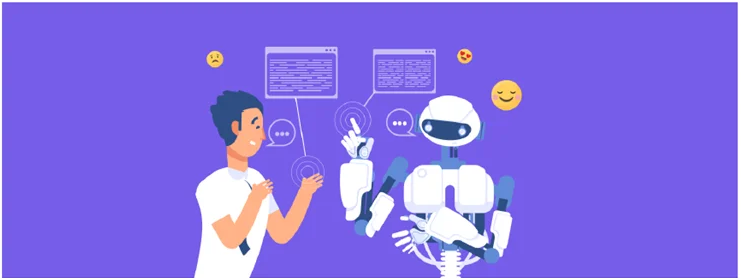
Emotional chatbot AI is revolutionizing digital interactions by bringing human-like empathy to automated conversations. Unlike traditional chatbots that follow rigid scripts, emotional chatbots can recognize, interpret, and respond to users' emotional states.
What sets emotional chatbots apart is their ability to:
- Detect emotions through text, voice, and behavioral cues
- Adapt responses based on emotional context
- Provide personalized interactions that feel more natural
- Maintain emotional awareness throughout conversations
These capabilities make emotional chatbots significantly more effective than their traditional counterparts, which often frustrate users with their inability to understand emotional nuances.
[Source: https://thelightbulb.ai/blog/emotion-ai-chatbot/]
Key Components of Emotional Chatbots
Empathetic Technology Integration
The foundation of emotional chatbots rests on *empathetic technology*, which enables them to:
- Process and understand human emotions
- Respond with appropriate emotional context
- Maintain awareness of user sentiment
- Adjust communication style based on emotional cues
Contextual AI Systems
Modern emotional chatbots utilize advanced *contextual AI* to:
- Understand conversation nuances
- Interpret slang and cultural references
- Grasp the broader context of interactions
- Provide relevant and emotionally appropriate responses
Emotion-Aware AI Agents
These sophisticated agents incorporate:
- Real-time emotion detection
- Semantic analysis capabilities
- Cultural sensitivity
- Adaptive response mechanisms
[Source: https://fastbots.ai/blog/emotionally-intelligent-ai-chatbots-transforming-user-experience]
Chatbot Detecting Tone and Sentiment Tracking
Advanced Sentiment Analysis
Modern emotional chatbots excel at detecting:
- Positive, negative, and neutral tones
- Emotional intensity
- Changes in mood throughout conversations
- Subtle emotional nuances
Real-World Applications
Several platforms showcase effective sentiment tracking:
- **Woebot Health**: Monitors user mood for mental health support
- **Wysa**: Provides emotional support through adaptive conversations
- **Replika**: Creates personalized emotional connections
- **Ada**: Uses sentiment analysis for enhanced customer service
- **Cognigy**: Detects real-time emotions for improved user support
[Source: https://research.aimultiple.com/emotional-chatbot/]
Personalized Conversation AI and AI Chatbot with Memory
Memory Integration
Advanced emotional chatbots enhance user experience through:
- Storage of previous interactions
- Recognition of user preferences
- Recall of past conversations
- Building of relationship context
Personalization Features
Key personalization capabilities include:
- Real-time mood analysis
- Conversation history tracking
- User preference learning
- Adaptive response patterns
These features create more meaningful and engaging interactions that evolve over time.
[Source: https://academic.oup.com/jcmc/article/29/5/zmae015/7742812]
Mood-Based Chatbots and Responsive AI Bots
Mood Recognition Technology
Modern mood-based chatbots utilize:
- Multiple input channels for emotion detection
- Advanced learning algorithms
- Natural language processing
- Real-time adaptation capabilities
Response Adaptation
These systems adjust their communication by:
- Matching user emotional states
- Providing appropriate emotional support
- Adapting tone and language
- Offering relevant solutions based on mood
[Source: https://thelightbulb.ai/blog/emotion-ai-chatbot/]
Real-life Applications and Case Studies
Customer Service Implementation
Emotional chatbots are transforming customer service through:
- Faster query resolution
- Enhanced empathy in responses
- Better customer satisfaction
- Improved brand loyalty
Mental Health Support
In the mental health sector, emotional chatbots provide:
- 24/7 emotional assistance
- Reduced stigma in seeking help
- Improved access to resources
- Consistent emotional support
Digital Assistant Enhancement
Personal digital assistants now offer:
- More natural conversations
- Emotionally intelligent responses
- Personalized guidance
- Reduced interaction friction
[Source: https://pmc.ncbi.nlm.nih.gov/articles/PMC10242473/]
Future of Emotional Chatbots
Upcoming Developments
The future of emotional chatbots promises:
- Enhanced multimodal emotion detection
- More sophisticated personality adaptation
- Deeper understanding of cultural contexts
- Improved emotional intelligence
Technical Advancements
Expected improvements include:
- More accurate sentiment detection
- Better natural language understanding
- Enhanced memory systems
- Smoother conversation flow
Challenges to Address
Key areas requiring attention:
- Privacy and data security
- Accuracy of emotion detection
- Ethical considerations
- Authentication of emotional responses
[Source: https://www.library.hbs.edu/working-knowledge/when-ai-chatbots-help-people-be-more-human]
Implementation Challenges
Privacy Concerns
Organizations must address:
- Secure handling of emotional data
- User privacy protection
- Ethical data storage
- Transparent data usage policies
Technical Limitations
Current challenges include:
- Accuracy in complex emotional situations
- Cultural nuance understanding
- Context maintenance
- Response appropriateness
[Source: https://research.aimultiple.com/emotional-chatbot/]
Conclusion
Emotional Chatbot AI represents a significant leap forward in human-machine interaction. By combining advanced emotional intelligence with sophisticated AI technology, these systems are creating more meaningful, personalized, and effective digital experiences. As the technology continues to evolve, we can expect even more natural and helpful interactions that bridge the gap between human and artificial intelligence.
The future of emotional chatbots looks promising, with continued advancements in:
- Emotion detection accuracy
- Personalization capabilities
- Context awareness
- Natural conversation flow
These improvements will further enhance the value of emotional chatbots across various sectors, from customer service to mental health support, making digital interactions more human-centered and effective than ever before.
[Source: https://fastbots.ai/blog/emotionally-intelligent-ai-chatbots-transforming-user-experience]
Frequently Asked Questions
- What is Emotional Chatbot AI?
Emotional Chatbot AI refers to artificial intelligence systems designed to recognize, interpret, and respond to human emotions, making digital interactions more empathetic and human-like.
- How do emotional chatbots detect emotions?
They detect emotions through advanced sentiment analysis, processing text, voice, and behavioral cues. This often involves natural language processing and machine learning algorithms.
- What are the main applications of emotional chatbots?
Key applications include enhancing customer service, providing mental health support, and improving personal digital assistants by offering more natural and empathetic interactions.
- What challenges are associated with implementing emotional chatbots?
Challenges include ensuring user privacy and data security, achieving high accuracy in complex emotional situations, understanding cultural nuances, and maintaining contextual awareness.
- How do emotional chatbots differ from traditional chatbots?
Traditional chatbots follow rigid scripts, while emotional chatbots can recognize, interpret, and adapt their responses based on the user's emotional state, providing a much more personalized and empathetic experience.
2 thoughts on “Understanding Emotional Chatbot AI: The Future of Human-Like Digital Interactions”
Comments are closed.