

How to Implement AI Agents: A Complete Guide
Estimated reading time: 12 minutes
Key Takeaways
- Implementing AI agents starts with clear goals and choosing the right tools.
- AI agents can significantly improve customer interaction and automate routine tasks, saving money and freeing up human staff.
- Effective training involves using website content, a knowledge base, and FAQs to ensure accurate and helpful responses.
- Low-code and no-code solutions make AI agent implementation accessible to businesses without extensive technical skills.
- Ongoing monitoring, testing, and adjustments are crucial for the long-term success of your AI agent.
Table of contents
- How to Implement AI Agents: A Complete Guide for Businesses
- Key Takeaways
- Understanding AI Agents and Their Impact on Modern Business
- Why Businesses Need AI Agents
- Planning Your AI Agent Implementation
- Essential Planning Steps
- The Complete AI Agent Onboarding Checklist
- Before Launch
- During Launch
- Training Your AI Chatbot with Website Content
- Best Training Practices
- Tips for Better Results
- Connecting Your Knowledge Base to Your Chatbot
- Connection Steps
- Benefits of Knowledge Base Integration
- Importing FAQs to Your AI Chatbot
- Import Process
- Making FAQs Work Better
- Understanding Low-Code and No-Code AI Solutions
- Benefits of Low-Code/No-Code
- Popular Tools
- Best Practices for AI Chatbot Success
- Design Tips
- Technical Tips
- Creating Your AI Agent Project Plan
- Project Plan Elements
- Conclusion
- Frequently Asked Questions
Understanding AI Agents and Their Impact on Modern Business
In today's fast-paced digital world, AI agents are becoming essential tools for businesses of all sizes. These smart computer programs can talk to customers, answer questions, and help with many daily tasks. Think of them as digital helpers that work 24/7 to make your business run better through intelligent automation.
AI agents, especially chatbots, are changing how companies interact with their customers. They can handle customer questions, help find products, and even process orders — all without needing a break!
Why Businesses Need AI Agents
- Save money by automating common customer questions.
- Provide help to customers any time, day or night.
- Collect useful information about what customers want.
- Free up human workers for more important, complex tasks.
Planning Your AI Agent Implementation
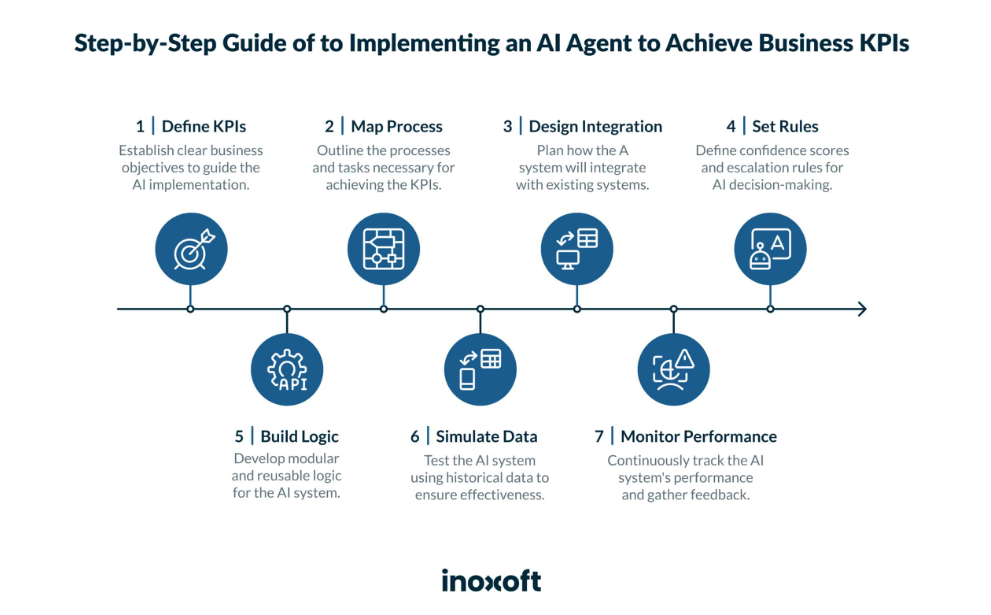
Before diving into AI agent setup, you need a solid plan. Let's break down the key steps to make your AI project successful.
Essential Planning Steps
- Set Clear Goals
- What do you want your AI agent to do?
- Which problems should it solve?
- How will you measure success?
- Choose Your Tools
- Pick software that fits your needs.
- Consider your budget and technical skills.
- Think about how it will grow with your business.
- Plan Your Timeline
- Set realistic deadlines.
- Include time for testing.
- Plan for training your team.
Source: Chatbot.com Academy Implementation Guide
The Complete AI Agent Onboarding Checklist
Getting your AI agent ready for work requires careful preparation. Here's what you need to do:
Before Launch
- ☑ Check your website data is ready.
- ☑ Set up your knowledge base.
- ☑ Design conversation flows.
- ☑ Test with sample users.
- ☑ Train your team.
During Launch
- ☑ Monitor early conversations closely.
- ☑ Fix any problems quickly.
- ☑ Gather user feedback.
- ☑ Make necessary adjustments.
Source: Tidio Chatbot Implementation Guide
Training Your AI Chatbot with Website Content
Your website contains valuable information that can make your AI chatbot smarter. Here's how to use it effectively:
Best Training Practices
- Copy important information from your website.
- Organize content into clear topics.
- Create simple question-and-answer pairs.
- Update regularly with new content.
Tips for Better Results
- Use clear, simple language.
- Include common customer questions.
- Add examples and explanations.
- Keep information up-to-date.
Source: Botpress Blog: Training Chatbots
Connecting Your Knowledge Base to Your Chatbot
A smart chatbot needs access to lots of information. Here's how to connect your knowledge base:
Connection Steps
- Organize your knowledge base.
- Choose the right integration method.
- Test the connection thoroughly.
- Monitor and adjust as needed.
Benefits of Knowledge Base Integration
- Faster, more accurate answers for customers.
- Better overall customer experience.
- Less work for your human support team.
- Easier updates and changes to information.
Source: Intercom Blog: Connecting Knowledge Base to Chatbot
Importing FAQs to Your AI Chatbot
Your frequently asked questions are gold for training your chatbot. Here's how to use them:
Import Process
- Collect all your existing FAQs.
- Format them properly for your chatbot platform.
- Upload to your chatbot platform.
- Test the responses to ensure accuracy.
Making FAQs Work Better
- Group similar questions together.
- Include different ways people might ask the same question.
- Add helpful examples and context.
- Update regularly with new questions and answers.
Source: Freshworks Chatbots: FAQ Automation
Understanding Low-Code and No-Code AI Solutions
Not everyone can write computer code, and that's okay! Low-code and no-code tools make it easy to create AI agents, opening up possibilities for businesses without dedicated development teams.
Benefits of Low-Code/No-Code
- Quick to set up and deploy.
- Easy to use, even for non-technical staff.
- Often less expensive than custom development.
- No coding skills needed for basic implementation.
Popular Tools
- Tidio
- Chatbot.com
- MobileMonkey
- ManyChat
Source: Gartner: Low-Code Chatbot Platforms
Best Practices for AI Chatbot Success
Follow these tips to make your AI chatbot work better and provide a superior experience for your users:
Design Tips
- Keep conversations simple and focused.
- Use friendly, natural language.
- Offer help and guidance when needed.
- Make it easy for users to reach a human agent if necessary.
Technical Tips
- Test regularly to catch errors.
- Update content and features often.
- Watch how it performs using analytics.
- Learn from mistakes and user interactions.
Source: Drift Blog: Chatbot Best Practices
Creating Your AI Agent Project Plan
A good plan helps your AI agent project succeed. Here's what to include in your comprehensive project plan:
Project Plan Elements
- Project Goals
- What you want to achieve with the AI agent.
- How you'll measure success (e.g., customer satisfaction, cost savings).
- Timeline for completion and deployment.
- Resource Needs
- Specific tools and software required.
- Team members involved and their roles.
- Estimated budget for development and maintenance.
- Implementation Steps
- Detailed plan for setup and installation.
- Strategy for training and testing phases.
- Roll-out plan for launch and ongoing monitoring.
Source: Sprinklr CXM: How to Implement Chatbot
Conclusion
Implementing an AI agent might seem challenging, but with careful planning and the right tools, it can greatly improve your business. Remember to:
- Start with clear goals to define success.
- Choose the right tools for your specific needs and budget.
- Train your AI agent well using all available data sources.
- Keep testing and improving its performance constantly.
Follow this guide, and you'll be well on your way to having a helpful AI agent working for your business around the clock, enhancing customer service and streamlining operations. The future of business is here, and it's powered by AI agents!
Frequently Asked Questions
What is an AI agent?
An AI agent is a smart computer program designed to perform tasks, interact with users, and automate processes, often using AI and machine learning to understand and respond to queries.
How long does it take to implement an AI agent?
The timeline varies depending on complexity and resources, but with proper planning and low-code/no-code tools, initial deployment can range from a few weeks to a couple of months. Ongoing optimization is a continuous process.
Do I need coding skills to build an AI agent?
Not necessarily! Many modern platforms offer low-code or no-code solutions that allow businesses to build and deploy AI agents using visual interfaces and pre-built templates, without writing extensive code.
What kind of information should I use to train my AI agent?
You should use your website content, organized knowledge base articles, and a comprehensive list of frequently asked questions (FAQs). The more relevant and well-structured the data, the smarter your AI agent will be.
8 thoughts on “How to Implement AI Agents: A Complete Guide”
Comments are closed.