

Privacy Compliance Guide: GDPR, CCPA, and HIPAA Requirements for AI Chatbots in Small Businesses
Estimated reading time: 8 minutes
Key Takeaways
- Using AI chatbots means handling customer data, which *mandates* adherence to privacy laws like GDPR, CCPA, and HIPAA.
- Non-compliance can lead to severe penalties, including hefty fines (e.g., up to €20 million for GDPR) and a significant loss of customer trust.
- Common data privacy risks include over-collection of personal information, insecure storage, lack of proper consent, and insufficient user control over their data.
- Achieving compliance involves implementing data minimization, robust user consent management, and ensuring data access rights.
- Specific requirements apply to different regions and data types, such as focusing on data selling for CCPA and stringent security for health information under HIPAA.
- Protecting Personally Identifiable Information (PII) is crucial, requiring tools for data redaction, encryption, and regular security audits.
- Businesses must make informed decisions between cloud-based and on-premises AI solutions, weighing factors like cost, scalability, and control over data.
- Clear communication and explicit consent are *non-negotiable* for all data collection and record-keeping activities.
Table of contents
- Privacy Compliance Guide: GDPR, CCPA, and HIPAA Requirements for AI Chatbots in Small Businesses
- Key Takeaways
- Understanding Privacy Laws for AI Systems
- Data Privacy Risks in Chatbot Systems
- Making Your Chatbot GDPR Compliant
- CCPA Requirements for AI Systems
- HIPAA Compliance for Healthcare Chatbots
- Protecting Personal Information
- Choosing Between Cloud and Local AI
- Getting User Consent
- Managing Chat Records
- Privacy Compliance Checklist
- Additional Resources
- Conclusion
- Frequently Asked Questions
Is your business using AI chatbots? Then you need to know about privacy laws. This guide will help you understand how to make your AI systems follow important rules like GDPR, CCPA, and HIPAA. For more details on integrating AI, explore best AI chatbot solutions for small businesses.
Understanding Privacy Laws for AI Systems
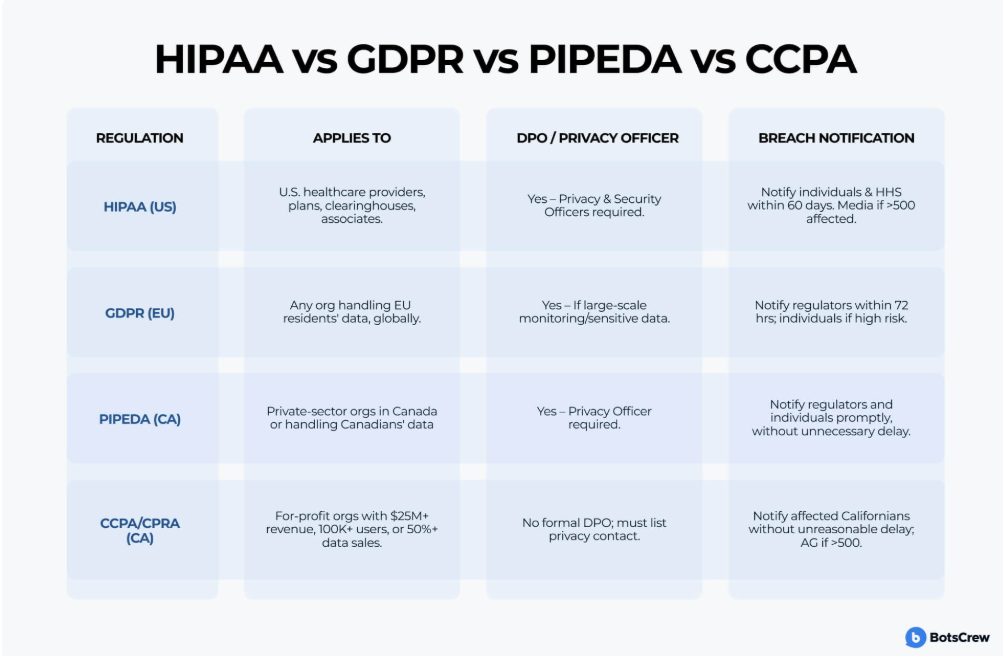
When your business uses AI chatbots, you're probably collecting customer data. This means you need to follow certain privacy laws. Let's break down the main ones you need to know about:
GDPR (General Data Protection Regulation)
This is Europe's main privacy law. It sets rules for how businesses handle personal data, even if you're not in Europe but serve European customers.
CCPA (California Consumer Privacy Act)
This law protects California residents' privacy rights. It's similar to GDPR but has some different requirements.
HIPAA (Health Insurance Portability and Accountability Act)
This law protects health information in the United States. If your chatbot deals with any medical data, you must follow HIPAA rules. Learn more about how AI can fit into healthcare with an AI receptionist in a medical office.
Why should small businesses care? Because breaking these rules can lead to big fines and lost customer trust. For example, GDPR fines can reach up to €20 million or 4% of your global revenue. Source
Data Privacy Risks in Chatbot Systems
When implementing AI chatbots, your business faces several privacy risks:
- Collecting too much personal information
- Storing data unsafely
- Using data without proper permission
- Not letting users control their data
These risks can lead to:
- Legal penalties
- Customer complaints
- Damaged reputation
- Lost business opportunities
Understanding these risks is crucial for mitigating common cybersecurity threats for small businesses. Source
Making Your Chatbot GDPR Compliant
To make your chatbot follow GDPR rules, you need these key features:
Data Minimization
- Only collect information you really need
- Delete data when you no longer need it
- Don't ask for extra details “just in case”
User Consent Management
- Ask permission before collecting data
- Make it easy to say yes or no
- Let users change their mind later
Data Access Rights
- Let users see their data
- Allow users to correct mistakes
- Make it easy to delete user data
CCPA Requirements for AI Systems
The California law has similar but different requirements:
Key CCPA Features
- Right to know what data you collect
- Right to delete personal information
- Right to opt-out of data selling
- Special rules for minors' data
Main Differences from GDPR
- Focuses more on data selling
- Applies to more types of businesses
- Has different penalty structures
HIPAA Compliance for Healthcare Chatbots
If your chatbot handles health information, HIPAA compliance for healthcare chatbots is crucial:
Required Security Measures
- Encrypt all health data
- Control who can access information
- Keep detailed access logs
- Have emergency plans for data breaches
Business Associate Agreements
- Need special contracts with service providers
- Must specify how data is protected
- Should outline responsibilities clearly
Protecting Personal Information
PII Redaction Tools
Your chatbot needs ways to protect personally identifiable information (PII):
- Automatic data masking
- Real-time information filtering
- Secure data storage systems
Implementing best AI cybersecurity tools for small businesses can greatly assist in this.
- Regular security checks
Best Practices
- Use encryption for all sensitive data
- Train staff on privacy rules
- Regular system updates
- Document all privacy measures
Choosing Between Cloud and Local AI
Your business has two main options for running AI chatbots:
Cloud-Based Solutions
Pros:
- Lower startup costs
- Easy to scale
- Regular updates
- Professional maintenance
Cons:
- Less direct control
- Depends on internet
- Provider access to data
On-Premises Solutions
Pros:
- Complete data control
- Works without internet
- Custom security options
Cons:
- Higher initial cost
- Needs technical staff
- More maintenance work
Getting User Consent
Your chatbot must clearly explain:
- What information it collects
- How it uses the information
- Who can access the data
- How long data is kept
Make sure to:
- Use simple language
- Get clear permission
- Keep consent records
- Allow easy opt-out
Managing Chat Records
If your chatbot records conversations:
- Tell users about recording
- Get permission first
- Store recordings safely
- Delete old recordings
- Control who can listen
- Have clear usage rules
Privacy Compliance Checklist
Use this checklist to stay compliant:
- ☐ Get clear user consent
- ☐ Collect minimum necessary data
- ☐ Use strong security measures
- ☐ Have privacy policies ready
- ☐ Train your team
- ☐ Regular security checks
- ☐ Document everything
- ☐ Plan for problems
- ☐ Keep systems updated
- ☐ Review regularly
Additional Resources
Want to learn more? Check these sources:
- Official GDPR website: gdpr.eu
- CCPA information: oag.ca.gov/privacy/ccpa
- HIPAA guidance: hhs.gov/hipaa
- AI privacy tools: Source
Conclusion
Following privacy laws for AI chatbots isn't optional – it's essential for your business. Start with these steps:
- Know which laws apply to you
- Choose the right tools
- Set up proper security
- Get user consent
- Keep good records
- Stay updated on changes
Learn more about how to implement an AI agent securely. Remember: Good privacy practices help build customer trust and protect your business from problems. Source
Need more help? Consider talking to a privacy expert who can look at your specific situation. They can help make sure your chatbot follows all the rules while still being useful for your business.
Frequently Asked Questions
What are the main privacy laws for AI chatbots?
The primary privacy laws applicable to AI chatbots, especially for small businesses, include the General Data Protection Regulation (GDPR) for European customers, the California Consumer Privacy Act (CCPA) for California residents, and the Health Insurance Portability and Accountability Act (HIPAA) if the chatbot handles protected health information.
Why is privacy compliance important for small businesses using AI chatbots?
Privacy compliance is critical for small businesses to avoid significant legal penalties and fines, maintain customer trust, and protect their brand reputation. Non-compliance can lead to severe financial consequences and a loss of business opportunities.
How can I make my chatbot GDPR compliant?
To ensure GDPR compliance, your chatbot should implement data minimization (only collecting necessary data), robust user consent management (getting clear permission), and data access rights (allowing users to view, correct, or delete their data).
What are the key differences between GDPR and CCPA?
While both laws aim to protect user privacy, CCPA places a greater emphasis on consumers' right to opt-out of the selling of their personal information. They also have different criteria for which businesses they apply to and distinct penalty structures.
What should I do if my chatbot handles health information?
If your chatbot processes protected health information, you must adhere to HIPAA regulations. This involves implementing strong security measures like data encryption, access controls, detailed logging, disaster recovery plans, and establishing Business Associate Agreements (BAAs) with all service providers.
What is PII redaction?
PII (Personally Identifiable Information) redaction involves automatically masking, filtering, or removing sensitive personal data from chat records or other data stores to prevent unauthorized access or disclosure, thereby protecting user privacy.
Should I choose cloud-based or on-premises AI for privacy?
The choice between cloud-based and on-premises AI depends on your specific needs and risk tolerance. On-premises solutions offer more direct control over data and security, which can be beneficial for strict privacy requirements, but often come with higher upfront costs and maintenance. Cloud solutions are scalable and cost-effective but involve relying on a third-party provider for data security and control.
4 thoughts on “Privacy Compliance Guide: GDPR, CCPA, and HIPAA Requirements for AI Chatbots in Small Businesses”
Comments are closed.