

HIPAA Compliant Chatbots: Revolutionizing Healthcare Workflows While Maintaining Patient Privacy
Estimated reading time: 4 minutes
Key Takeaways
- HIPAA compliant chatbots represent a significant advancement, blending AI efficiency with stringent privacy protocols.
- They effectively tackle challenges like overwhelming administrative workloads, inefficient scheduling, and critical PHI security in healthcare.
- These specialized systems feature end-to-end encryption, secure data storage, and comprehensive audit logging to safeguard patient data.
- The implementation brings about substantial improvements in operational efficiency, patient experience, and robust regulatory compliance.
- Real-world applications demonstrate success, including considerable reductions in no-show rates and administrative burdens.
- Adherence to strict technical requirements, including Business Associate Agreements (BAA) and multi-factor authentication, is crucial for compliance.
- The future promises further enhancements through advanced natural language processing and predictive analytics, continually reshaping healthcare delivery.
Table of Contents
- HIPAA Compliant Chatbots: Revolutionizing Healthcare Workflows While Maintaining Patient Privacy
- Key Takeaways
- The Current Healthcare Landscape
- Understanding HIPAA Compliant Chatbots
- Benefits of HIPAA Compliant Chatbots in Healthcare
- Success Stories: Real-World Implementations
- Technical Requirements for HIPAA Compliance
- Types of HIPAA Compliant Chatbots
- Choosing the Right Healthcare AI Partner
- Implementation Guidelines
- Future Trends in Healthcare Chatbots
- Conclusion
- Frequently Asked Questions
The Current Healthcare Landscape
The healthcare industry faces unprecedented challenges in managing patient intake, scheduling, and maintaining Protected Health Information (PHI security). Healthcare providers struggle daily with:
- Overwhelming administrative workload
- Inefficient scheduling processes
- High no-show rates
- Complex compliance requirements
- Resource-intensive patient communication
These challenges impact both operational efficiency and patient care quality, creating a pressing need for innovative solutions.
Understanding HIPAA Compliant Chatbots
HIPAA compliant chatbots are AI-powered conversational interfaces specifically designed to handle protected health information while adhering to stringent privacy measures to streamline healthcare operations while ensuring regulatory compliance. Unlike standard chatbots, these specialized systems incorporate:
- End-to-end encryption
- Secure data storage protocols
- Authentication mechanisms
- Audit logging capabilities
- Role-based access controls
These features ensure that patient data remains confidential and protected throughout all interactions.
Benefits of HIPAA Compliant Chatbots in Healthcare
Implementing AI-driven chatbots in healthcare settings delivers multiple advantages:
Operational Efficiency:
- Automated appointment scheduling
- Streamlined patient intake processes
- Reduced administrative burden
- Improved resource allocation
Patient Experience:
- 24/7 availability
- Instant responses to common queries
- Personalized interactions
- Convenient appointment management
Compliance and Security:
- Consistent HIPAA adherence
- Secure handling of PHI
- Documented patient interactions
- Reduced compliance risks
Success Stories: Real-World Implementations
Several healthcare organizations have successfully integrated HIPAA compliant chatbots:
Dental Practices:
A network of dental clinics implemented appointment scheduling chatbots, resulting in:
- 40% reduction in no-show rates
- 60% decrease in administrative workload
- Improved patient satisfaction scores
Medical Clinics:
Primary care facilities using AI assistants reported:
- 30% increase in appointment efficiency
- 50% reduction in phone call volume
- Enhanced patient communication
Technical Requirements for HIPAA Compliance
Developing and maintaining HIPAA compliant chatbots requires strict attention to technical specifications:
Security Measures:
- Encryption protocols for data in transit and at rest
- Secure cloud storage solutions
- Multi-factor authentication
- Regular security audits
Documentation Requirements:
- Business Associate Agreements (BAA)
- Privacy policy documentation
- Consent management systems
- Audit trail maintenance
Types of HIPAA Compliant Chatbots
Different healthcare scenarios require specialized chatbot solutions:
Symptom Checker Chatbots:
- Initial patient assessment
- Triage support
- Care recommendations
Insurance Verification Chatbots:
- Coverage verification
- Benefits explanation
- Claims status updates
Pharmacy Assistance Bots:
- Prescription refill requests
- Medication reminders
- Drug interaction information
Choosing the Right Healthcare AI Partner
Key considerations when selecting a chatbot provider:
Technical Capabilities:
- HIPAA compliance expertise
- Integration capabilities
- Customization options
- Scalability potential
Support and Service:
- Implementation assistance
- Staff training programs
- Ongoing technical support
- Regular updates and maintenance
Security Features:
- Data encryption standards
- Access control systems
- Audit capabilities
- Disaster recovery plans
Implementation Guidelines
Follow these steps for successful chatbot integration:
1. Assessment Phase:
- Evaluate current workflows
- Identify pain points
- Define success metrics
- Set implementation timeline
2. Selection Process:
- Review vendor credentials
- Check HIPAA compliance history
- Verify technical capabilities
- Assess integration requirements
3. Implementation Steps:
- Configure security settings
- Train staff members
- Test system thoroughly
- Monitor performance metrics
Future Trends in Healthcare Chatbots
Emerging developments include:
- Advanced natural language processing
- Predictive analytics integration
- Enhanced personalization capabilities
- Expanded integration options
- Improved machine learning algorithms
These advancements will further improve healthcare delivery while maintaining strict privacy standards.
Conclusion
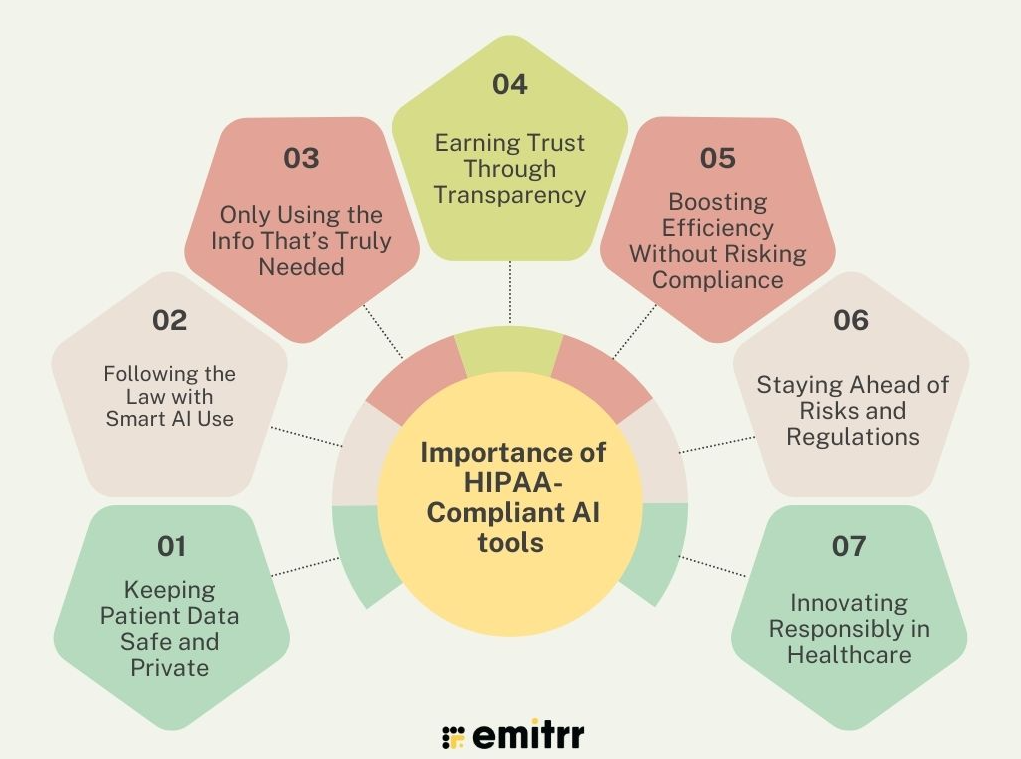
HIPAA compliant chatbots represent a crucial advancement in healthcare technology, offering a perfect balance between operational efficiency and regulatory compliance. By carefully selecting and implementing these AI-driven solutions, healthcare providers can significantly improve their workflows while ensuring patient data security.
The future of healthcare lies in the successful integration of such intelligent, compliant systems that enhance both provider operations and patient care delivery. As technology continues to evolve, HIPAA compliant chatbots will play an increasingly vital role in shaping the future of healthcare service delivery.
For healthcare providers looking to modernize their operations while maintaining strict privacy standards, HIPAA compliant chatbots offer a proven solution that delivers measurable benefits across all aspects of healthcare delivery.
Frequently Asked Questions
Q: What is a HIPAA compliant chatbot?
A: A HIPAA compliant chatbot is an AI-powered conversational interface designed to securely handle Protected Health Information (PHI) while adhering to the privacy and security regulations outlined by HIPAA.
Q: How do these chatbots ensure patient privacy?
A: They incorporate features like end-to-end encryption, secure data storage, robust authentication mechanisms, role-based access controls, and detailed audit logging to ensure PHI remains confidential and protected.
Q: What are the main benefits of using HIPAA compliant chatbots in healthcare?
A: Key benefits include improved operational efficiency (e.g., automated scheduling, reduced administrative burden), enhanced patient experience (e.g., 24/7 availability, instant responses), and strong regulatory compliance with secure PHI handling.
Q: Are Business Associate Agreements (BAAs) required for chatbot vendors?
A: Yes, if a chatbot vendor handles, transmits, or stores PHI on behalf of a healthcare provider, a Business Associate Agreement (BAA) is legally required to ensure they adhere to HIPAA's privacy and security rules.
Q: Can these chatbots integrate with existing healthcare systems?
A: Reputable HIPAA compliant chatbot solutions are designed with integration capabilities to seamlessly connect with existing electronic health record (EHR) systems, scheduling software, and other healthcare platforms, improving workflow cohesion.
One thought on “HIPAA Compliant Chatbots: Revolutionizing Healthcare Workflows While Maintaining Patient Privacy”
Comments are closed.