Build vs Buy AI Chatbot: A Complete Technical Guide for 2024

Estimated reading time: 8 minutes
Key Takeaways
- The decision to *build vs buy AI chatbot* solutions is critical for businesses in 2024.
- AI chatbots are *essential tools* for enhancing customer service and automating routine tasks for businesses of all sizes.
- Building an AI chatbot offers complete customization and *full data control*, but it comes with *higher initial costs* and *longer development times*.
- Buying a pre-built AI chatbot provides quick implementation and *professional vendor support*, though it often entails *limited customization* and *ongoing subscription fees*.
- Key factors to consider include your *business needs*, available *resources* (budget, technical team, timeline), and overall *strategic goals*.
- Technical components for building include Language Models (LLMs) like GPT-4o, Claude, or Llama 3, robust development frameworks, diverse databases, and scalable infrastructure.
- *Hybrid approaches* are increasingly popular, offering a balanced solution that combines the best aspects of both building and buying for moderate customization and manageable maintenance.
Table of contents
- Build vs Buy AI Chatbot: A Complete Technical Guide for 2024
- Key Takeaways
- Introduction
- Understanding AI Chatbots
- What is an AI Chatbot?
- Types of AI Chatbots
- Advantages and Disadvantages of Building an AI Chatbot
- Advantages
- Disadvantages
- Advantages and Disadvantages of Buying an AI Chatbot
- Advantages
- Disadvantages
- Factors to Consider When Deciding Between Building and Buying
- Business Needs
- Resources
- Strategic Goals
- Technical Stack Choices for Building AI Chatbots
- Essential Components
- Best LLMs for Customer Service and AI Chatbot Development
- Top Language Models
- Case Studies: Successful Implementations
- Custom-Built Success: JPMorgan
- Pre-built Success: Retail Implementation
- Key Lessons
- Conclusion
- Frequently Asked Questions
The rise of artificial intelligence has made AI chatbots a *must-have tool* for businesses of all sizes. But when it comes to implementing an AI chatbot, companies face a crucial decision: should they build vs buy AI chatbot solutions? This *comprehensive guide* will help you make the right choice for your business needs in 2024.
Introduction
AI chatbots have become *essential tools* across industries, especially for small businesses looking to improve customer service and automate routine tasks. These digital assistants can handle customer inquiries 24/7, process orders, and provide instant support. But before diving into implementation, you need to understand the *key differences* between building and buying an AI chatbot.
The “build vs buy AI chatbot” decision affects everything from your *initial costs* to *long-term success*. Let's explore both options in detail to help you make an informed choice.
[Source: https://beetroot.co/ai-ml/build-vs-buy-ai-chatbot/]
Understanding AI Chatbots
What is an AI Chatbot?
An AI chatbot is a computer program that uses *artificial intelligence* to have conversations with users. Unlike simple rule-based chatbots, AI chatbots can *understand context*, learn from interactions, and provide more *natural responses*.
Types of AI Chatbots
Several types of AI chatbots are available today:
- Open Source Chatbots: Built using frameworks like Rasa or LangChain
- Autogen Agents: *Advanced AI systems* that can work together to solve complex tasks and automate processes
- LangChain Agents: *Specialized chatbots* that combine different AI capabilities, leveraging large language models
- RAG (Retrieval Augmented Generation) Chatbots: Systems that combine AI with specific company knowledge for more relevant responses
[Source: https://beetroot.co/ai-ml/build-vs-buy-ai-chatbot/]
Advantages and Disadvantages of Building an AI Chatbot
Advantages
- Complete Customization: Design *exactly what you need*, tailored to your unique business processes.
- Full Data Control: Keep sensitive information *in-house*, ensuring compliance and security.
- Unique Features: Add *specialized capabilities* that give your business a competitive edge.
- Integration Freedom: Connect seamlessly with *any existing system you use*, without vendor limitations.
- No Vendor Lock-in: Own your technology *completely*, free from reliance on external providers.
Disadvantages
- Higher Initial Costs: Requires *significant investment* in development, infrastructure, and skilled personnel.
- Longer Development Time: Can take *months to build* and refine, delaying time-to-market.
- Technical Expertise Needed: Requires a team of *skilled developers*, AI engineers, and data scientists.
- Ongoing Maintenance: Your team must handle *updates, fixes, and continuous improvements*.
- Resource Intensive: Demands *continuous attention and improvement*. Consider the first step in building an AI agent carefully.
[Source: https://www.kellton.com/kellton-tech-blog/build-vs-buy-in-agentic-ai-how-to-make-right-choice]
Advantages and Disadvantages of Buying an AI Chatbot
Advantages
- Quick Implementation: Get started in *days or weeks*, not months.
- Lower Initial Cost: *Pay-as-you-go* options available, reducing upfront investment.
- Professional Support: Vendor handles *technical issues, maintenance, and infrastructure*.
- Regular Updates: Automatic improvements and *new features* provided by the vendor.
- Proven Solutions: Already *tested and refined* by numerous users, reducing risks.
Disadvantages
- Limited Customization: Must work within *platform constraints*, potentially limiting unique features.
- Ongoing Costs: *Monthly or annual subscription fees* can accumulate over time.
- Less Control: Dependent on *vendor's roadmap* and feature releases.
- Integration Limitations: May not connect with *all your existing tools* seamlessly.
- Data Privacy Concerns: Information passes through a third party. Review our GDPR compliant chatbot guide for best practices.
[Source: https://www.verloop.io/blog/build-vs-buy-chatbot-edition/]
Factors to Consider When Deciding Between Building and Buying
Business Needs
- Current Requirements: *What specific problems need solving now?*
- Future Growth: *How might needs change* and evolve over time as your business scales?
- Integration Requirements: *What systems absolutely need to connect* with the chatbot?
- Data Security: *How sensitive is your information*, and what regulatory compliance is required?
Resources
- Budget: Evaluate both *initial and long-term costs*. Check our AI agent pricing guide.
- Technical Team: Assess the *available in-house expertise* to build or maintain.
- Timeline: Determine *how quickly you need the solution* to be operational.
- Support Capabilities: Your team's ability to *maintain, troubleshoot, and improve the system*.
Strategic Goals
- Competitive Advantage: Is there a *need for unique features* to stand out in the market?
- Scalability: How will the solution support your *future growth plans* and increasing user base?
- Market Position: Are there *industry-specific requirements* or standards to meet?
- Customer Experience: What are your expectations for *service quality* and user satisfaction?
[Source: https://auralis.ai/blog/ai-chatbots-build-vs-buy-framework/]
Technical Stack Choices for Building AI Chatbots
Essential Components
- Language Models (LLMs)
-
- GPT-4o
-
- Claude
-
- Llama 3
- Custom-trained models for specialized needs
-
- Development Frameworks
-
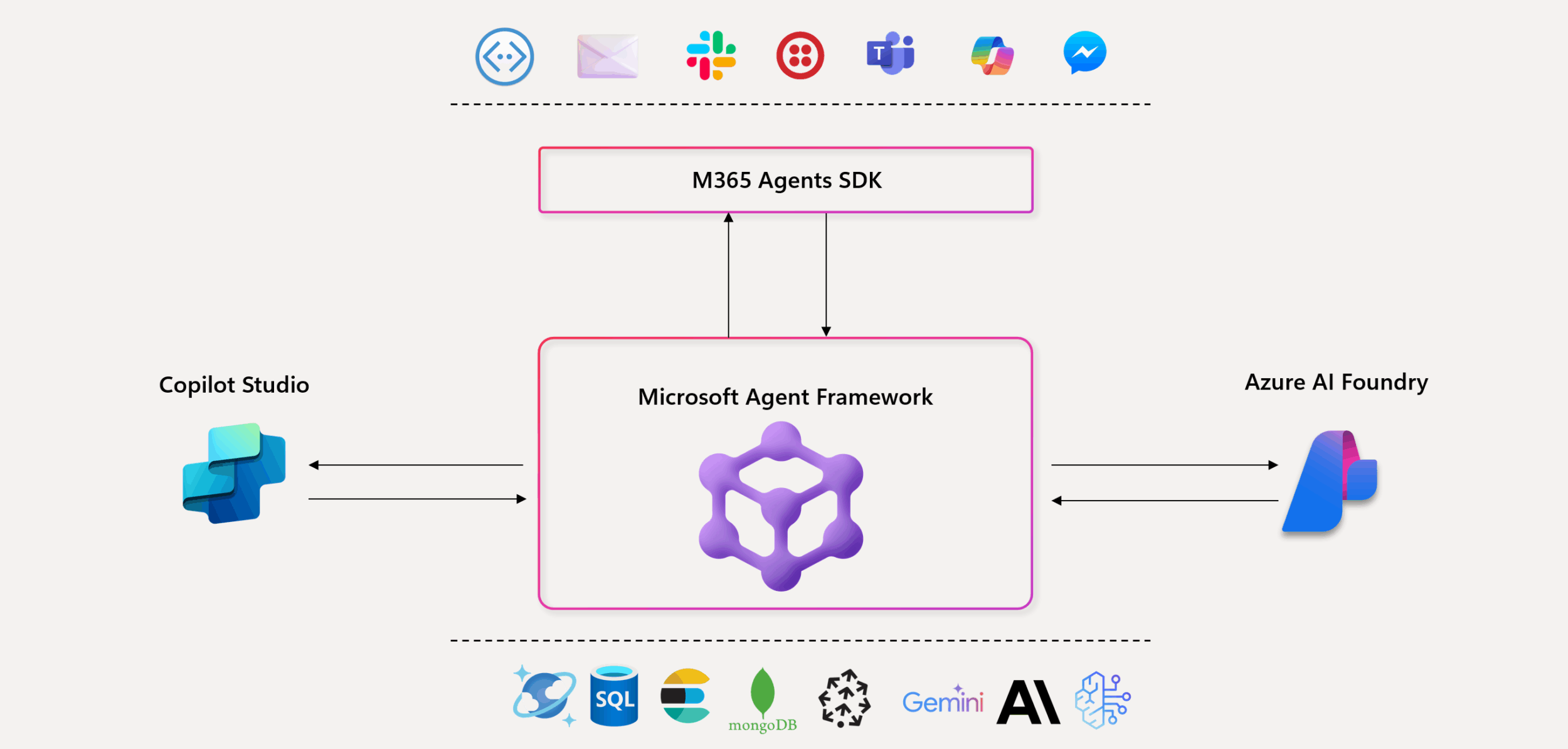
- LangChain
-
- Rasa
-
- Autogen
- Custom frameworks or no-code solutions built on existing APIs
-
- Databases
-
- Vector Databases (e.g., Pinecone, Weaviate) for semantic search
-
- Traditional Databases (e.g., PostgreSQL, MongoDB) for structured data
-
- Graph Databases for complex relationships
- Hybrid Solutions combining different database types
-
- Infrastructure
-
- Cloud Platforms (e.g., AWS, Azure, GCP) for scalability and managed services
-
- On-premises Servers for maximum data control
- Hybrid Setups combining cloud and on-premise resources
-
[Source: https://www.netguru.com/blog/build-vs-buy-ai]
Best LLMs for Customer Service and AI Chatbot Development
Top Language Models
- GPT-4o
-
- Best for: *Complex, nuanced conversations* and generative tasks
-
- Strong points: *Advanced understanding*, *natural responses*, multimodal capabilities
- Use case: High-end customer service, creative content generation
-
- Claude
-
- Best for: *Detailed technical support* and ethical AI applications
-
- Strong points: *Accuracy*, *safety features*, long context windows
- Use case: Professional services, compliance-heavy industries
-
- Llama 3
-
- Best for: *Custom deployments* and self-hosted solutions
-
- Strong points: *Open source*, *flexible*, strong performance for its size
- Use case: Specialized applications, research, cost-sensitive projects
-
[Source: https://beetroot.co/ai-ml/build-vs-buy-ai-chatbot/]
Case Studies: Successful Implementations
Custom-Built Success: JPMorgan
- JPMorgan built an *internal AI chatbot* for legal and compliance tasks, showcasing the power of custom solutions.
- They maintained *complete data control* over sensitive financial information.
- Successfully integrated with *highly sensitive internal systems*.
- Results: Improved efficiency and enhanced security posture, demonstrating the value of building for specific, critical needs.
Pre-built Success: Retail Implementation
- A retail company successfully deployed *Google Dialogflow CX* for customer service.
- Achieved a *quick MVP launch*, demonstrating rapid time-to-value.
- Enabled *iterative improvements* based on real-time customer interactions.
- Results: *Fast deployment*, positive customer feedback, and scalable customer support.
Key Lessons
- Building takes *longer* and requires more resources but offers *unparalleled control* and customization.
- Buying speeds up deployment and reduces initial overhead but may *limit options* and necessitate vendor dependency.
- *Hybrid approaches* are increasingly being adopted to offer the best of both worlds – balancing control with convenience.
[Source: https://www.replicant.com/blog/build-vs-buy-chatbot]
Conclusion
The “build vs buy AI chatbot” decision depends on your *specific situation*, resources, and strategic vision. Consider these final points carefully:
- Choose Build If You Need:
-
- *Complete customization* and unique, proprietary features.
-
- *Full data control* and adherence to strict security protocols.
-
- *Deep integration capabilities* with highly specialized internal systems.
- A long-term strategic asset with *no vendor lock-in*.
-
- Choose Buy If You Want:
-
- *Fast deployment* and quick time-to-market.
-
- *Lower initial costs* and predictable subscription models.
-
- *Managed updates* and continuous improvements from a vendor.
- *Professional support* and reduced internal maintenance burden.
-
- Consider Hybrid If You Want: Explore how to implement an AI agent in a hybrid setup.
-
- A compelling balance of *control and convenience*.
-
- *Moderate customization* for core functionalities.
-
- *Manageable maintenance* with vendor support for platform, and internal for custom layers.
- A *scalable solution* that adapts to evolving business needs.
-
Remember to align your choice with your *business goals*, *technical capabilities*, and *long-term strategy*. Whether you build or buy, ensure your AI chatbot solution serves your customers effectively while meeting your operational needs for 2024 and beyond.
[Sources: https://www.hp.com/us-en/shop/tech-takes/enterprise-ai-services-build-vs-buy, https://auralis.ai/blog/ai-chatbots-build-vs-buy-framework/]
Frequently Asked Questions
- What are the main differences between building and buying an AI chatbot?
- When should a business consider building an AI chatbot?
- What are the technical components needed to build an AI chatbot?
- Can a hybrid approach be used for AI chatbot implementation?
- What are the best LLMs for AI chatbot development in 2024?
What are the main differences between building and buying an AI chatbot?
Building an AI chatbot offers *complete customization*, *full data control*, and *no vendor lock-in*, but it involves *higher initial costs*, *longer development times*, and demands *in-house technical expertise*. Buying an AI chatbot provides *quick implementation*, *lower initial costs*, and *professional vendor support*, though it comes with *limited customization*, *ongoing subscription fees*, and potential *vendor dependency*.
When should a business consider building an AI chatbot?
A business should strongly consider building an AI chatbot if it requires *highly specialized features* that aren't available off-the-shelf, demands *absolute control over data security and integration* with complex internal systems, and possesses the *necessary technical expertise and budget* for a long-term development and maintenance commitment. This approach is ideal for achieving a *truly unique competitive advantage*.
What are the technical components needed to build an AI chatbot?
Building an AI chatbot typically requires several essential technical components: advanced *Language Models (LLMs)* such as GPT-4o, Claude, or Llama 3 for natural language understanding and generation; robust *development frameworks* like LangChain, Rasa, or Autogen for orchestration; various *databases* (vector, traditional, graph) for knowledge storage and retrieval; and scalable *infrastructure* deployed on cloud platforms (AWS, Azure, GCP) or on-premises servers.
Can a hybrid approach be used for AI chatbot implementation?
Yes, a *hybrid approach* is an increasingly popular and viable option for AI chatbot implementation. This strategy allows businesses to leverage the strengths of both building and buying. It could involve using a pre-built platform for core, common functionalities (e.g., natural language processing) while *customizing specific modules*, integrating proprietary data sources, or developing unique conversational flows in-house. This offers a beneficial balance of *control, convenience, and scalability*.
What are the best LLMs for AI chatbot development in 2024?
For AI chatbot development in 2024, the top Language Models include *GPT-4o*, excelling in complex conversations and natural responses, making it ideal for high-end customer service. *Claude* is highly recommended for detailed technical support due to its accuracy and safety features. Lastly, *Llama 3* stands out for custom deployments and specialized applications, owing to its open-source nature and flexibility.