

AI Agent Pricing: A Complete Guide to Costs, ROI, and Implementation for Businesses
Estimated reading time: 9 minutes
Key Takeaways
-
- AI agents are transforming businesses, offering 24/7 service and automated task handling.
-
- **Budget planning is crucial**, especially for SMEs, with various pricing models available to fit different needs.
-
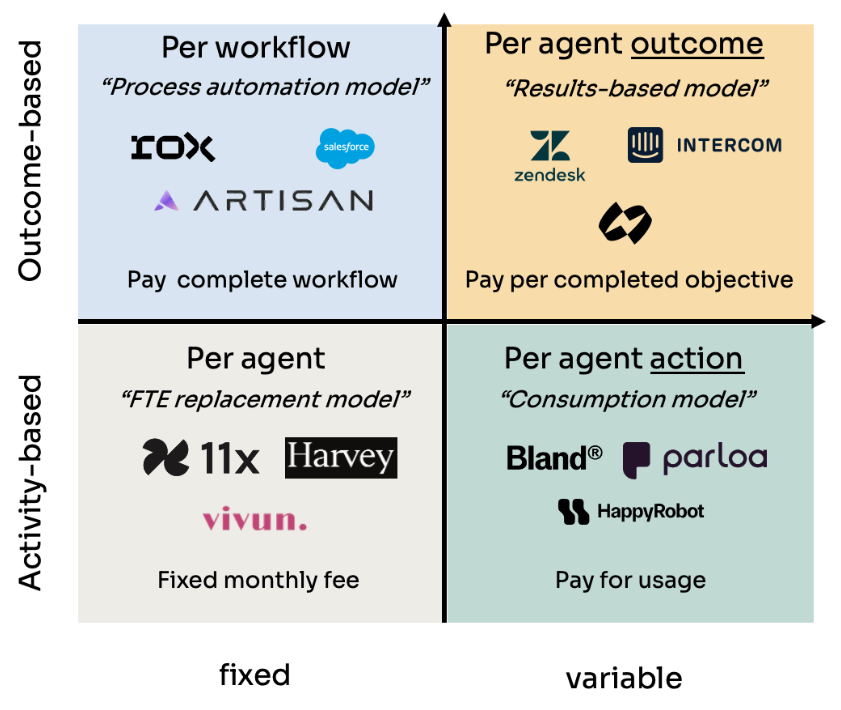
- Pricing models include **monthly subscriptions** (ranging from $15 to $5,000+), **usage-based** (around $2-$6 per resolution), and **custom solutions** (from $5,000 to over $500,000).
-
- The **Return on Investment (ROI)** for AI agents is significant, demonstrated through reduced labor costs, faster response times, and improved customer satisfaction.
-
- Businesses must consider **hidden costs** such as maintenance, training, and scalability to understand the true Total Cost of Ownership (TCO).
-
- AI support offers distinct advantages over human support, including *24/7 availability*, consistent performance, and lower long-term costs.
- Effective budget planning involves assessing needs, comparing pricing models, planning for future growth, and calculating potential ROI.
Table of contents
- AI Agent Pricing: A Complete Guide to Costs, ROI, and Implementation for Businesses
- Key Takeaways
- Introduction: Understanding AI Agents in Business
- Why Budget Planning Matters for AI Implementation
- Understanding AI Agent Pricing Models
- Cost vs. Benefit Analysis: The Real Value of AI Agents
- Hidden Costs: Understanding Total Cost of Ownership
- AI vs. Human Support: A Cost Comparison
- Creating a Small Business AI Budget
- Conclusion: Making the Right Investment in AI
- Frequently Asked Questions
Introduction: Understanding AI Agents in Business
Artificial Intelligence (AI) agents are transforming how businesses handle customer service and operations. These digital assistants, including AI chatbots and virtual receptionists, are becoming essential tools for companies of all sizes. They work around the clock, answering customer questions and handling routine tasks automatically.
The evolution of AI technology has made these tools more powerful and accessible than ever before. Today's AI agents can understand natural language, learn from interactions, and provide quick, accurate responses to customer inquiries. This advancement has opened new opportunities for businesses to improve their customer service while managing costs effectively. For a deeper dive into these intelligent automation tools, explore this comprehensive guide to AI agents.
Why Budget Planning Matters for AI Implementation
Creating a clear budget for AI implementation is *crucial*, especially for small and medium enterprises (SMEs). Many business owners mistakenly believe that AI technology is only for large corporations with big budgets. This couldn't be further from the truth.
Small businesses across various industries are successfully implementing AI agents within reasonable budgets. The key is understanding the different pricing models available and choosing one that aligns with your business needs and financial capabilities. For more insights on best AI chatbot solutions for small businesses, click here. Understanding the cost implications of chatbots is vital for effective planning.
Understanding AI Agent Pricing Models
The cost of implementing an AI agent varies based on several factors. Here are the main pricing models available:
Monthly Subscription:
- Basic plans: $15-$500 per month
- Enterprise plans: $1,200-$5,000 per month
Usage-Based Pricing:
- Approximately $2-$6 per resolution, making it scalable for varying interaction volumes.
Custom Solutions:
- Basic custom solutions: $5,000-$30,000 (one-time setup)
- Advanced AI-powered solutions: $75,000-$500,000+, often leveraging platforms like OpenAI's AI agent builder for no-code solutions.
Hybrid Models:
- A combination of setup fees, ongoing usage fees, and annual charges, offering flexibility.
Key factors affecting pricing include:
- Complexity level required for the AI agent's tasks and intelligence.
- Extensive customization needs to integrate with existing workflows and branding.
- Seamless integration requirements with other business systems.
- The anticipated volume of interactions the agent will handle.
- Specific features and capabilities, from natural language processing to advanced analytics.
For more detailed information on chatbot pricing and a broader look at pricing models across different chatbot solutions, these resources can be very helpful.
Cost vs. Benefit Analysis: The Real Value of AI Agents
When evaluating AI agent pricing, it's essential to consider the return on investment (ROI). Here's what businesses typically gain:
Measurable Benefits:
- Significantly reduced labor costs through automation of routine tasks.
- Ensuring 24/7 customer service availability, enhancing customer experience.
- Achieving faster response times, often in seconds.
- Leading to *improved customer satisfaction* and loyalty.
- Providing scalability during peak periods without needing to hire additional staff.
Real-World Example:
A mid-sized e-commerce company invested $20,000 in an AI agent and achieved:
- A remarkable 40% reduction in customer support costs.
- Response times reduced from minutes to *mere seconds*.
- Higher customer satisfaction ratings and, consequently, *improved customer retention*.
This example highlights the tangible benefits and potential ROI of chatbot implementation.
Hidden Costs: Understanding Total Cost of Ownership
The total cost of ownership (TCO) for an AI agent extends beyond the initial purchase price. Consider these additional, often overlooked, expenses:
Maintenance Costs:
- Regular software updates and patches to ensure optimal performance and security.
- Ongoing technical support fees, which can vary by vendor.
- Necessary platform improvements and upgrades as technology evolves.
Training Requirements:
- Investing in staff training programs to manage and interact with the AI agent effectively.
- Continuous system optimization to refine the agent's responses and capabilities.
- Regular content updates to keep the AI's knowledge base current.
Scalability Expenses:
- Costs associated with adding additional features or expanding capabilities as business needs grow.
- Increased capacity costs to handle a higher volume of interactions.
- Fees for integration with new systems or platforms in the future.
Understanding these hidden chatbot costs is crucial for a realistic budget.
AI vs. Human Support: A Cost Comparison
Understanding the financial difference between AI and human support helps in making informed decisions:
Human Support Costs:
- Significant outlays for salaries and benefits.
- Continuous training expenses for new hires and skill development.
- Costs related to workplace infrastructure (office space, equipment, utilities).
- Limited availability, typically 8-12 hours a day.
- Linear scaling costs; adding more support requires proportional increases in all other costs.
AI Support Advantages:
- 24/7 availability, ensuring constant customer engagement.
- Consistent performance without fatigue or mood fluctuations.
- Lower long-term costs compared to human agents.
- Exponential scaling capability to handle massive volumes without proportional cost increases.
- Delivers *instant response times*, greatly enhancing customer satisfaction.
The transition to AI agents transforming work highlights these efficiencies. For a detailed breakdown of chatbot pricing versus human agents, consult available resources.
Creating a Small Business AI Budget
Follow these steps to develop an effective AI implementation budget:
- Assess Your Needs:
- Calculate current customer service volume and interaction patterns.
- Identify common customer queries and pain points that AI can address.
- Determine required features and functionalities for your AI agent.
- Evaluate integration needs with your existing CRM, ERP, or other systems.
- Compare Pricing Models:
- Decide between monthly subscription vs. a one-time payment.
- Consider usage-based vs. fixed pricing based on your expected volume.
- Evaluate the pros and cons of hybrid model considerations.
- Plan for Growth:
- Anticipate future scaling requirements as your business expands.
- Budget for additional feature needs and potential upgrades.
- Consider future integration possibilities with new tools or platforms.
- Calculate ROI Potential:
- Use this simple formula to project your return:
- ROI = (Savings + Revenue Improvements – Total Cost) / Total Cost
This formula helps in understanding how much a chatbot costs versus the value it brings.
Budget Planning Checklist:
- ☑ Map current service volumes and customer interaction data.
- ☑ List all required features and desired capabilities.
- ☑ Compare vendor pricing models and offerings carefully.
- ☑ Calculate potential savings and revenue improvements.
- ☑ Consider future growth plans and scalability needs.
- ☑ Account for all maintenance, training, and hidden costs.
Conclusion: Making the Right Investment in AI
Investing in an AI agent is a *strategic decision* that can transform your customer service operations. While the initial costs may seem significant, the long-term benefits often justify the investment through reduced operational costs, improved customer satisfaction, and increased efficiency.
When evaluating AI solutions, remember to:
- Consider both immediate and long-term costs.
- Calculate potential ROI carefully and realistically.
- Choose a pricing model that *fits your business* and budget.
- Plan for scalability and growth to future-proof your investment.
- Account for all aspects of Total Cost of Ownership (TCO).
Take the next step by consulting with AI vendors to get a customized cost analysis for your specific business needs. With careful planning and the right approach, implementing an AI agent can be a game-changing investment for businesses of any size.
For further details on comprehensive chatbot cost analysis, additional resources are available.
Frequently Asked Questions
-
- What are the main pricing models for AI agents?The main pricing models include monthly subscriptions (basic plans from $15-$500/month, enterprise from $1,200-$5,000/month), usage-based pricing ($2-$6 per resolution), custom solutions ($5,000-$500,000+), and hybrid models combining setup, usage, and annual fees.
-
- What are the key benefits of implementing AI agents for businesses?Key benefits include reduced labor costs, 24/7 customer service availability, faster response times, improved customer satisfaction, and enhanced scalability during peak periods, all contributing to a strong ROI.
-
- What hidden costs should businesses consider when budgeting for AI agents?Hidden costs in the Total Cost of Ownership (TCO) include ongoing maintenance (software updates, technical support fees), training requirements (staff training, system optimization), and scalability expenses (additional features, increased capacity, new system integrations).
- How can a small business create an effective AI budget?An effective AI budget involves assessing current needs and customer service volume, comparing various pricing models, planning for future growth and scalability, and calculating the potential Return on Investment (ROI) using the formula: (Savings + Revenue Improvements – Total Cost) / Total Cost.
4 thoughts on “AI Agent Pricing: A Complete Guide to Costs, ROI, and Implementation for Businesses”
Comments are closed.