The Ultimate Checklist: Top AI Client Red Flags 2025 to Protect Your Agency
The Ultimate Checklist: Top AI Client Red Flags 2025 to Protect Your Agency
Estimated reading time: 9 minutes
Key Takeaways
- Identifying financial, operational, and communication red flags is crucial for agency health and profitability in the booming AI industry.
- Unrealistic expectations regarding AI capabilities, budget, and project timelines are major warning signs that can lead to project failure.
- Poor data quality, unclear success metrics, and a casual approach to legal compliance can derail AI projects and expose your agency to risk.
- Proactive vetting, AI-powered client screening, and ironclad contracts are essential defensive strategies to protect your agency.
- Knowing when and how to professionally decline or exit a problematic client relationship is one of the most profitable decisions an agency can make.
Table of Contents
The AI industry is booming, and agencies are seeing an unprecedented influx of potential clients. However, not every prospect that walks through your door will be good for business. As we move into 2025, identifying AI client red flags early can save your agency from costly mistakes, endless revision cycles, and damaged relationships.
This comprehensive guide will help you spot and avoid problematic AI clients before signing that contract. We'll explore the major warning signs across financial, operational, and communication domains, equipping you with a practical framework for client evaluation.
Financial & Budgetary Warning Signs
Conversations about money often reveal the first major red flags in potential AI client relationships. Here are the key financial warning signs to watch for:
Excessive Price Haggling
- Constant attempts to negotiate prices down
- Comparing your services to generic AI tools
- Refusing to acknowledge the value of strategic expertise
- Treating AI development as a commodity
This pattern of devaluation typically indicates a client who won't respect your expertise throughout the project. [Source]
Inadequate Budget Allocation
- Budget proposals far below market rates
- Expecting enterprise-level results with startup budgets
- Resistance to discussing realistic costs
- Lack of understanding about AI development investments
When clients show these signs, they're likely to be perpetually disappointed with what their budget can achieve. [Source]
Payment History Concerns
- History of late payments with other vendors
- Reluctance to discuss payment terms
- Requesting unusual payment structures
- Lack of financial transparency
Pro Tip: Use AI tools to research a company's financial stability before your discovery calls. [Source]
Free Work Requests
- Asking for “proof of concept” work without compensation
- Expecting extensive pre-contract deliverables
- Requesting multiple rounds of free consultations
- Using “future work” as leverage for free services
These requests often indicate a pattern of devaluing professional services that will continue throughout the relationship. [Source]
Unrealistic Expectations & Scope Management Red Flags
This section focuses on how undefined goals and shifting requirements can doom your AI projects from the start.
Unrealistic AI Capabilities Expectations
- Expecting human-level general intelligence
- Demanding 100% accuracy from day one
- Refusing to acknowledge AI limitations
- Comparing your custom solutions to consumer AI tools
The AI Denier vs. The AI Replacement Thinker
- AI Deniers: Refuse to acknowledge industry changes
- AI Replacement Thinkers: Believe AI eliminates need for human expertise
- Both extremes signal fundamental misunderstandings
- Watch for phrases like “ChatGPT can do this for free.” [Source]
Scope Creep Warning Signs
- Vague initial requirements
- Using phrases like “and other related tasks”
- Frequent scope changes during discovery
- Resistance to detailed project specifications
The “we'll know it when we see it” attitude is a major red flag for endless revision cycles. [Source]
Unclear KPIs and Success Metrics
- Inability to define success criteria
- Moving goalposts
- Resistance to establishing metrics
- Vague performance expectations
Micromanagement Tendencies
- Excessive oversight requests
- Distrust in established processes
- Constant status update demands
- Interference with technical decisions
Endless Revision Cycle Patterns
- Inability to make final decisions
- Constantly changing direction
- Perfectionist tendencies
- Lack of clear approval process [Source]
Data, Legal & Compliance Red Flags
The technical and legal risks in AI projects require special attention to these warning signs.
Data Quality and Availability Issues
- No organized data infrastructure
- Poor quality or insufficient data
- Unclear data access protocols
- Resistance to data cleanup investments
Legal Compliance Concerns
- Casual approach to data privacy
- Lack of GDPR/CCPA awareness
- No digital transformation strategy
- Reliance on outdated manual processes [Source]
NDA Red Flags
- Overly broad restrictions
- One-sided protection clauses
- Unusual intellectual property claims
- Resistance to standard protective measures
Communication & Professionalism Red Flags
Poor communication early on often predicts project failure.
Communication Problem Indicators
- Irregular or delayed responses
- Unclear decision-making processes
- Unable to articulate project goals
- Poor internal communication structure
Key Questions to Ask:
- “How have you measured success with previous consultants?”
- “What's your typical decision-making process?”
- “Who are the key stakeholders involved?” [Source]
Project Ghosting Warning Signs
- Inconsistent engagement
- Missing scheduled meetings
- Delayed feedback cycles
- Poor responsiveness patterns
High Agency Churn Indicators
- History of short-term agency relationships
- Negative references from previous partners
- Pattern of blaming external partners
- Resistance to discussing past projects [Source]
Proactive Defence: Vetting & Contractual Protection
Transform these red flags into actionable protection strategies.
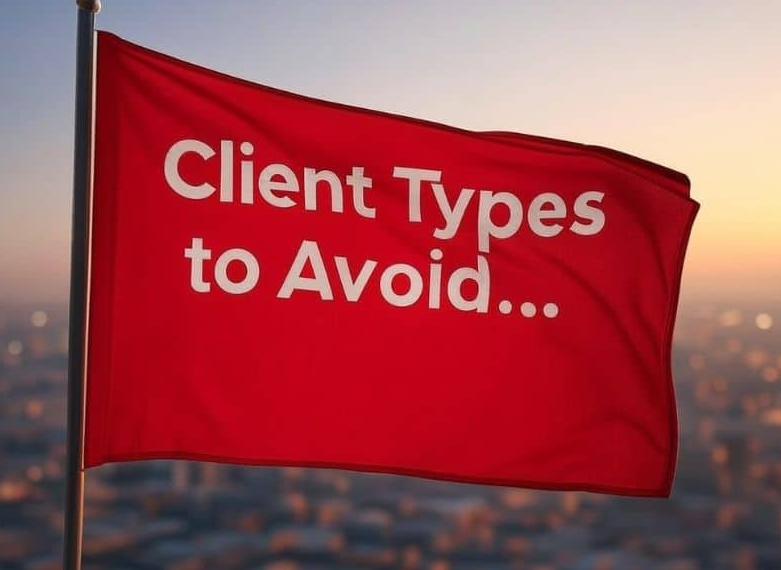
Problem Client Archetypes to Avoid
- The Micromanager
- The Unrealistic Dreamer
- The Chronic Haggler
- The Scope Creeper
- The Data Denier
AI-Powered Client Screening
- Use AI tools for financial research
- Track interaction patterns
- Analyze communication styles
- Monitor industry reputation [Source]
Creating an Effective Blacklist
- Document problematic behaviors
- Share information internally
- Maintain professional discretion
- Update regularly with new patterns
Contract Protection Strategies
- Clear termination clauses
- Detailed scope definitions
- Payment protection measures
- Change request procedures
Professional Exit Strategies
When relationships become untenable, you have three options:
- Address issues directly with clear boundaries
- Modify the relationship with protective measures
- Complete current obligations and decline future work [Source]
Content Marketing Specific Considerations
- Watch for speed-obsessed clients
- Be wary of AI transparency resistance
- Avoid those seeking unrealistically low pricing
Conclusion
In the rapidly evolving AI agency landscape of 2025, your most important asset isn't your technology – it's your client list. Learning to identify and act on these red flags isn't just about avoiding problems; it's about making room for ideal clients who value your expertise and contribute to your agency's growth.
Remember that proper vetting is an investment in your agency's future. Every problematic client you avoid creates space for a partner who appreciates your value, respects your process, and contributes to a mutually beneficial relationship.
Take these warning signs seriously, trust your instincts, and don't be afraid to say “no” to projects that raise multiple red flags. In the long run, turning down the wrong client is one of the most profitable decisions you can make.
By implementing these screening protocols and maintaining high standards for client acceptance, you'll build a stronger, more sustainable agency that attracts and retains the kind of clients who drive long-term success.
Frequently Asked Questions
What is the single biggest financial red flag to watch for in a new AI client?
While any financial warning sign is concerning, requests for extensive free work (e.g., unpaid “proof of concept” projects) are particularly dangerous. This indicates a fundamental lack of respect for your time and expertise, a trait that is unlikely to change once a contract is signed.
How can I handle a client with unrealistic expectations about AI?
Education and documentation are key. Start by gently educating them on the real-world limitations and capabilities of current AI technology. If they persist, clearly document what is and isn't possible within their budget and timeline in your proposal and contract. If they refuse to accept these realities, it's often best to walk away.
What's the most important clause to have in my agency's contract?
A detailed and specific “Scope of Work” is arguably the most critical. This clause should precisely define all deliverables, processes, and success metrics. It should also include a clear procedure for handling change requests, which helps prevent scope creep and ensures you are compensated for any additional work.
When is it time to “fire” a client or end a project?
You should consider ending a relationship when multiple red flags are present and direct attempts to address the issues have failed. If a client consistently disrespects your boundaries, causes significant team stress, or frequently defaults on payment, it's time to activate the termination clause in your contract and pursue a professional exit strategy.