

AI Receptionist For Medical Office: A Complete Guide to Modern Healthcare Reception
AI Receptionist For Medical Office: A Complete Guide to Modern Healthcare Reception
Estimated reading time: 8 minutes
Key Takeaways
-
- AI receptionists are *transforming* medical office front-desk operations by enhancing efficiency and patient care.
-
- These sophisticated systems can manage appointments, answer patient inquiries, and handle administrative tasks, offering *24/7 availability*.
-
- *HIPAA compliance* is paramount; any AI solution must rigorously protect patient privacy and data security.
-
- Practical applications include automated appointment management, improved patient communication through multilingual support, and streamlined administrative duties.
-
- AI reception offers significant advantages over traditional methods, providing *consistent performance* and *simultaneous interaction handling*.
-
- Successful implementation requires a structured approach: thorough assessment, selection of HIPAA-compliant providers, and a phased transition strategy.
- Future trends indicate even more advanced capabilities, including enhanced natural language processing, emotional intelligence, and seamless integration with existing healthcare systems.
Table of Contents
The face of healthcare is changing rapidly, and nowhere is this more evident than in medical office reception areas. Today's medical practices face increasing demands for efficiency while maintaining high-quality patient care. Traditional receptionists have long been the backbone of medical offices, managing everything from appointments to patient inquiries. However, recent advances in artificial intelligence are *transforming* how medical offices handle these crucial front-desk operations.
The Evolution of Reception Services in Healthcare
The healthcare industry is experiencing a *significant shift* in how it manages patient interactions. While traditional reception roles focused on in-person staff handling appointments and phone calls, modern medical offices are embracing technological solutions to enhance their operations.
What is an AI Receptionist?
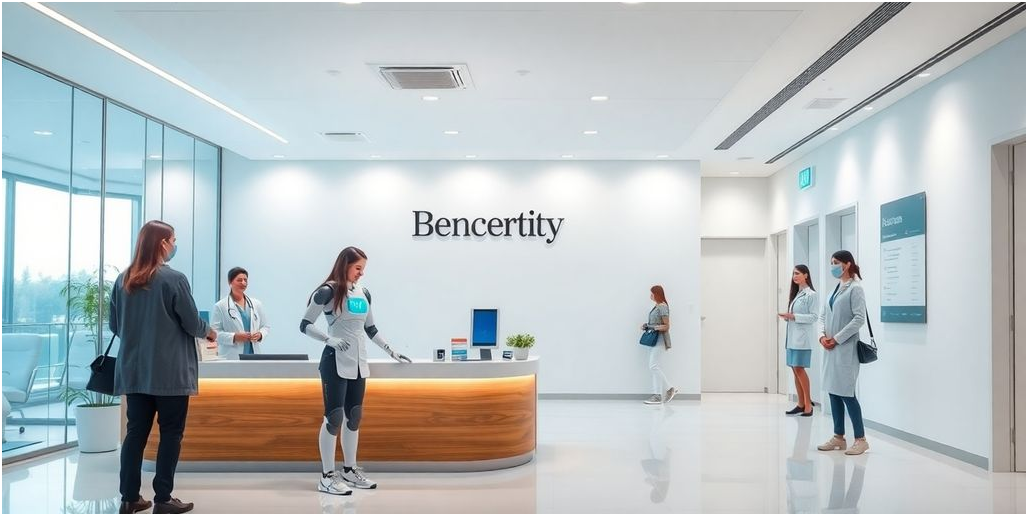
An AI receptionist is a sophisticated software system that uses artificial intelligence to handle many of the tasks traditionally performed by human receptionists. These *virtual assistants* can:
-
- Schedule and manage appointments
-
- Answer common patient questions
-
- Handle routine administrative tasks
-
- Provide 24/7 availability
- Process initial patient intake information
The implementation of AI receptionists helps medical offices maintain *constant availability* while improving efficiency and reducing operational costs. These systems work tirelessly to ensure that patient needs are met promptly and accurately. To learn more about the broader concept of these intelligent systems, check out:
HIPAA Compliance: A Critical Component
When it comes to AI receptionists in healthcare settings, *HIPAA compliance is non-negotiable*. Any digital receptionist solution must fully adhere to the Health Insurance Portability and Accountability Act regulations to protect patient privacy and maintain confidentiality in all interactions.
Key aspects of HIPAA-compliant AI systems include:
-
- Encrypted data transmission
-
- Secure storage of patient information
-
- Strict access controls
-
- Regular compliance audits
- Comprehensive audit trails
Medical offices must ensure their AI receptionist providers have signed Business Associate Agreements (BAA) and maintain *rigorous security protocols* to protect patient health information.
Practical Applications: AI Receptionist Use Cases in Medical Offices
The implementation of AI receptionists in medical settings offers numerous benefits through various use cases: For a comprehensive overview of how AI aClick Heregents are transforming various sectors, including those similar to healthcare, explore:
Appointment Management
-
- Automated scheduling and rescheduling
-
- Real-time calendar updates
-
- Appointment reminders and confirmations
- Virtual queuing systems
To delve deeper into how AI is revolutionizing scheduling and minimizing missed appointments, read:
Patient Communication
-
- 24/7 availability for basic inquiries
-
- Multilingual support
-
- Quick response to frequently asked questions
- Emergency triage guidance
For insights into how AI-powered chatbots enhance customer service and operations, especially concerning quick responses and multilingual support, consider:
And for advanced call handling and routing solutions, see:
Administrative Tasks
-
- Insurance verification
-
- Patient registration
-
- Document management
- Basic billing inquiries
Comparing Traditional and AI Reception Solutions
To understand the impact of AI receptionists, it's helpful to compare them with traditional reception services across different industries. Like real estate answering services, medical office AI receptionists offer *significant advantages*:
Traditional Reception
-
- Limited to business hours
-
- Subject to human error
-
- Can handle one call at a time
-
- May have language limitations
- Requires breaks and time off
AI Reception
-
- 24/7 availability
-
- Consistent performance
-
- Handles multiple interactions simultaneously
-
- Supports multiple languages
- Never needs time off
Similar success has been seen in law firms (law firm answering service AI) and home services sectors, where AI solutions have dramatically improved customer service efficiency.
Implementing an AI Receptionist: Transition Strategy
Medical offices considering the switch to an AI receptionist solution should follow a *structured approach*:
Assessment Phase
-
- Evaluate current reception workload
-
- Identify pain points and bottlenecks
-
- Determine specific needs and requirements
- Review existing technology infrastructure
Selection Process
-
- Research HIPAA-compliant providers
-
- Request demonstrations and trials
-
- Check references and case studies
- Review security protocols and BAA terms
Implementation Steps
-
- Start with a pilot program
-
- Gather feedback from all stakeholders
-
- Make necessary adjustments
- Scale up gradually
Just as home services answering AI has transformed customer service in that industry, medical offices can benefit from a *well-planned transition* to AI reception services.
Technical Considerations and Integration
For successful implementation, medical offices must consider:
System Integration
-
- Electronic Health Record (EHR) compatibility
-
- Existing scheduling software integration
-
- Phone system compatibility
- Security infrastructure requirements
Staff Training Requirements
-
- System operation procedures
-
- Troubleshooting protocols
-
- Emergency override procedures
- Patient assistance guidelines
Monitoring and Maintenance
-
- Performance metrics tracking
-
- Regular system updates
-
- Compliance monitoring
- Quality assurance checks
For a deeper understanding of monitoring in intelligent automation systems, read:
Future Trends in Medical Office AI Reception
The future of AI receptionists in healthcare looks *promising*, with several emerging trends:
Advanced Technologies
-
- Improved natural language processing
-
- Enhanced voice recognition
-
- Emotional intelligence capabilities
- Predictive scheduling algorithms
Integration Capabilities
-
- Seamless telehealth coordination
-
- Advanced insurance verification
-
- Automated payment processing
- Interactive patient education
Conclusion: Embracing the Future of Medical Reception
AI receptionists represent a *significant advancement* in medical office management, offering improved efficiency, enhanced patient experience, and robust HIPAA compliance. As technology continues to evolve, these systems will become increasingly sophisticated, providing even greater value to medical practices and their patients.
To stay competitive and provide the best possible patient care, medical offices should consider implementing AI receptionist solutions that align with their specific needs while maintaining *strict compliance* with healthcare regulations.
Ready to modernize your medical office reception? Consider these next steps:
-
- Assess your current reception needs
-
- Research HIPAA-compliant AI providers
-
- Plan a phased implementation approach
-
- Prepare staff for the transition
- Monitor and optimize performance
By embracing AI receptionist technology, medical offices can improve operational efficiency, enhance patient satisfaction, and position themselves for *success in the evolving healthcare landscape*.
3 thoughts on “AI Receptionist For Medical Office: A Complete Guide to Modern Healthcare Reception”
Comments are closed.