The Complete History of AI Agents: From Simple Programs to Modern Intelligence
Estimated reading time: 7 minutes
Key Takeaways
-
- AI agents have evolved from basic programs to sophisticated digital assistants.
-
- Alan Turing's question in 1950 and the Turing Test marked the beginning of AI development.
-
- Early AI programs like Logic Theorist, ELIZA, and PARRY laid foundational groundwork but were rule-based.
-
- AI agents progressed through Web 1.0 (static, rule-based), Web 2.0 (interactive, recommendation systems), and Web 3.0 (autonomous, generative AI).
-
- Key moments include the Turing Test, ELIZA, expert systems, the machine learning revolution, and large language models.
-
- Small businesses benefit from AI agents through increased efficiency, better customer service, and reduced costs.
-
- Modern virtual agents use natural language understanding and context awareness, contrasting with pre-AI boom limitations.
-
- Foundational research by Turing, Newell & Simon, Sutton & Barto, and Russell & Norvig has shaped AI agents.
- The future promises increased autonomy, better collaboration, more sophisticated reasoning, and human-like interactions.
Table of contents
The History of AI Agents: A Journey Through Time
Artificial Intelligence (AI) agents have transformed from basic computer programs into sophisticated digital assistants that shape our daily lives. These intelligent automation systems represent one of technology's most fascinating evolution stories, marking humanity's progress in creating machines that can think, learn, and solve problems.
Today, we'll explore the complete history of AI agents, from their humble beginnings to their current state as powerful tools that help businesses and individuals alike. Whether you're familiar with virtual assistants like Siri or wondering how chatbots became so smart, this journey through time will help you understand how we got here. AI agent chatbot virtual assistant
Source: https://www.wwt.com/blog/the-evolution-of-ai-agents-from-simple-programs-to-agentic-ai
Origins of Early AI Agents
The story of AI agents begins with a simple question: Can machines think? This question, posed by Alan Turing in 1950, led to the creation of the famous Turing Test. This test became the first way to measure machine intelligence, setting the stage for all future AI development.
Early AI programs showed promise but were very basic:
- Logic Theorist (1956): The first AI program that could solve math problems
- ELIZA (1966): The world's first chatbot, which pretended to be a therapist
- PARRY (1972): A more advanced chatbot that could act like a person with specific behaviors
These early programs laid the groundwork for everything that followed, though they were limited to following simple rules and couldn't truly learn or understand context. memory-based AI agents
Source: https://www.mindset.ai/blogs/how-have-ai-agents-evolved-over-time
Source: https://www.tableau.com/data-insights/ai/history
The Evolution of Intelligent Agents Through Web Eras
Web 1.0: The Static Beginning
During the Web 1.0 era, AI agents were simple and could only follow basic instructions. They worked like digital clerks, performing the same tasks over and over without learning or improving.
Key features of Web 1.0 AI agents:
- Rule-based scripts
- Simple automation
- Basic chatbots like ELIZA
- No ability to learn from interactions
Web 2.0: The Interactive Revolution
The Web 2.0 period brought significant changes to AI agents. They became more dynamic and could interact with users in new ways:
- Smarter chatbots that could handle different types of questions
- Recommendation systems that could suggest products or content
- Basic personalization features
- Ability to process user feedback
Web 3.0: The Intelligent Present
Today's Web 3.0 era has introduced incredibly advanced AI agents:
- Autonomous decision-making abilities
- Sophisticated reasoning capabilities
- Blockchain-based intelligent systems
- Generative AI assistants that can create content
- Multi-agent collaboration systems
Source: https://www.wwt.com/blog/the-evolution-of-ai-agents-from-simple-programs-to-agentic-ai
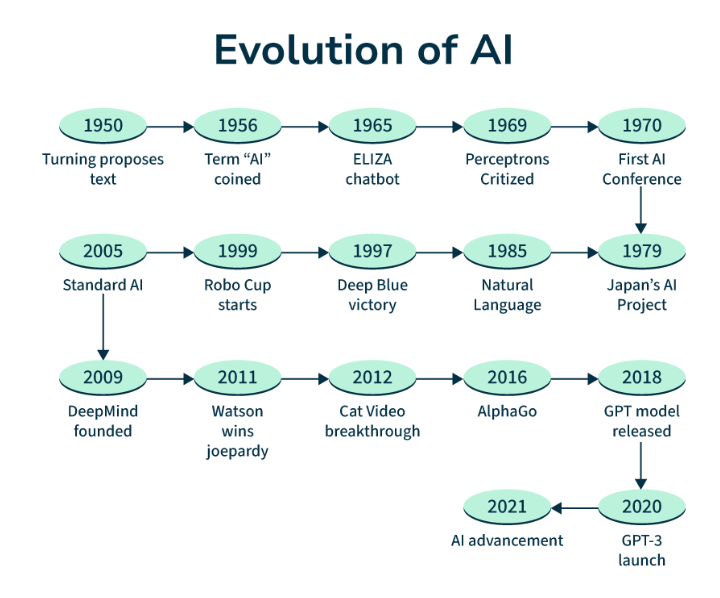
Timeline of AI Agent Development
Let's walk through the key moments that shaped AI agent history:
1950s:
- Turing Test introduction
- Logic Theorist development
- General Problem Solver creation
1960s:
- ELIZA chatbot launch
- First natural language processing experiments
1970s:
- Development of rule-based expert systems
- Introduction of PARRY
- Advanced problem-solving programs
1980s:
- Knowledge-based systems emerge
- Logic programming becomes popular
- First reinforcement learning systems
1990s:
- Introduction of intelligent agents
- Early virtual assistants
- Advanced automation systems
2000s:
- Machine learning revolution begins
- IBM Watson development
- Commercial chatbots appear
2010s:
- Deep learning breakthroughs
- Launch of Siri and Alexa
- Advanced conversational AI
2020s:
- Agentic AI emergence
- Multi-agent collaboration systems
- GPT and large language models
Source: https://www.tableau.com/data-insights/ai/history
AI Agents in Small Business Operations
The adoption of AI agents by small businesses shows how these tools have become more accessible and useful over time. ultimate guide ai agents small business
Early Business Uses:
- Basic automation for inventory
- Simple scheduling systems
- Customer database management
Current Business Applications:
- Advanced customer support chatbots
- Personalized recommendation engines
- Automated marketing systems
- Smart inventory management
- Sales forecasting
Benefits for Small Businesses:
- Increased efficiency
- Better customer service
- Reduced operational costs
- Improved decision-making
- 24/7 customer support capability
Source: https://www.wwt.com/blog/the-evolution-of-ai-agents-from-simple-programs-to-agentic-ai
The Rise of Virtual Agents in Customer Service
Pre-AI Boom Era
Before the AI boom, virtual agents were limited:
- Simple FAQ responses
- Basic keyword matching
- No context understanding
- Limited language capabilities
- Frequent user frustration
Post-AI Boom Era
Modern virtual agents offer sophisticated features:
- Natural language understanding
- Context-aware responses
- Multi-language support
- Emotional intelligence
- Learning from interactions
- Problem-solving capabilities
Source: https://www.mindset.ai/blogs/how-have-ai-agents-evolved-over-time
Key Research Insights in AI Agent Development
Foundational Research
Important theoretical work that shaped AI agents:
- Turing's computational theory
- Newell and Simon's problem-solving approach
- Sutton and Barto's reinforcement learning
- Russell & Norvig's comprehensive AI framework
Modern Research Impact
Recent research has led to:
- Improved agent architecture
- Better decision-making models
- Advanced communication protocols
- Multi-agent system design
- Learning optimization techniques
Source: https://www.wwt.com/blog/the-evolution-of-ai-agents-from-simple-programs-to-agentic-ai
The Future of AI Agents
As we look ahead, AI agents continue to evolve:
Emerging Trends:
- Increased autonomy
- Better collaboration abilities
- More sophisticated reasoning
- Enhanced learning capabilities
- Stronger security features AI agents transform work
Expected Developments:
- More human-like interactions
- Improved problem-solving
- Better emotional understanding
- Stronger ethical frameworks
- Advanced decision-making employees thrive ai workplace
Source: https://ai100.stanford.edu/2016-report/appendix-i-short-history-ai
Conclusion
The history of AI agents shows an amazing journey from simple programs to sophisticated digital assistants. From ELIZA's basic responses to today's advanced AI systems, we've seen incredible progress in how machines can help us think, work, and solve problems.
Looking forward, AI agents will continue to evolve, becoming even more capable and integrated into our daily lives. Understanding their history helps us appreciate how far we've come and imagine where we might go next.
The future of AI agents promises even more exciting developments as technology continues to advance. Whether in business, personal assistance, or new applications we haven't yet imagined, AI agents will play an increasingly important role in shaping our digital world.
This story of progress and innovation continues to unfold, making the history of AI agents not just a tale of the past, but a window into our future. As we move forward, the lessons learned from this history will help guide the next generation of AI development.