

The Ultimate Guide to AI Agent Pricing Models in 2025
The Ultimate Guide to AI Agent Pricing Models in 2025
Estimated reading time: 10 minutes
Key Takeaways
- The AI agent pricing landscape is shifting towards hybrid and value-centric models that connect costs to client outcomes.
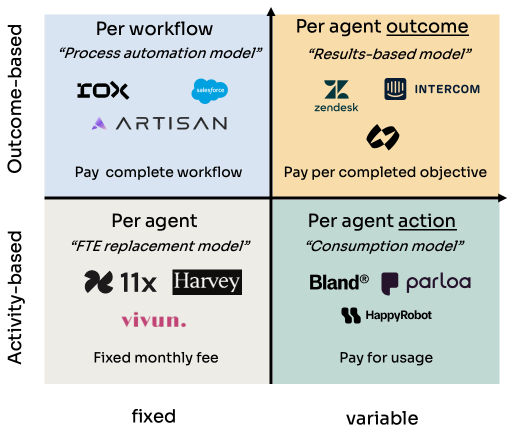
- Foundational models include recurring subscriptions, one-time project fees, flat-rate packages, and usage-based pricing.
- Performance-driven models like Pay Per Lead, Value-Based, and ROI-Based fees are increasingly popular for aligning provider and client goals.
- Total costs must include hosting, maintenance, support, and licensing, which agencies need to factor into their pricing.
- Successful pricing strategies require transparency, clear value propositions, and competitive market analysis to demonstrate a strong ROI.
Table of Contents
- The Ultimate Guide to AI Agent Pricing Models in 2025
- Key Takeaways
- The Foundational Pricing Models for AI Agents
- Performance & Value-Driven Models
- Advanced & Hybrid Pricing Strategies for 2025
- Factoring in All Costs & Agency Considerations
- Managing Pricing and Sales
- Conclusion
- Frequently Asked Questions (FAQ)
Are you trying to figure out how much AI agents should cost? You're not alone. As artificial intelligence transforms business, understanding the ai agent pricing model 2025 landscape has become crucial for both buyers and sellers.
This comprehensive guide breaks down every pricing structure you need to know. Whether you're a business comparing services or an agency setting rates, you'll learn exactly how AI agent pricing works in 2025.
Let's dive into the details that matter.
The Foundational Pricing Models for AI Agents
1. SaaS Recurring AI Agent Subscription
A subscription model means paying a regular fee (monthly or yearly) for ongoing AI agent services. This approach has become a standard in the industry, especially for businesses that need consistent service.
Key points:
- SMBs typically see tiered plans around $5,000 per year
- Enterprise solutions range from $10,000 to $100,000+ annually
- Includes regular updates and ongoing support
- Provides predictable costs for better budgeting
This model works best for companies needing long-term AI support with regular updates and maintenance. [Source]
2. One-Time Fee AI Agent Projects
Some businesses prefer paying a single upfront fee for a specific AI agent build. These project-based costs typically range from $5,000 to $100,000+, depending on complexity.
Benefits:
- Clear, defined scope
- No ongoing commitments
- Perfect for pilot programs
- Better budget control
This option suits companies with well-defined, standalone AI needs. [Source]
3. AI Agent Flat Rate Packages
Flat-rate packages offer different service levels at fixed prices. This tiered approach includes:
- Basic Package: $99-$500/month
- Essential automation features
- Standard support
- Limited capabilities
- Enterprise Package: $1,000-$5,000+/month
- Advanced analytics
- Full personalization
- Premium support
- Unlimited capabilities
This structure makes it easy for clients to choose based on their needs and budget. [Source]
4. AI Agent Usage-Based Pricing
Pay-as-you-go pricing links costs directly to consumption. You only pay for what you use, whether that's:
- Number of tasks completed
- Hours of operation
- Amount of data processed
- API calls made
Current rates show significant savings:
- AI agents: $0.25-$0.50 per interaction
- Human agents: $3-$6 per interaction
This model offers excellent cost efficiency for organizations with variable AI needs. [Source]
Performance & Value-Driven Models
1. Pay Per Lead AI Agent Model
This high-stakes model ties pricing to actual lead generation results. It's perfect for:
- Marketing agencies
- Sales organizations
- Lead generation companies
The risk/reward nature means you only pay for successful outcomes, making it attractive for performance-focused businesses. [Source]
2. Value-Based Pricing AI Agents
Value-based pricing connects costs to concrete business benefits. For example:
- Revenue increases
- Cost savings
- Efficiency gains
- Productivity improvements
Major players like IBM and Moveworks use this model to justify higher-end contracts by showing clear ROI, such as 50% reductions in help desk time. [Source]
3. ROI-Based AI Agent Fees
This model charges a percentage of the proven return on investment. Benefits include:
- Perfect alignment of provider/client interests
- Clear performance metrics
- Long-term partnership focus
- Scalable pricing based on success
It's ideal for enterprise-level implementations where results are easily measured. [Source]
Advanced & Hybrid Pricing Strategies for 2025
1. Hybrid Pricing AI Agency 2025
Modern pricing often combines multiple models:
- Base subscription fee
- Usage-based components
- Performance bonuses
Starting packages typically range from $25,000-$100,000 upfront, with variable costs based on results or usage. [Source]
2. AI Agent Upsell Pricing Tiers
Strategic tiering encourages growth:
- Basic features in lower tiers
- Premium features in higher tiers
- Clear upgrade paths
- Additional capacity options
- Enhanced support levels
This approach helps clients start small and scale up as needed. [Source]
3. Freemium AI Agent Funnel Strategy
The freemium model offers:
- Limited free version
- Basic features at no cost
- Clear upgrade path
- Wide user base potential
Companies like Zapier demonstrate how free trials can convert to hundreds of dollars in monthly revenue per customer. [Source]
Factoring in All Costs & Agency Considerations
1. AI Agent Hosting Cost Calculator
Essential costs to consider:
- Computing resources
- Infrastructure requirements
- Platform licensing
- Maintenance expenses
- Support staff
Agencies must factor these baseline costs before adding profit margins. [Source]
2. AI Agent Monthly Maintenance Cost & Support Retainer Pricing
Ongoing services typically include:
- Regular updates
- System monitoring
- Technical support
- Performance optimization
- Security maintenance
Support retainers provide steady revenue for agencies while ensuring reliable service for clients. [Source]
3. Markup White Label AI Agents
Reselling considerations:
- Platform licensing costs
- Support infrastructure
- Profit margins
- Competition analysis
- Value-added services
White-label solutions need careful pricing to remain competitive while ensuring profitability. [Source]
4. Competitive Pricing AI Agencies 2025
- Regular competitor analysis
- Clear value proposition
- Transparent pricing
- Demonstrated ROI
- Flexible options
Studies show AI agents can reduce costs by 85-90% compared to human agents. [Source]
Managing Pricing and Sales
1. Pricing Table Template AI Services
Effective pricing tables should:
- Show clear value tiers
- Highlight key features
- Compare options easily
- Include common add-ons
- Display pricing transparently
Visual pricing helps clients make informed decisions quickly. [Source]
2. Discount Strategies AI Agent Sales
Strategic discounting includes:
- Multi-year commitments
- Prepayment options
- Volume discounts
- Limited-time offers
- Early adopter pricing
Use discounts carefully to avoid devaluing your service. [Source]
3. Raising Prices on AI Agent Clients
Best practices for price increases:
- Clear communication
- Advance notice
- Value justification
- Grandfather options
- Transparent reasoning
Always tie increases to enhanced value or expanded services. [Source]
Conclusion
The ai agent pricing model 2025 landscape is complex and evolving. The trend is clearly moving toward hybrid and value-centric approaches that align provider success with client outcomes.
Choose your pricing model based on:
- Business goals
- Target market
- Service complexity
- Competition
- Value delivery
Remember, there's no one-size-fits-all solution. The best pricing model is the one that creates sustainable value for both provider and client while supporting long-term growth and innovation.
Whether you're buying or selling AI agent services, focus on transparent pricing that clearly communicates value and supports your strategic objectives. The future of AI agent pricing is flexible, scalable, and increasingly tied to measurable business results.
Frequently Asked Questions (FAQ)
1. What is the most common AI agent pricing model in 2025?
The most common models are hybrid, combining a base subscription with usage-based or performance-driven components. This provides predictability for clients while aligning costs with actual value and consumption.
2. How much should a small business expect to pay for an AI agent?
Small to medium-sized businesses (SMBs) can find subscription plans starting around $5,000 per year or basic flat-rate packages from $99 to $500 per month. One-time project fees for simpler agents can start as low as $5,000.
3. What's the difference between value-based and ROI-based pricing?
Value-based pricing links the cost to the potential or demonstrated business benefits (like efficiency gains or cost savings). ROI-based pricing is more direct, charging a percentage of the proven financial return generated by the AI agent.
2 thoughts on “The Ultimate Guide to AI Agent Pricing Models in 2025”