AI Agent vs Chatbot vs Virtual Assistant: Understanding the Key Differences
AI Agent vs Chatbot vs Virtual Assistant: Understanding the Key Differences
Estimated reading time: 6 minutes
Key Takeaways
- AI Agents, Chatbots, and Virtual Assistants, while seemingly similar, possess *distinct capabilities* and applications.
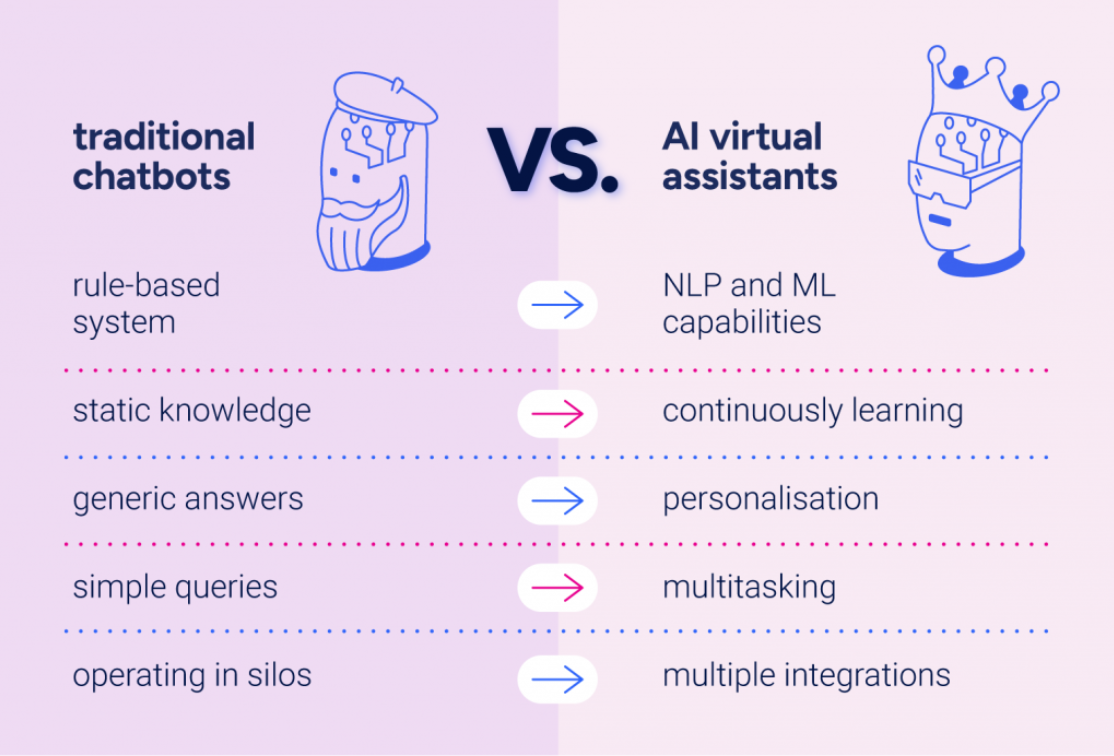
- Chatbots are designed for *simple, pre-scripted responses* to common queries, serving as basic customer service helpers.
- Virtual Assistants are smarter, able to *complete step-by-step tasks* like scheduling and information retrieval.
- AI Agents represent the most advanced category, capable of working independently, making decisions, and *achieving complex goals* across systems.
- Machine Learning (ML) is crucial, allowing all these AI tools to *learn and improve* over time.
- Natural Language Processing (NLP) is the foundation that enables AI to *understand and interact* in human language.
- Choosing the *right AI solution* depends on the complexity of tasks, required autonomy, and specific business objectives.
Table of contents
- AI Agent vs Chatbot vs Virtual Assistant: Understanding the Key Differences
- Key Takeaways
- Introduction
- Understanding AI Agents, Chatbots, and Virtual Assistants
- The Role of Machine Learning in AI Technologies
- Natural Language Processing vs AI Agent
- AI Avatar vs AI Agent
- RPA vs AI Automation
- Digital Humans vs AI Agent
- Chatbot vs Conversational AI vs Agent
- Choosing the Right AI for Business Tasks
- Important AI Automation Terms
- Conclusion
- Frequently Asked Questions
Introduction
In today's digital world, AI technologies are everywhere. But telling the difference between an AI Agent, Chatbot, and Virtual Assistant can be confusing. These smart tools might seem similar at first glance, but they each have unique abilities and best uses. This guide will help you understand what makes each one special and how to choose the right one for your needs.
Let's explore the key differences between AI Agents, Chatbots, and Virtual Assistants to help you make better decisions about using these technologies.
Understanding AI Agents, Chatbots, and Virtual Assistants
What is a Chatbot?
A chatbot is like a digital helper that answers simple questions using pre-written responses. Think of it as a basic customer service robot that can handle common questions quickly. Chatbots are great for:
- Answering frequently asked questions
- Helping customers with basic problems
- Directing people to the right department
- Managing simple conversations
Chatbots work best when the questions are straightforward and don't need complex thinking. Check out the best AI chatbots for small biz for more information.
Source
What is a Virtual Assistant?
Virtual Assistants (VAs) are smarter than chatbots. They can help you complete tasks step by step, like:
- Scheduling meetings
- Creating documents
- Finding information
- Managing calendars
Think of popular tools like Siri, Alexa, or Google Assistant. They work with you to get things done, rather than just answering questions.
Source
What is an AI Agent?
AI Agents are the most advanced of the three. They can:
- Work independently to achieve goals
- Make decisions on their own
- Handle complex tasks across different systems
- Learn and improve from experience
- Work towards specific business targets
Unlike chatbots and virtual assistants that wait for commands, AI Agents can take action on their own to reach their goals. Explore an AI Agents Guide for intelligent automation and see how AI agents transform work.
Source
The Role of Machine Learning in AI Technologies
How Machine Learning Makes AI Smarter
Machine Learning (ML) helps all these AI tools get better at their jobs over time. Here's how:
- Chatbots learn to understand questions better
- Virtual Assistants learn user preferences
- AI Agents learn to make better decisions
Discover more about memory-based AI agents and their future.
The more these tools interact with people, the smarter they become at handling tasks.
Source
Natural Language Processing vs AI Agent
Understanding NLP
Natural Language Processing (NLP) is what helps AI understand human language. It's like teaching computers to read and understand how people talk.
How NLP and AI Agents Work Together
While NLP is a tool, AI Agents use it to:
- Understand complex instructions
- Have natural conversations
- Process different languages
- Pick up on context and meaning
This combination makes AI Agents more effective at handling human communication.
Source
AI Avatar vs AI Agent
What's an AI Avatar?
An AI Avatar is like a digital face for AI. It gives users someone to talk to, making interactions feel *more personal*.
Key Differences
- AI Avatars:
- Focus on visual representation
- Make interactions feel more human-like
- Work best for customer service
- AI Agents:
- Focus on getting tasks done
- Work behind the scenes
- Handle complex business processes
RPA vs AI Automation
Understanding RPA
Robotic Process Automation (RPA) is like a digital worker that:
- Follows exact rules
- Does repetitive tasks
- Works with existing computer systems
AI Automation
AI Automation is smarter than RPA because it:
- Can handle changing situations
- Makes decisions on its own
- Learns from experience
When to Use Each
- Use RPA for: Simple, repetitive tasks
- Use AI Automation for: Complex tasks that need thinking and decision-making
Digital Humans vs AI Agent
What are Digital Humans?
Digital Humans are advanced AI Avatars that:
- Look and act like real people
- Show emotions and facial expressions
- Provide more engaging interactions
Comparing Digital Humans and AI Agents
Digital Humans focus on the *experience*, while AI Agents focus on *getting work done*. Both have their place in modern business.
Source
Chatbot vs Conversational AI vs Agent
Understanding Conversational AI
Conversational AI is the technology that powers natural conversations between humans and machines. It's used in:
- Advanced chatbots
- Virtual Assistants
- AI Agents
Explore Zapier chatbot integration for deeper insights into conversational AI.
Key Differences
- Chatbots: Simple, scripted responses
- Conversational AI: Natural, flowing conversations
- AI Agents: Independent problem-solving and task completion
Choosing the Right AI for Business Tasks
Factors to Consider
When picking an AI solution, think about:
- What tasks need to be done
- How complex the work is
- How much human oversight is needed
- Your budget and resources
Learn more about how to implement AI agent solutions effectively.
Best Uses for Each Type
- Choose Chatbots for:
- Simple customer service
- Basic FAQ handling
- Quick responses to common questions
- Choose Virtual Assistants for:
- Helping with daily tasks
- Scheduling and organization
- Guided support
- Choose AI Agents for:
- Complex business processes
- Independent decision-making
- Strategic business goals
Refer to the ultimate guide AI agents small business for comprehensive strategies.
Source
Important AI Automation Terms
Key Terms to Know
- API: How different software programs talk to each other
- Machine Learning: How AI systems learn and improve
- Natural Language Processing: How AI understands human language
- Automation: Getting computers to do tasks without human help
- KPI: Key Performance Indicator – how success is measured
Conclusion
Understanding the differences between AI Agents, Chatbots, and Virtual Assistants is *crucial* for making smart business decisions. Each tool has its strengths:
- Chatbots are perfect for *simple, quick responses*
- Virtual Assistants excel at *helping with daily tasks*
- AI Agents can handle *complex, independent work*
Choose the right tool based on your needs, and you'll be well on your way to successful AI implementation. Remember, the goal is to make work easier and more efficient, whether you're helping customers, supporting employees, or improving business processes.
Frequently Asked Questions
- What is the main difference between an AI Agent and a Chatbot?A Chatbot is designed for simple, pre-programmed responses to direct questions, while an AI Agent can *independently make decisions*, learn, and work towards complex goals without constant human input.
- Can Virtual Assistants work independently like AI Agents?No, Virtual Assistants are designed to assist users in completing tasks step-by-step and usually *require commands or guidance*. AI Agents, conversely, can initiate actions and adapt their strategy to achieve objectives autonomously.
- How does Machine Learning improve these AI tools?Machine Learning enables these AI tools to *learn from data and interactions*, improving their ability to understand language, predict user preferences, and make more effective decisions over time, making them smarter and more efficient.
- When should I choose an AI Agent over a Chatbot or Virtual Assistant for my business?You should choose an AI Agent for complex business processes, tasks requiring independent decision-making, and strategic goals that involve learning and adapting. Chatbots are better for basic customer service, and Virtual Assistants for guided daily task management.