

What Is the Primary Purpose of Business Monitoring in Agentic AI Systems? A Comprehensive Guide to Visibility, Optimization, and Risk Management
What Is the Primary Purpose of Business Monitoring in Agentic AI Systems?
Estimated reading time: 9 minutes
Key Takeaways
-
- Agentic AI systems operate autonomously to make complex business decisions without constant human guidance.
-
- Business monitoring provides visibility, real-time optimization, risk mitigation, and facilitates continuous learning for these AI systems.
-
- Monitoring ensures human oversight remains integral to avoid costly errors and maintain trustworthiness.
-
- Real-world benefits of monitored agentic AI include fraud prevention, operational acceleration, and regulatory compliance.
- The future points to more advanced, outcome-driven monitoring integrated with explainable AI and predictive analytics.
Table of contents
Understanding Agentic AI and Business Monitoring
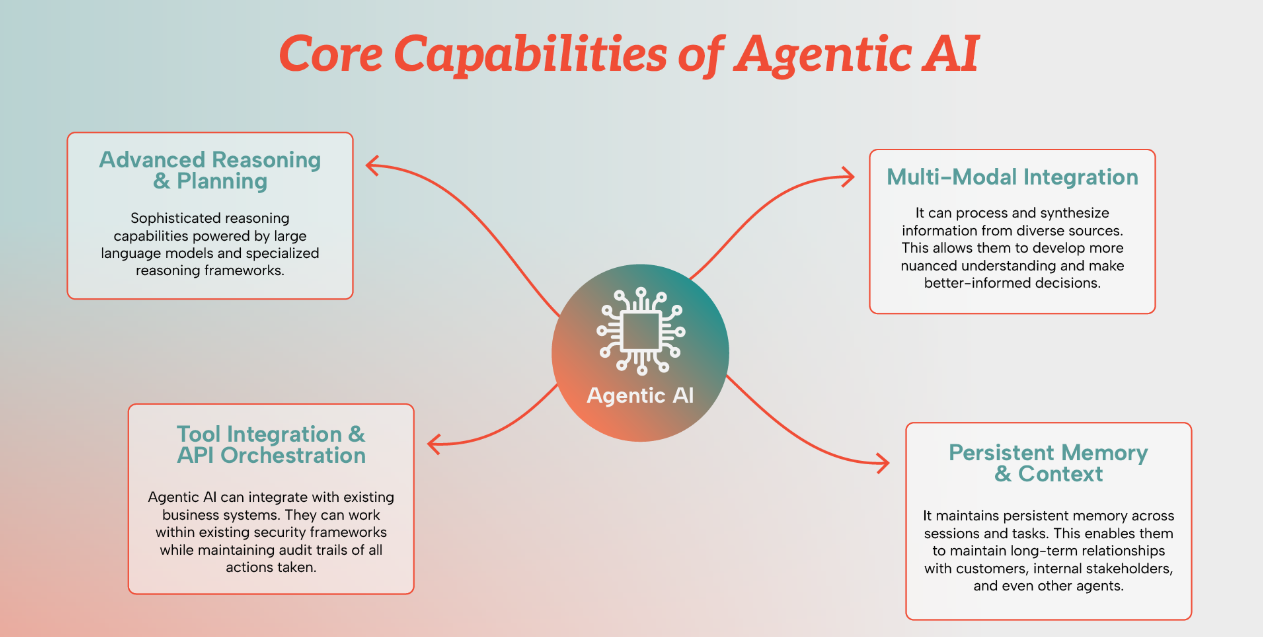
Before exploring the primary purpose of business monitoring, it’s important to grasp what agentic AI entails. Unlike traditional AI models that require constant human instruction, agentic AI systems operate autonomously, making independent decisions and taking actions to meet defined goals. These systems wield remarkable power in automating complex tasks across business domains—whether in finance, marketing, supply chain, or cybersecurity.
However, autonomy breeds complexity. Without oversight, agentic AI’s independent decisions could lead to unintended consequences or missed opportunities. This is where business monitoring steps in—a critical layer that offers visibility, real-time insight, and control over these AI agents’ activities and impact.
The Primary Purpose of Business Monitoring in Agentic AI Systems
Drawing from extensive research by leading AI consultancies and enterprises—including Altamira.ai, Denser.ai, Boston Consulting Group, and IBM—the consensus is clear:
The primary purpose of business monitoring in agentic AI systems is to provide visibility into agent performance, enable real-time optimization, ensure reliability and risk mitigation, and facilitate continuous learning and scaling.
— Altamira.ai | Denser.ai | BCG | IBM
This explanation highlights four critical pillars business monitoring upholds:
1. Providing Visibility Into Agent Performance
Agentic AI systems can perform thousands of complex tasks daily. Without clear visibility, companies would struggle to understand what actions agents are taking, whether those actions achieve the intended outcomes, and how agents impact broader business goals.
Monitoring tools illuminate metrics such as time saved, issue resolution rates, employee satisfaction, and end business impact. By tracking these key performance indicators (KPIs), businesses gain a transparent window into agent behaviors which is essential to refining their performance and expanding their capabilities.
According to Denser.ai and IBM’s Institute for Business Value, dashboards and detailed reports enable teams to “see what agents are doing, where they struggle, and their overall effects.” This clarity uncovers vital insights used to tune agent responses and decision-making strategies for scalable success.
2. Enabling Real-Time Optimization and Anomaly Detection
Agentic AI thrives on speed and responsiveness. In real-time, agents should detect anomalies, adjust tasks, and mitigate risks automatically—without the delays inherent in human intervention. Monitoring systems act as continuous auditors, flagging financial irregularities, compliance issues, or cybersecurity threats precisely when they arise.
Real-world applications span crucial business areas:
-
- Finance: Agents flag suspicious transactions to prevent fraud before it escalates.
-
- Cybersecurity: AI monitors network activity to detect imminent cyberattacks or breaches.
- Supply Chain: Real-time inventory and logistics monitoring optimize workflows and avoid bottlenecks.
As explained by Denser.ai and BCG, this proactive monitoring “enables agents to respond to risk proactively without waiting for human input.” Thus, it transforms business resiliency and operational agility.
3. Ensuring Reliability and Risk Mitigation Through Human Oversight
Despite autonomous sophistication, agentic AI systems must never operate unchecked, especially when high-stakes decisions are involved. Effective business monitoring preserves human oversight and intervention—keeping people “in the loop” with transparent logging, explainability features, and timely alerts.
This balance prevents costly mistakes, such as unintended price drops or erroneous compliance breaches. Moreover, it empowers human supervisors to review, adjust, or override agent actions when necessary.
BCG and IBM highlight this as a cornerstone for trustworthy AI deployment:
“Monitoring ensures humans remain actively involved in the process, with clear visibility into agent actions. It safeguards against risks while allowing confident AI-driven decision making.”
— BCG | IBM Report
4. Facilitating Continuous Learning and Adaptation
Business monitoring is not static supervision—it’s also a powerful engine for learning and evolution. Agents generate a wealth of data about their actions, outcomes, and environments. Monitoring systems create feedback loops enabling AI agents to retain contextual knowledge, analyze performance outcomes, and adapt their algorithms through machine learning.
This dynamic approach turns raw data into actionable intelligence, improving accuracy and efficiency over time. As Altamira and Denser describe:
“Monitoring frameworks embed learning mechanisms so agents grow smarter from experience, tuning their behavior based on observed successes and failures.”
— Altamira.ai | Denser.ai
Beyond Basics: What Business Monitoring Tracks and Measures
Business monitoring in agentic AI thrusts far beyond rudimentary oversight. It involves comprehensive tracking of key business impact metrics that capture agent value holistically:
-
- Time saved and process acceleration: How effectively do agents reduce manual effort and speed operations?
-
- Issue resolution and success rates: Are agents solving problems autonomously with high success?
-
- Employee and customer satisfaction: Does agent interaction enhance human experiences rather than disrupt them?
- Revenue and cost impacts: What is the economic benefit or savings realized through AI autonomy?
By integrating these measurements, enterprises transition from human-efficiency KPIs to outcome-centric metrics that focus on automated decision impact and system interconnectedness—as IBM's Institute for Business Value notes. This paradigm shift supports complex, interlocking workflows across sales, HR, finance, and compliance departments, where AI agents collaborate seamlessly.
Real-World Business Benefits from Agentic AI Monitoring
Enterprises adopting agentic AI with robust monitoring report significant, tangible benefits:
-
- Process acceleration improvements of 30-60% through embedding agents in popular enterprise platforms like SAP and ServiceNow. Monitoring prevents operational bottlenecks and increases resilience across global teams and supply chains.
-
- Enhanced fraud detection and prevention, where agentic systems autonomously analyze transactions and flag anomalies in seconds—saving businesses millions.
-
- Optimizing marketing campaigns by constantly monitoring ad spend effectiveness and adjusting strategies dynamically without manual intervention.
- Ensuring regulatory compliance by tracking and responding automatically to legal updates and audit events, thus avoiding heavy fines.
These successes underscore monitoring’s role as more than oversight—it is a critical enabler of scale, efficiency, and business agility made possible by intelligent AI autonomy.
The Future of Business Monitoring in Agentic AI
As agentic AI systems evolve, so too will the tools and strategies for business monitoring. Advances in explainable AI, predictive analytics, and integrated human-AI collaboration platforms will deepen transparency and trust.
Forward-thinking organizations are already experimenting with new operating models and KPIs that emphasize outcome-driven performance and continuous improvement, moving beyond efficiency metrics to intelligence-led decision ecosystems. This shift will be pivotal for realizing the full promise of intelligent enterprise platforms and the AI age.
Conclusion
The primary purpose of business monitoring in agentic AI systems is to ensure these autonomous agents fulfill their potential safely, efficiently, and with continuous improvement. From comprehensive visibility and real-time risk detection to embedding human oversight and driving learning loops, monitoring is the command center enabling smart AI agents to transform enterprises at scale.
As the AI frontier expands, businesses that master monitoring will harness agentic AI not just as a tool, but as a strategic partner in innovation, resilience, and competitive advantage.
Stay tuned to this blog for the latest insights into agentic AI’s thrilling journey transforming the future of work and business.
Frequently Asked Questions
-
- What is agentic AI?
Agentic AI refers to autonomous artificial intelligence systems capable of making independent decisions and taking actions to achieve predefined goals without constant human intervention.
- What is agentic AI?
-
- Why is business monitoring critical for agentic AI?
Business monitoring is essential to provide visibility, ensure reliability, enable real-time risk detection, maintain human oversight, and support continuous learning, making autonomous AI systems trustworthy and effective.
- Why is business monitoring critical for agentic AI?
-
- How does monitoring help in risk mitigation?
Monitoring ensures transparent logging, explainability, and timely alerts so that humans can intervene when necessary, preventing costly mistakes and reducing risks in high-stakes AI-driven decisions.
- How does monitoring help in risk mitigation?
-
- What are the key metrics tracked in monitoring?
Metrics include time saved, issue resolution success rates, employee and customer satisfaction, and financial impacts—offering a holistic view of agentic AI’s business value. - How is business monitoring evolving?
It is advancing with explainable AI, predictive analytics, and integrated human-AI collaboration, focusing on outcome-driven performance and continuous improvement.
- What are the key metrics tracked in monitoring?