

Exploring the OpenAI Agents SDK: A Comprehensive Guide to Building Multi-Agent AI Applications
Exploring the OpenAI Agents SDK: Revolutionizing Multi-Agent AI Applications
Estimated reading time: 15 minutes
Key Takeaways
-
- The OpenAI Agents SDK is a powerful, flexible framework for building multi-agent AI systems using Python and TypeScript.
-
- Core primitives include agents, handoffs, guardrails, sessions, and tracing, enabling dynamic, safe, and stateful multi-agent workflows.
-
- Designed for production readiness, the SDK supports provider-agnostic models and integrates well with evolving tools like AgentKit and Codex.
-
- Installation is straightforward via pip for Python or npm for JavaScript/TypeScript, with additional features such as voice support and Redis session management.
- Code examples highlight simplicity in creating agents and deploying in diverse environments, including serverless edge setups.
Table of contents
What is the OpenAI Agents SDK?
The OpenAI Agents SDK is a lightweight but robust framework primarily written in Python and TypeScript designed to build multi-agent AI systems. These systems allow multiple AI “agents” to interact, cooperate, and delegate tasks dynamically. The SDK originated from OpenAI’s Swarm experiment and has matured into a production-ready solution focusing on simplicity and flexibility.
The SDK’s fundamental building blocks, or “primitives”, include:
-
- Agents: Large Language Models (LLMs) tailored with specific instructions and tools to perform tasks.
-
- Handoffs: Allowing agents to delegate tasks to one another seamlessly.
-
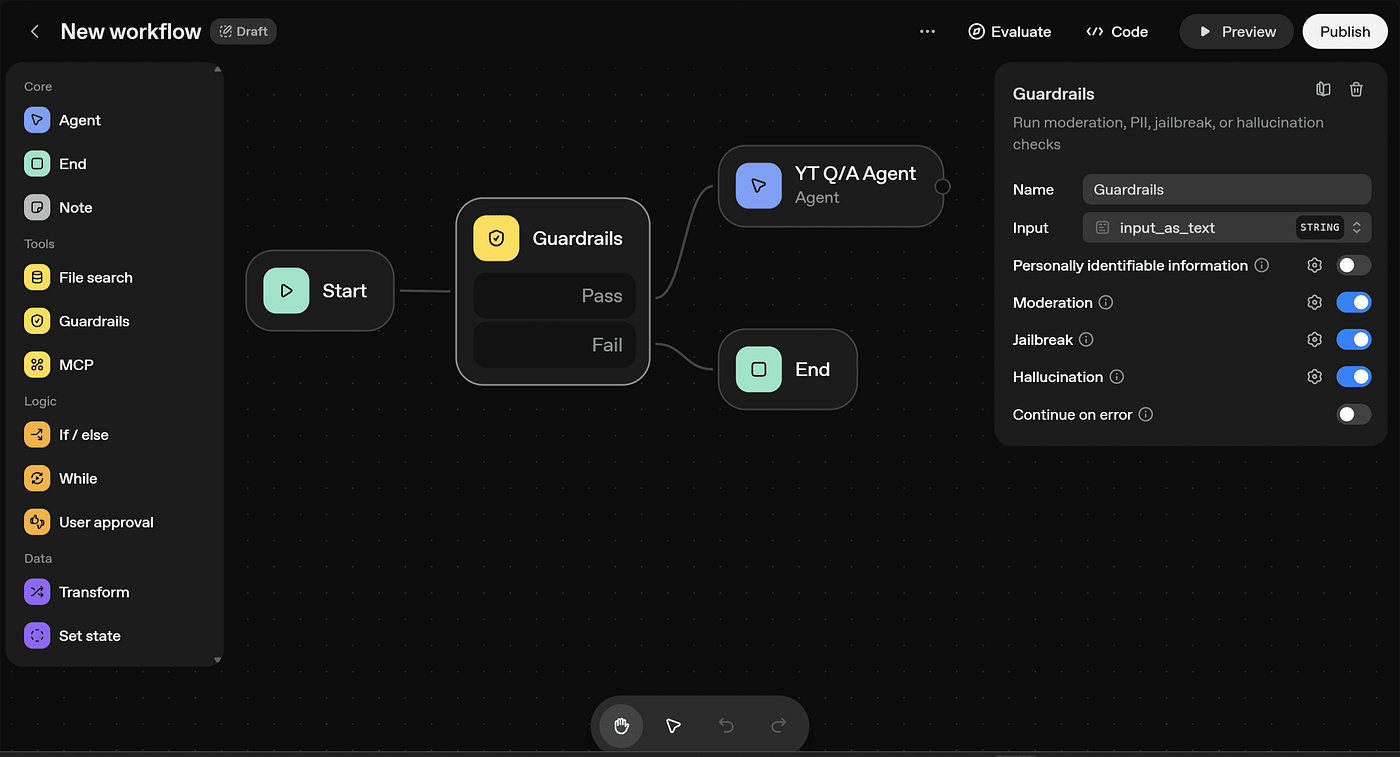
- Guardrails: Validations that ensure safety by checking inputs and outputs.
-
- Sessions: Managing conversation history across agent interactions.
- Tracing: Tools to debug and visualize information flow between agents.
These features make the SDK a powerful toolkit for building customizable and reliable multi-agent workflows.
Sources: OpenAI Agents Python SDK Documentation, OpenAI Platform Agents SDK Guide, PyPI OpenAI Agents Package
Why the OpenAI Agents SDK Matters: The Shift Toward Multi-Agent Systems
Conventional AI applications typically utilize a single model performing isolated tasks. But as AI complexity grows, so does the need for multi-agent architectures. Imagine a team of AI assistants with specialized roles, collaborating seamlessly to solve complex challenges.
The OpenAI Agents SDK addresses this demand by:
-
- Offering primitives to define agents with unique roles and instructions.
-
- Enabling intelligent handoffs for dynamic task delegation.
-
- Integrating guardrails to maintain safe, on-track conversations.
-
- Tracking session history for stateful interactions.
- Providing powerful tracing tools for debugging and tuning.
This makes production-grade multi-agent AI development easier, more maintainable, and scalable.
Diving Into the Core Primitives and Features of OpenAI Agents SDK
Explore the critical pieces that give this SDK its power and versatility.
1. Agents: The Heart of the SDK
An Agent combines an LLM with specific instructions, tools, and communication abilities with other agents. Supporting OpenAI models and over 100 third-party models, this abstraction allows developers to select the best model for their needs.
Agents can be tailored with instructions and enforce guardrails for input/output validation, ensuring safe and precise task execution.
Sources: OpenAI Agents Python SDK, Agents SDK overview, PyPI project page
2. Handoffs: Delegation Made Easy
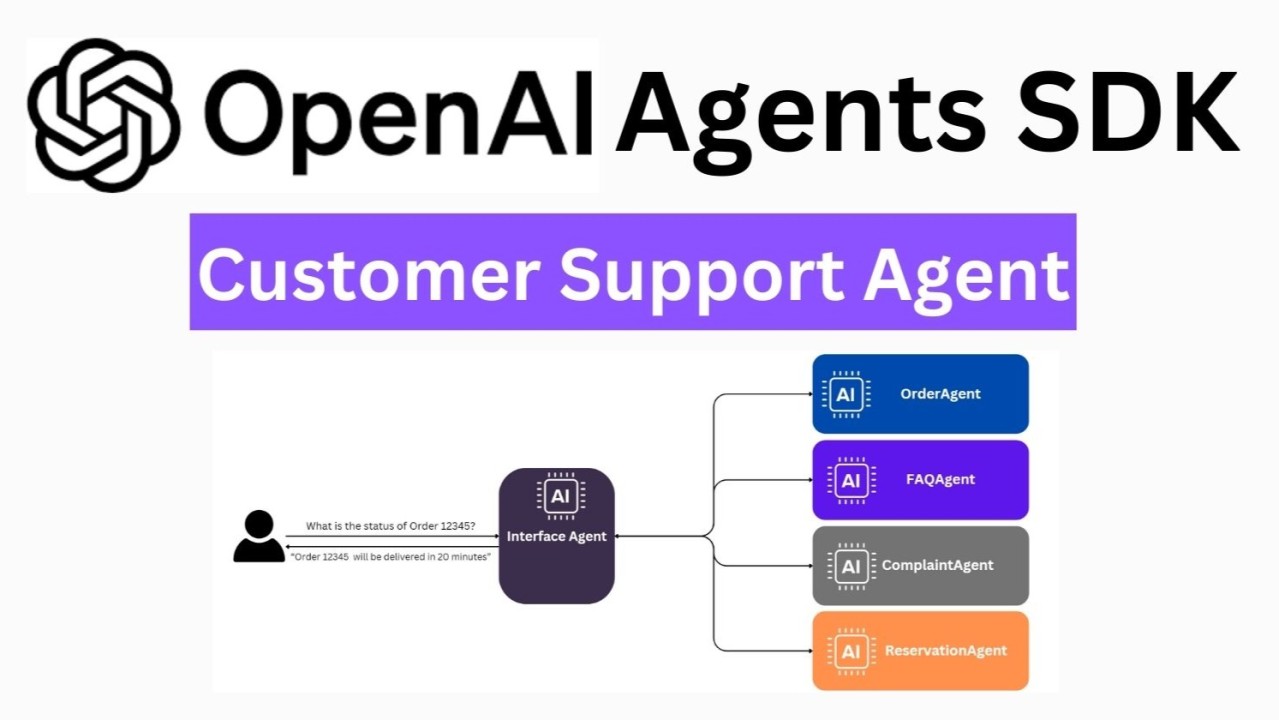
Handoffs enable smooth task delegation among agents tailored for specific jobs. Agents use tool calls to communicate and pass work, enhancing collaboration and resilience.
For example, a generalist agent detects a specialist is needed and hands off the task, improving efficiency and expertise application.
Sources: OpenAI Agents Python SDK, Fermyon blog on agents, PyPI project page
3. Guardrails: Safety Through Validation
The guardrails system validates inputs and outputs to prevent errors and unpredictable outcomes.
This safety layer is key to maintaining trustworthy, high-quality interactions and mitigating harmful or nonsensical behavior.
Sources: OpenAI Agents Python SDK, YouTube Tutorial on Agents SDK
4. Sessions: Remembering the Conversation
Managing conversation history is critical. The SDK’s session management lets agents maintain context, “remember” past exchanges, and respond coherently across interactions.
Optional Redis support enables persistent memory for scaling long-running or distributed workflows.
Sources: OpenAI Agents Python SDK, Agents SDK guide
5. Tracing: Insight and Debugging
Tracing tools visualize the flow of information between agents, aiding debugging, evaluation, and fine-tuning.
This transparency is essential to identify bottlenecks or logical errors in complex deployments.
Sources: OpenAI Agents Python SDK, Platform guide on agents
Installation: Getting Started With OpenAI Agents SDK
Python Installation
Run this command to install the SDK using pip:
pip install openai-agents
Set your OpenAI API key in the environment:
export OPENAI_API_KEY="sk-your-api-key-here"
For Redis support (sessions), install the extras:
pip install 'openai-agents[redis]'
This works on Python 3.9+ environments.
Sources: OpenAI Agents Python SDK Docs, Platform guide, PyPI Package
JavaScript/TypeScript Installation
For serverless or edge apps, install via npm:
npm install @openai/agents
This enables usage in TypeScript and JavaScript, including frameworks like Fermyon Spin for robust edge AI.
Sources: Fermyon blog on openai-agents
Hands-On Example: Hello World with the OpenAI Agents SDK (Python)
Here is a succinct example creating a helpful assistant agent that writes a haiku about recursion:
from agents import Agent, Runner

agent = Agent(name="Assistant", instructions="You are a helpful assistant")

result = Runner.run_sync(agent, "Write a haiku about recursion in programming.")
print(result.final_output)
# Expected output:
# Code within the code, /
# Functions calling themselves, /
# Infinite loop's dance.
This example shows how the SDK abstracts API complexity, enabling straightforward synchronous agent use.
Sources: OpenAI Agents Python Docs, Agents SDK guide
JavaScript/TypeScript Integration Example with Spin (Fermyon)
Example snippet for serverless or edge integration using TypeScript:
import { Agent, run, setDefaultOpenAIKey, tool } from '@openai/agents';

class SupportAgent {
  constructor(private openAiApiKey: string) {}

  async ask(question: string): Promise<string> {
    setDefaultOpenAIKey(this.openAiApiKey);
    const supportAgent = new Agent({
      name: "SupportAgent",
      model: "gpt-4o-mini",
      instructions: `You are a support agent. Use the FAQ tool if you can answer from it.`
    });

    // Running the agent with a question
    const result = await run(supportAgent, question);
    return result.final_output;
  }
}
It demonstrates creating an agent with specific instructions and tools for use inside serverless cloud or edge functions.
Sources: Fermyon Blog
Extending Capabilities: Voice Support, Function Tools, and Agent Loops
The SDK is continuously evolving, adding capabilities such as:
-
- Voice Support: Add speech input/output with
pip install 'openai-agents[voice]'.
- Voice Support: Add speech input/output with
-
- Function Tools: Auto-generate schemas from Python functions so agents can reliably call custom code.
- Agent Loops: Enable repeated tool calls until a task completes, facilitating iterative or multi-step workflows.
These features push the SDK beyond text tasks, powering broad AI applications.
Sources: PyPI openai-agents, YouTube Agents Tutorial
The Ecosystem Around OpenAI Agents SDK
The Agents SDK fits within a larger ecosystem supporting multi-agent AI development and deployment:
| Tool / Feature | Description | Languages/Platforms |
|---|---|---|
| Agents SDK | Core framework for building agents and workflows | Python, TS/JS |
| AgentKit | Visual workflow builder, connectors, chat UI integration, evaluations | OpenAI Platform-wide |
| Codex Integration | Supports multi-agent coding workflows, enhanced dev environments | Python |
| Evaluations & Monitoring | Tools to grade, tune, and monitor agent performance | OpenAI Platform |
This ecosystem allows developers not only to build but also to monitor, evaluate, and improve multi-agent AI efficiently.
Sources: Introducing AgentKit – OpenAI, OpenAI Platform Agents Guide, Codex integration documentation
Why Should Developers and Businesses Care?
The OpenAI Agents SDK ushers in a new era for AI application development:
-
- Simplified Multi-Agent Collaboration: Build AI teams where agents distribute work and support each other.
-
- Production Ready: Safety, validation, and scalability designed for real-world use.
-
- Provider-Agnostic & Flexible: Use OpenAI or 100+ other models from various providers.
-
- Cross-Platform Loops: Python-first, with TypeScript and serverless options.
- Robust Ecosystem: Works with AgentKit, Codex, evaluations, and monitoring tools.
This avenue empowers hobbyists to enterprises to innovate with AI-driven workflows and automation.
Final Thoughts and Future Outlook
The OpenAI Agents SDK represents a significant step forward in AI system design. Balancing low complexity with rich features, it enables sophisticated, composable multi-agent AI applications.
Guardrails promote safety, handoffs optimize teamwork, and tracing tools improve developer insight — these foundations support the future of AI agents as capable, cooperative, and composable entities.
With ongoing ecosystem growth featuring tools like AgentKit, the SDK is becoming more accessible and powerful. Whether you're a developer exploring multi-agent AI or a tech enthusiast watching intelligent software evolve, the OpenAI Agents SDK is a worthwhile journey.
For updates and learning resources, visit:
Unlock the future of AI development today by harnessing the power of the OpenAI Agents SDK — where intelligent agents meet seamless collaboration.
Frequently Asked Questions
-
- What is the OpenAI Agents SDK?
The OpenAI Agents SDK is a framework for building multi-agent AI systems, allowing agents to cooperate, delegate, and operate safely using primitives like agents, handoffs, guardrails, sessions, and tracing.
- What is the OpenAI Agents SDK?
-
- How can I install the OpenAI Agents SDK?
For Python, install viapip install openai-agentsand set your OpenAI API key. For JavaScript/TypeScript, install withnpm install @openai/agents. Additional features like Redis or voice support require extra packages.
- How can I install the OpenAI Agents SDK?
-
- What are guardrails?
Guardrails are validation mechanisms in the SDK that check agent inputs and outputs to prevent errors and ensure safe, reliable AI behavior.
- What are guardrails?
-
- Can I use the Agents SDK with models outside OpenAI?
Yes, the SDK supports OpenAI models and integrates with over 100 third-party LLM providers, making it provider-agnostic. - What is agent tracing and why is it important?
Agent tracing visualizes the flow of tasks and information between agents, assisting developers in debugging, evaluating, and optimizing multi-agent workflows.
- Can I use the Agents SDK with models outside OpenAI?