

Kaggle Google AI Agent Course: A Comprehensive Guide to Building Intelligent Autonomous AI Systems
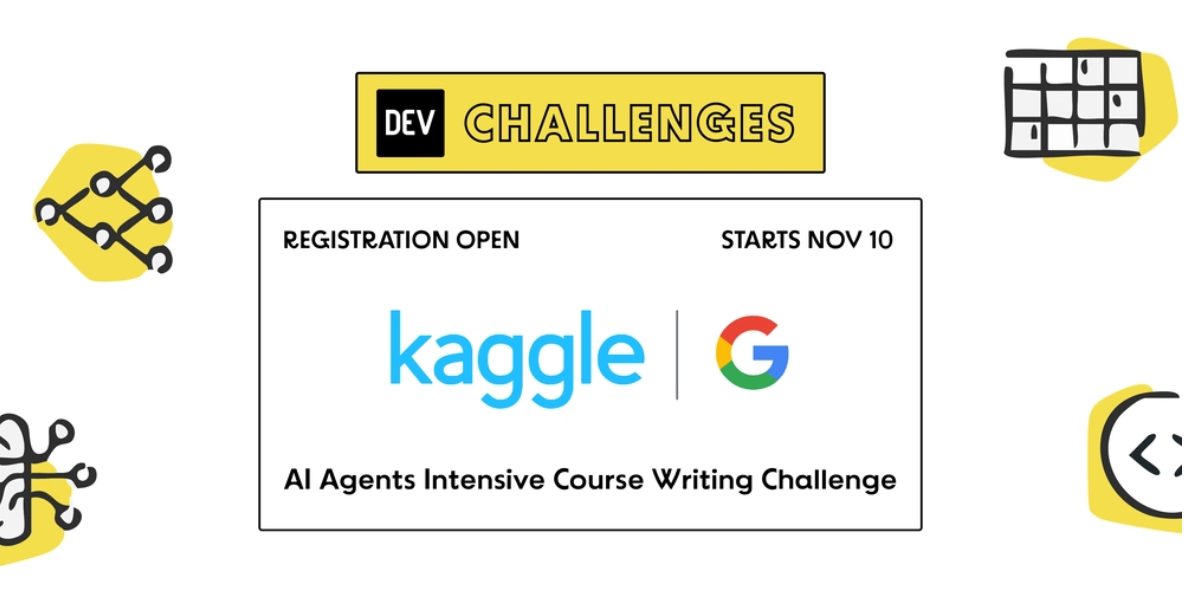
Kaggle Google AI Agent Course: Unlocking the Future of Intelligent AI Agents
Estimated reading time: 12 minutes
Key Takeaways
-
- The Kaggle Google AI Agent Course trains learners to build autonomous AI agents, going beyond chatbots to systems that think, decide, and act.
-
- It’s a 5-day intensive with hands-on coding using Google’s Gemini ADK, Kaggle Notebooks, and cutting-edge multi-agent frameworks.
-
- Core skills include tool integration, memory management, agent evaluation for safety, and moving from prototype to production-ready models.
-
- The course culminates with a capstone project challenging learners to create impactful AI agents.
- Designed for developers, data scientists, and AI enthusiasts at all levels eager to explore next-gen intelligent systems.
Table of Contents
Artificial intelligence is evolving rapidly, and the latest frontier taking the spotlight is the world of AI agents — intelligent systems that don’t just chat but think, decide, and act autonomously. This week, the buzz in the AI community is all about the Kaggle Google AI Agent Course, a groundbreaking, five-day intensive program crafted by Google and Kaggle to equip developers, data scientists, and AI enthusiasts with practical skills to build these next-gen AI agents.
In this deep dive, we’ll explore everything you need to know about the Kaggle Google AI Agent Course — from the course’s structure and learning objectives to key insights from learners and the exciting capstone project. Whether you’re new to AI or looking to level up your skills in autonomous AI systems, this course represents a thrilling opportunity to dive into the future of intelligent agents.
What Is the Kaggle Google AI Agent Course?
The Kaggle Google AI Agents Intensive Course, officially known as the 5-Day AI Agents Intensive Course with Google & Kaggle, is a hands-on, practical program focused on teaching participants how to build AI agents — not just chatbots, but autonomous systems that can think, decide, and take action in complex real-world scenarios.
After the success of the earlier 5-Day Generative AI Intensive Course with Google, this new AI Agents Intensive zooms in on creating AI entities that integrate language models with tools, memory, and planning to operate effectively in dynamic environments.
Who Organizes This Pioneer Program?
This cutting-edge course is a collaboration between:
-
- Google — including teams from Google AI, Google DeepMind, and Google Developers, bringing world-class AI research and toolsets.
- Kaggle — Google’s premier platform for data science, machine learning, and community learning.
Together, they’ve designed the course to serve as both an introduction and a deep dive into the building blocks of AI agents, providing learners with hands-on experience using the latest AI tools and development kits.
Course Overview: What You’ll Learn in 5 Days
The course runs as a 5-day intensive program, originally delivered as live sessions and now available as a self-paced guide on Kaggle Learn.
Defining AI Agents
AI agents are not simply chatbots that respond to text inputs; they are intelligent entities that can decide, plan, execute actions, and use tools to interact with external systems, all while managing memory and context just like a human assistant. This course dives deep into this paradigm shift.
Main Focus Areas and Learning Objectives
Throughout five days, learners are guided through the following core topics:
-
- What AI agents are and how they differ from chatbots, emphasizing their ability to take real-world actions.
-
- Agent architectures and components, including large language models (LLMs), tools (APIs, functions), memory, and planning.
-
- Practical development of agents using Google’s Gemini Agent Development Kit (ADK) and Kaggle Notebooks.
-
- Management of memory and context, crucial for maintaining coherent conversations and task flows.
-
- Agent behavior evaluation, focusing on safety, reliability, and minimizing hallucinations.
- Building agents from prototypes to production-ready systems, including multi-agent collaboration frameworks.
The 5-Day Course Breakdown: A Closer Look
Day 1: Introduction to Agents
Day one sets the foundation by explaining what AI agents are and how they go beyond the capabilities of simple chatbots. Learners explore the core components — Large Language Models, tools, memory, planning, and actions.
A hands-on session walks through building a simple agent using Google’s Gemini ADK, including converting Python functions into agent tools and combining agents (one agent used as a tool in another). This practical approach allows learners to immediately engage with agent construction concepts.
Day 2: Agent Tools & Function Calling
The focus shifts to tools — the external systems agents can call upon. Whether APIs, databases, calculators, or search engines, agents learn to interact with diverse tools seamlessly.
Using the Gemini ADK, learners build functions that agents use for real-world tasks, deepening their understanding of tool integration through hands-on Kaggle codelabs.
Day 3: Generative AI Agents
On day three, the course guides learners in constructing sophisticated agents using frameworks such as LangGraph, designed to support multi-agent workflows and system integration.
A standout exercise involves creating a café ordering agent utilizing the Gemini 2.0 Live API, demonstrating real-time interaction with live data.
Learners also study agent evaluation techniques and iterative development practices to refine agent performance.
Day 4: Advanced Agent Architectures
Day four explores complex systems — multi-agent collaboration, agent spaces, and advanced architectural patterns. The lessons emphasize building safe, reliable agents capable of working cooperatively and autonomously.
Topics include agent safety, strategies to prevent hallucinations or unsafe outputs, and rigorous evaluation metrics.
Day 5: From Prototype to Production
The final day prepares learners for deploying their agents in production environments. It covers essential considerations such as monitoring, scaling, and maintaining reliability in real-world use cases.
This day culminates in a capstone project briefing, inviting participants to apply their newfound skills to build useful AI agents that address real problems.
Course Curriculum & Delivery Methods
The course combines multiple learning modes for a comprehensive experience:
-
- Conceptual explanations to build foundational knowledge.
-
- Daily live streams and recorded sessions on YouTube for flexible access.
-
- Extensive use of Kaggle Notebooks (codelabs) for hands-on coding.
- Active community engagement through the Kaggle Discord server, encouraging discussions and Q&A.
Tools and platforms featured include:
-
- Kaggle Notebooks — an accessible environment for writing and running code.
-
- Google AI Studio & Gemini API — for agent model development.
-
- Gemini Agent Development Kit (ADK) — Google’s key toolkit for agent construction.
- LangGraph — framework enabling multi-agent orchestration.
Getting Started: Prerequisites and Setup
To enroll and participate effectively, learners need:
-
- A Kaggle account, with phone verification necessary to run codelabs.
- Signing up at Google AI Studio to obtain a Gemini API key.
- Joining the Kaggle Discord server to benefit from community support.
- Basic knowledge of Python programming and familiarity with Large Language Models (LLMs) and prompt engineering is helpful but not mandatory.
This approach lowers barriers, welcoming anyone eager to engage with AI agent development.
The Capstone Project: Showcase Your Agent
A highlight of the course is the Agents Intensive Capstone Project hosted on Kaggle. This competition invites all participants to build AI agents that tackle real-world challenges or enhance productivity.
Project tracks include:
-
- Concierge Agents: Assistants for travel planning, scheduling, and customer service.
-
- Agents for Good: AI solutions aimed at social impact and humanitarian causes.
-
- Enterprise Agents: Business process automation tools.
- Creative/Experimental Agents: Innovative, exploratory AI applications.
Rewards for top submissions include Kaggle badges, exclusive Google swag, and visibility on Google and Kaggle social channels. This opportunity encourages innovation and real application of course concepts.
Key Insights from the Learner Community
Learner feedback and summaries from blogs and videos highlight some crucial takeaways:
-
- Agents Are Not Just Chatbots
AI agents can proactively take actions like searching databases, making purchases, or planning trips, setting them apart fundamentally from reactive chatbots. - Tools Are the Agent’s Power
The ability to use APIs and perform function calls is central. Teaching agents to utilize these tools transforms them from mere conversationalists into powerful assistants. - Memory and Context Matter
Good agents keep track of interactions and contexts across multiple steps, resembling human memory, which improves coherence and effectiveness. - Safety and Evaluation Are Critical
Emphasis on verifying agent outputs, reducing hallucinations, and ensuring safe decision-making is a significant theme throughout the course. - Accessible for Beginners and Experts Alike
Despite its advanced concepts, the course is structured and practical, enabling learners without deep AI research backgrounds to build useful AI agents.
- Agents Are Not Just Chatbots
Course Accessibility and Additional Resources
Beyond the course materials, learners have access to a vibrant support ecosystem:
-
- Discord: A dedicated space for real-time help, troubleshooting, and collaboration.
-
- YouTube: Live streams and recordings supplement learning with expert walkthroughs.
- Independent Tutorials: Community members have created detailed step-by-step guides, expanding the learning ecosystem.
These resources ensure ongoing support as learners experiment and hone their agent-building abilities.
How This Course Builds on Prior AI Learning
The Kaggle Google AI Agents Intensive Course is a natural extension of the earlier 5-Day Generative AI Intensive Course with Google, which introduced foundational models, prompt engineering, embeddings, and vector databases.
Notably, the generative AI course touched on agent concepts briefly on Day 3. This new intensive takes that initial glimpse and expands it into a comprehensive, five-day deep dive, especially focusing on:
-
- Agent design,
-
- Integration with external tools,
-
- Memory architectures,
-
- Multi-agent collaboration,
- And moving agents into production.
This progression ensures learners build from solid theoretical knowledge toward impactful real-world applications.
Who Should Take the Kaggle Google AI Agent Course?
This course is especially suited for:
-
- Developers and engineers eager to build autonomous AI systems.
-
- Data scientists and machine learning practitioners seeking practical agent-building experience.
-
- Product managers and technical leaders exploring AI agent use cases to innovate products.
- Anyone curious about the future of intelligent, action-oriented AI.
Whether you want to create virtual assistants, automate workflows, or experiment with AI collaboration, this course offers a unique gateway.
Why AI Agents Matter: The Bigger Picture
The transition from chatbots to AI agents marks a significant evolution in artificial intelligence. Unlike chatbots that simply simulate conversation, AI agents equipped with tools and memory can actively solve tasks — searching, booking, scheduling, coding, or analyzing data autonomously.
The Kaggle Google AI Agents Intensive Course opens the door to this future by making agent development accessible, practical, and hands-on — proving that building such agents is not a far-off dream but a reality available to learners today.
This course is more than just a training program; it’s an invitation to participate in shaping the future of AI-powered assistance.
How to Access the Kaggle Google AI Agent Course Now
Ready to jump in? The course is now available as a self-paced Kaggle Learn guide:
-
- Main Course Page:
https://www.kaggle.com/learn-guide/5-day-agents
- Main Course Page:
-
- Capstone Project Details:
https://www.kaggle.com/competitions/agents-intensive-capstone-project - For official updates and insights, check out the Google developers blog post:
https://blog.google/technology/developers/ai-agents-intensive/
- Capstone Project Details:
Conclusion
The Kaggle Google AI Agent Course heralds a new era in AI education — one focused on action-taking, intelligent agents that interact with the world in meaningful ways. Whether building a café-ordering assistant, an enterprise automation tool, or social impact AI, this program equips learners with the latest tools, frameworks, and best practices.
From its hands-on approach with Google’s Gemini API and Kaggle platforms to its vibrant community and practical capstone, this course is a must for anyone excited about the future of AI.
Start building smarter agents today, and step into the future of AI innovation.
Frequently Asked Questions
What prior knowledge do I need to join the Kaggle Google AI Agent Course?
A basic understanding of Python programming is helpful but not mandatory. Familiarity with Large Language Models (LLMs) and prompt engineering can enhance your learning experience. The course is designed for both beginners and experienced practitioners.
Is the course free to access?
Yes, the self-paced guide on Kaggle Learn is freely accessible to everyone with a Kaggle account.
How do I participate in the capstone project?
Once enrolled, you can join the capstone competition on Kaggle, where you can submit your AI agent following the provided guidelines and compete for rewards.
What tools and platforms are used in this course?
The course utilizes Google’s Gemini Agent Development Kit (ADK), Kaggle Notebooks for coding labs, Google AI Studio for API access, and multi-agent orchestration frameworks like LangGraph.
Can beginners build production-ready AI agents through this course?
Yes, the curriculum guides you from prototypes to production best practices, including deployment, scaling, and monitoring, enabling motivated learners to create robust AI agents.