

GPT 5.2: Faster, Safer, and Smarter AI Advancements Unveiled
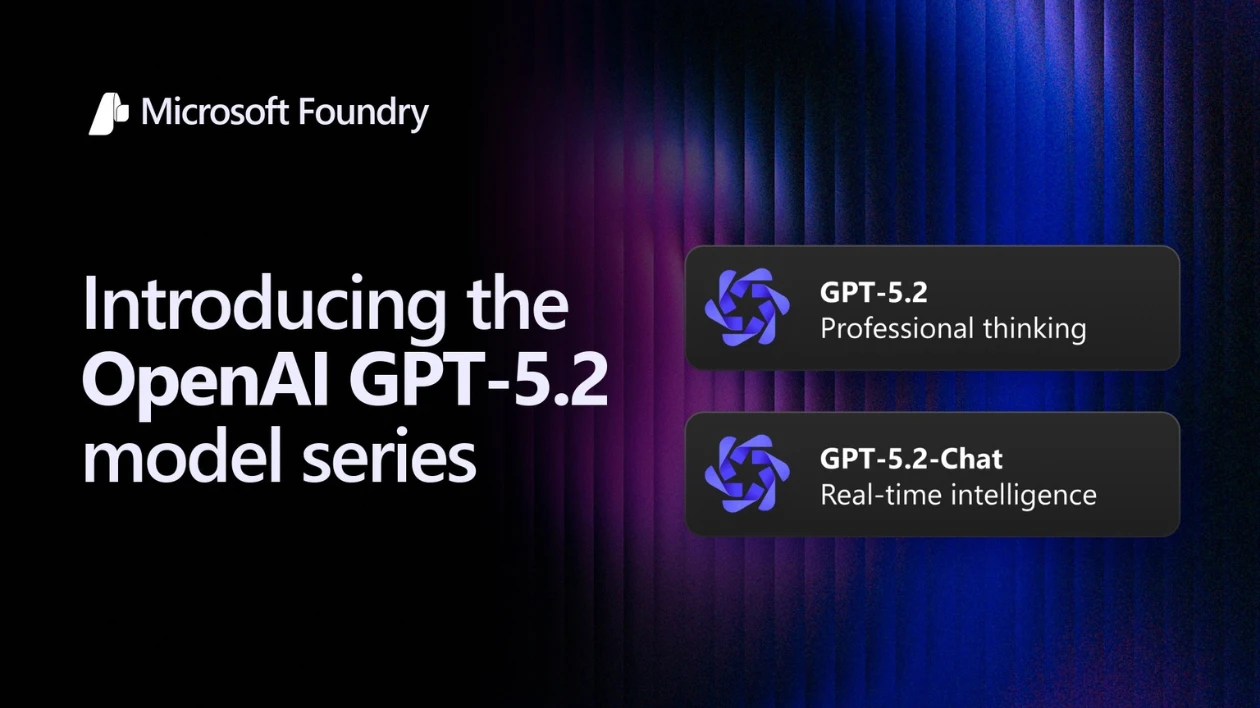
GPT 5.2: OpenAI’s Latest Leap in Speed, Safety, and Smarts
Estimated reading time: 10 minutes
Key Takeaways
GPT 5.2 is a strategic upgrade focusing on faster, cheaper, and safer AI capabilities within the GPT-5 series.
-
- Two model variants — gpt-5.2-instant for speed and economy, and gpt-5.2-thinking for deep reasoning — enable versatile applications.
-
- Improvements in safety, productivity tasks (spreadsheets, coding, presentations), and specialized reasoning.
-
- Robust safety and governance measures maintain responsible deployment in high-risk domains like biology, chemistry, and cybersecurity.
- GPT 5.2 balances performance and cost efficiency without a fundamental architectural overhaul, focusing on responsible AI innovation.
Table of contents
The AI world is abuzz with the release of GPT 5.2, the newest member of OpenAI’s cutting-edge GPT-5 series. Launched in December 2025, GPT 5.2 brings exciting upgrades designed to deliver faster, more economical, and safer AI capabilities without sacrificing the impressive intelligence and reasoning that earlier GPT-5 versions showcased.
Today, we take a detailed dive into everything GPT 5.2 offers—from its technology and performance improvements to its heightened safety features and broad real-world applications. If you’ve been following AI’s rapid evolution or are curious about how it’s transforming productivity and complex problem-solving, this blog is for you.
What is GPT 5.2? A New Chapter in the GPT-5 Family
GPT 5.2 is the latest iteration in the GPT-5 series, building directly on the technology behind GPT 5 and GPT 5.1. While it may not be a radical leap forward in raw capability, it is a strategic advancement known as an economic and utility upgrade. This means GPT 5.2 aims to be cheaper and faster, making it more accessible and practical for everyday tasks, while still matching or even exceeding GPT 5.1's quality and safety benchmarks in various areas.
OpenAI launched GPT 5.2 with two primary model variants to cater to different workloads:
-
- gpt-5.2-instant: This variant is fine-tuned for speed and cost efficiency, ideal for interactive applications such as chatbots, quick automation tasks, and other high-throughput scenarios. It’s designed to deliver fast responses while being budget-friendly.
- gpt-5.2-thinking: This version focuses on deep, multi-step reasoning and complex tasks—perfect for detailed analysis, research-style work, coding, and intricate planning where thoughtful responses are critical.
These two variants make GPT 5.2 versatile, covering a broad spectrum of AI needs in business, software development, creative work, and more. (Source: OpenAI GPT 5.2 Introduction; GPT 5.2 System Card)
How Well Does GPT 5.2 Perform?
General Quality Compared to GPT 5.1
OpenAI’s internal testing shows that GPT 5.2 performs “on par with or better than” the GPT 5.1 models across most evaluation metrics. Here’s a detailed look:
-
- gpt-5.2-thinking surpasses GPT 5.1-thinking models especially on safety and capability benchmarks. This variant shines in specialized domains like biological sciences, chemistry, and cybersecurity, demonstrating notable improvements over GPT 5-thinking and performing comparably to GPT 5.1-codex-max in many coding-related security tests.
- gpt-5.2-instant, while optimized for speed and cost, does show slightly lower scores on some safety benchmarks compared to GPT 5.1-instant. However, it still outperforms the older GPT 5-instant and earlier versions, offering a strong balance between efficiency and reliability.
This critical balance means GPT 5.2 is well-suited for real-world applications that require both speed and safety. (Source: GPT 5.2 System Card)
Productivity Boosts in Everyday Work
One of the standout improvements OpenAI touts with GPT 5.2 is its superior performance in office-style productivity tasks. Here are some exciting highlights:
-
- Spreadsheets: GPT 5.2 is better at creating, editing, and reasoning about tables and spreadsheet formulas, streamlining workflows for analysts and accountants alike.
-
- Presentations: The model can craft more comprehensive slide outlines and structured business decks, assisting professionals with designing clear and impactful presentations.
-
- Coding: GPT 5.2 strengthens its mastery of code by writing, refactoring, debugging, and understanding multiple programming languages more reliably than before.
- Writing and analysis: Whether drafting reports, summarizing content, or editing documents, GPT 5.2 produces more accurate and less hallucinated outputs, making it a trusted assistant for researchers, writers, and knowledge workers.
These upgrades focus on automating and enhancing “knowledge work,” unlocking vast economic value by saving time and reducing errors in daily tasks. (Source: OpenAI GPT 5.2 Launch Blog)
GPT 5.2 and Safety: Raising the Bar in Risk Management
OpenAI has consistently stressed the importance of safety and risk assessment in deploying powerful models like GPT 5.2. The GPT 5.2 System Card clearly states that safety mitigations largely follow those established for earlier GPT 5 models, with targeted updates to address new challenges introduced by GPT 5.2's capabilities.
Content Safety and Harm Prevention
OpenAI reports that GPT 5.2 models match or slightly outperform GPT 5.1 on sensitive content handling:
-
- Self-harm and suicide prevention: GPT 5.2 shows strong content filters and response strategies to safely manage discussions around these critical topics.
-
- Mental health and emotional support: The model provides improved empathy and responsibly handles delicate emotional interactions.
- Harmful or erotic content: GPT 5.2 enforces effective content moderation, scoring approximately 0.99 on safety filter evaluations, demonstrating very high robustness against inappropriate outputs.
These improvements contribute to a safer experience for users in varied content scenarios. (Source: GPT 5.2 System Card)
Biological and Chemical Security
GPT 5.2-thinking is classified as “High capability” in biological and chemical domains, the same category as GPT 5.1-thinking. Highlights include:
-
- Strict domain-specific mitigations to prevent misuse.
-
- Tight use restrictions around detailed experimental protocols.
- Additional oversight measures tailored for research applications involving potentially hazardous biological or chemical information.
These steps aim to balance innovation with caution, reducing risks without stifling the advancement of science. (Source: System Card PDF)
Cybersecurity Risk and Controls
OpenAI subjects GPT 5.2-thinking to rigorous evaluations in cybersecurity:
- Discovering advanced, practical exploits.
- Automating attacks from start to finish.
- Executing attacks at scale while avoiding detection.
Results showed GPT 5.2-thinking outperforms GPT 5-thinking but remains below GPT 5.1-codex-max on key exploit benchmarks by about 11 percentage points, partly due to codex-max’s superior extended context handling. Importantly, GPT 5.2-thinking does not reach the “High” capability threshold in cybersecurity, defined as mid-career security research engineer skill level.
OpenAI maintains ongoing safeguard practices including output filtering and strict usage policies to prevent abuse. (Source: GPT 5.2 System Card)
Governance and Responsible Release
The deployment of GPT 5.2 follows the same careful, multi-stage review and risk assessment procedures pioneered with GPT 5 and 5.1:
-
- Collaboration with external experts in biosecurity, cybersecurity, and other high-risk fields for red-teaming exercises.
- Commitment to continuous post-deployment monitoring, allowing rapid identification and mitigation of emerging safety issues.
This exemplifies OpenAI’s dedication to balancing rapid AI innovation with responsible stewardship. (Source: OpenAI GPT 5.2 System Card Update)
Comparing GPT 5.2 to Earlier GPT-5 Models
| Model | Positioning | Key Notes |
|---|---|---|
| GPT 5 Instant/Thinking | Baseline GPT 5 models | Foundation of GPT-5 series; broad safety design inherited by later variants. |
| GPT 5.1 Instant | Faster, cheaper, better quality than GPT-5 instant | GPT 5.2-instant roughly matches or slightly falls behind on some safety metrics but outperforms GPT-5 instant. |
| GPT 5.1 Thinking | Stronger reasoning than GPT-5 thinking | GPT 5.2-thinking outperforms in safety and capability, especially in higher-risk domains. |
| GPT 5.1 Codex Max | Code-specialized with extended context | GPT 5.2-thinking is similar in capability but somewhat behind on certain cybersecurity exploits. |
Overall, GPT 5.2 is best understood as a refined enhancement within the GPT-5 line, offering better economics and targeted improvements in capability and safety rather than a foundational architectural breakthrough. (Sources: OpenAI Blog, GPT 5.2 System Card)
How Was GPT 5.2 Trained? A Look Under the Hood
Though OpenAI shares only high-level details, GPT 5.2’s training methodology builds on the solid foundations of GPT 5 and 5.1:
-
- Data sources: A vast mixture of public internet text, licensed materials, and content generated by humans. This diverse dataset is carefully filtered for safety and quality to minimize harmful or misleading information.
-
- Training approach:
• First, supervised learning on extensive text and code corpora to teach the model linguistic and reasoning patterns.
• Then, reinforcement learning from human feedback (RLHF) fine-tunes the model’s alignment with human preferences and reduces the production of harmful or unhelpful outputs.
- Training approach:
- Safety-specific datasets: Special datasets target sensitive areas like self-harm, mental health, extremism, and harassment. Adversarial prompt testing is employed extensively to strengthen content controls.
OpenAI does not disclose specific parameter counts or architecture details but treats GPT 5.2 as part of their ongoing GPT-5 architecture family evolution. (Sources: System Card PDF, OpenAI Update)
Known Limitations of GPT 5.2: What to Watch Out For
While GPT 5.2 is a powerful and safer iteration, it is not without limitations:
-
- Hallucinations: The model can still confidently produce incorrect or fabricated information.
-
- Nuanced multi-turn conversations: Despite improvements, it may occasionally miss subtle context or the thread of extended discussions.
-
- Biases: GPT 5.2 inherits biases from training data. Although mitigations reduce their impact, some biases may persist.
- Residual safety risks: Under carefully crafted adversarial prompts, GPT 5.2 might still generate unsafe content, although the risk is significantly lower than with older models.
OpenAI emphasizes that their rigorous adversarial testing often overrepresents rare worst-case scenarios, so these limitations should be viewed in perspective, but users must remain cautious. (Source: GPT 5.2 System Card, OpenAI Launch Blog)
Real-World Applications: GPT 5.2 in Action
With its improved speed, cost efficiency, and strong safety profile, GPT 5.2 is poised to become an AI workhorse in a variety of sectors:
-
- Business productivity: Automate and accelerate workflows with smarter assistants for spreadsheets, presentations, report writing, and customer relationship management (CRM).
-
- Software development: Utilize advanced code generation, debugging, and review tools that improve developer productivity and software quality.
-
- Operations and support: Deploy sophisticated customer support chatbots and internal knowledge bots that can handle complex queries quickly and reliably.
- Creative and analytical work: Empower writers, analysts, and researchers to draft, edit, and extract insights from vast amounts of data with fewer errors and higher efficiency.
Moreover, the integration of GPT 5.2 variants into OpenAI APIs and products like ChatGPT enhances user experiences by delivering faster responses and cutting the costs of AI-powered services—making advanced AI more accessible to businesses of all sizes. (Source: OpenAI GPT 5.2 Introduction)
Conclusion: GPT 5.2 Is a Smarter, Safer, and Speedier AI Partner
GPT 5.2 marks a significant milestone in OpenAI’s ongoing journey to build capable, reliable, and cost-effective AI. Although it refines rather than revolutionizes GPT-5’s architecture, its enhancements in speed, safety, and specialized reasoning unlock considerable value across countless domains—from office productivity to scientific research.
By balancing advances in performance with robust safety measures and careful governance, GPT 5.2 raises the bar for responsible AI deployment while making advanced machine intelligence more affordable and practical than ever.
As AI continues to evolve rapidly, GPT 5.2 exemplifies how thoughtful innovation can help society harness the power of artificial intelligence safely and effectively—fueling creativity, productivity, and discovery in the years ahead.
For more detailed information about GPT 5.2, including comprehensive system cards and technical notes, visit OpenAI’s official resources here:
– Introducing GPT 5.2
– GPT 5.2 System Card PDF
– GPT 5 System Card Update
Frequently Asked Questions
What are the main differences between GPT 5.2-instant and GPT 5.2-thinking?