

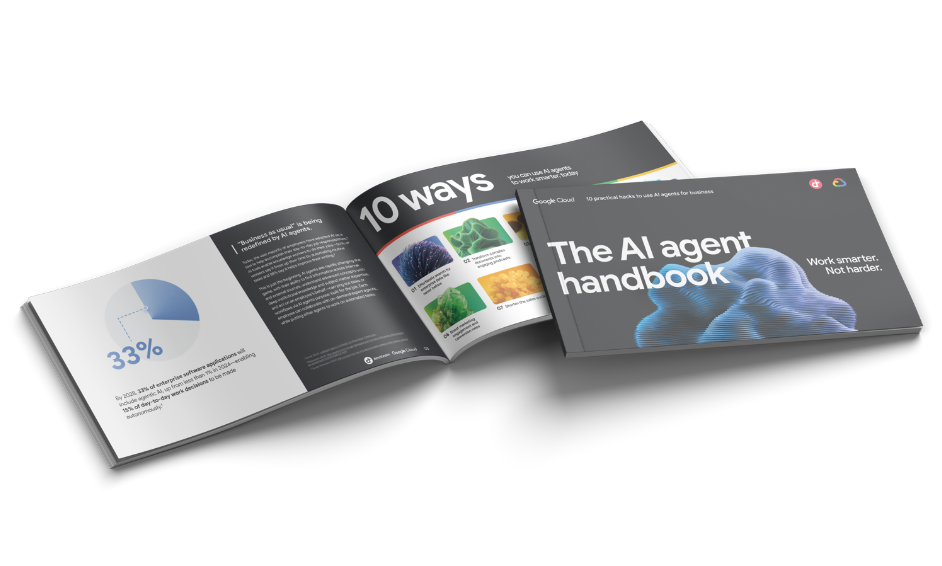
The Google AI Agent Handbook: Unlocking a World of Super-Smart AI Assistants!
Key Takeaways
- The Google AI Agent Handbook is a comprehensive guide for building and deploying advanced AI assistants.
- It leverages Google Cloud’s ecosystem, including Vertex AI, Gemini, and the Agent Development Kit (ADK).
- Key techniques like Retrieval-Augmented Generation (RAG) and Multimodal AI are crucial for creating accurate and versatile agents.
- AI agents are poised to transform workflows, from customer service and marketing to HR and developer productivity.
- The handbook emphasizes AgentOps and Responsible AI for ethical, safe, and scalable deployment.
- Unified Data Access (Agent Space) is highlighted as foundational for powerful, context-aware AI agents.
- Early adopters are reporting impressive results, including significant improvements in customer satisfaction and operational efficiency.
Table of contents
- The Google AI Agent Handbook: Unlocking a World of Super-Smart AI Assistants!
- Key Takeaways
- What Exactly is This Google AI Agent Handbook That Everyone's Talking About?
- The Core Ingredients: How to Build and Deploy Your Own AI Agents
- Super-Smart Tricks: Generative AI Techniques You'll Learn
- Power-Up 1: Retrieval-Augmented Generation (RAG) – Making AI Super Accurate!
- Power-Up 2: Multimodal AI – Seeing, Hearing, and Understanding the World!
- Transforming Work: How AI Agents Change Everything
- Ten Practical Hacks: Real-World Examples to Inspire You!
- Enterprise AI Agents: The Backbone of Tomorrow's Businesses
- Boosting Developer Productivity: AI as a Coding Sidekick!
- Playing it Safe and Smart: AgentOps & Responsible AI
- All Your Info in One Place: Unifying Data Access
- Amazing Results! The Real-World Impact of AI Agents
- Unleashing Efficiency and Autonomy
- The Dawn of Proactive Customer Service
- Empowering Teams Across the Board
- Ready to Start Your Own AI Adventure? How to Get Going!
- The Google Cloud Guide: Your Agent Starter Pack!
- More Cool Stuff: Additional Resources
- A Quick Look: Key Features and How They're Used
- The Future is Now: Your Call to Action with the Google AI Agent Handbook!
- Frequently Asked Questions
Imagine a future where computers don't just follow simple commands, but actually think, learn, and act almost like a helpful team member, handling tricky tasks, making decisions, and even being proactive! Sounds like something from a science fiction movie, right? Well, get ready, because that future is not just around the corner – it's already here, and Google is showing us the way with an incredible new guide called the Google AI Agent Handbook. This isn't just another tech document; it's a thrilling blueprint, a secret map to building your very own super-smart AI assistants that can change how businesses work forever!
In the fast-paced world of artificial intelligence, a new superstar has emerged: the AI agent. These aren't just simple chatbots; they are digital helpers with brains, capable of understanding complex situations, planning steps, and carrying out tasks across different systems. They're like having a team of brilliant, tireless workers ready to tackle challenges. And now, Google, a leader in the digital realm, has unleashed a powerful new resource: the Google AI Agent Handbook. This comprehensive guide is designed to help everyone – from big businesses and clever developers to ambitious startups – understand, build, and deploy these amazing AI agents using Google Cloud's most advanced technologies. Think of it as your ultimate guide to creating digital superheroes!
This handbook dives deep into both the technical wizardry and the real-world business magic of AI agents. It's packed with practical deployment strategies, showing you how to transform old ways of working into exciting, efficient new workflows, and how to get incredible, measurable results. Get ready to explore a world where AI doesn't just assist, but truly empowers, and where the possibilities are as vast as your imagination.
What Exactly is This Google AI Agent Handbook That Everyone's Talking About?
At its heart, the Google AI Agent Handbook is a groundbreaking, all-in-one resource. It's like finding a treasure chest filled with wisdom on how to build and use AI agents. Who is this treasure chest for? It’s for businesses eager to leap forward, for developers keen to craft new digital tools, and for startups dreaming of changing the world. This handbook helps them not only grasp what AI agents are but also how to bring them to life using Google Cloud’s powerful tools.
Picture this: Google Cloud is like a giant playground for technology, and within it are some very special toys. The handbook shows you how to use these toys, mainly:
- Vertex AI: This is Google's special platform where you can build, train, and deploy machine learning models, like a sophisticated workshop for creating AI brains.
- Gemini: This is Google's super-smart, next-generation large language model. Think of Gemini as the incredible brain inside your AI agent, capable of understanding and generating human-like text, images, and more.
- Agent Development Kit (ADK): This is like a special toolbox that makes it easier for developers to put together all the pieces needed to build an AI agent quickly and efficiently.
Together, these tools form the core of what the handbook teaches. It isn't just about theory; it’s about rolling up your sleeves and getting things done. The handbook focuses strongly on practical deployment – meaning, how to actually get these AI agents working in the real world. It shows you how these agents can transform how work gets done, making everything smoother and faster, and ultimately, how they lead to amazing, tangible results for companies. It’s like being given the keys to a new era of efficiency and innovation! (Sources)
The Core Ingredients: How to Build and Deploy Your Own AI Agents
The journey of creating an AI agent might sound like a super-complicated secret mission, but the handbook breaks it down into clear, exciting steps. It takes you on a guided tour, showing you exactly how to build these smart digital helpers, moving from a simple spark of an idea all the way to a powerful system working at a huge scale. Imagine starting with a doodle on a napkin and ending up with a fully operational robot – that’s the kind of journey the handbook helps you embark on!
The handbook is like a master chef's recipe book, guiding you through each stage:
- Idea Generation: What problem do you want your AI agent to solve?
- Prototyping: Building a small, early version to see if your idea works.
- Scaling: Making your agent bigger and better, so it can handle lots of tasks for many people.
To speed up this journey, the handbook emphasizes using Google's amazing generative AI tools. These are the tools that can create new things, like writing stories, drawing pictures, or even helping write computer code. With Vertex AI, Gemini, and the ADK, you’re not just building; you’re accelerating development, like giving your project a rocket boost! This means you can get your AI agents up and running faster than ever before, turning your visions into reality in record time.
Super-Smart Tricks: Generative AI Techniques You'll Learn
What makes these AI agents so incredibly smart? It’s all thanks to some cutting-edge generative AI techniques that the handbook explains in detail. Think of these as the secret powers that give AI agents their “brain power” and make them truly revolutionary.
Power-Up 1: Retrieval-Augmented Generation (RAG) – Making AI Super Accurate!
Have you ever asked a question and gotten an answer that sounds good but isn't quite right? That can happen with some AI models. But with RAG, that problem gets a powerful solution! Retrieval-Augmented Generation is a fancy name for a very clever trick. It means that when a large language model (like Gemini) needs to answer a question or complete a task, it doesn't just rely on what it already “knows.” Instead, it first retrieves extra information from many different, reliable sources – like looking up facts in a giant, super-fast library.
Imagine an AI agent trying to answer a customer's complicated question about a product. Instead of guessing, the RAG technique tells the AI to quickly search through the company's entire database of product manuals, customer reviews, and expert opinions. It then uses that retrieved, real-world data to create its answer, making it much more accurate, relevant, and trustworthy. This “grounding” of information means AI agents can provide responses that are not just fluent, but also factually sound, helping businesses avoid mistakes and build trust with their users. It’s like giving the AI a super-powered research assistant!
Power-Up 2: Multimodal AI – Seeing, Hearing, and Understanding the World!
Most people think of AI as something that works with text – like chatting or writing emails. But imagine an AI agent that can do so much more! That's where Multimodal AI comes in, and it's truly thrilling. Multimodal means that these agents can understand and work with many different types of information, not just words.
Think about how humans experience the world: we see pictures, hear sounds, read text, and watch videos. Multimodal AI agents are being trained to do the same! The handbook teaches you how to build agents that can:
- Process text: Read and write reports, emails, and conversations.
- Understand images: Look at a photo and describe what’s in it, or identify objects.
- Analyze audio: Listen to a voice recording, understand speech, or even recognize emotions.
- Interpret video: Watch a video clip and understand the actions or events happening within it.
Why is this so powerful for businesses? Imagine a customer service agent that can not only read a customer’s typed message but also look at a picture they sent of a broken product, or listen to a voice note describing their issue, and then provide a comprehensive solution. Or a marketing agent that can analyze a company's past advertising videos to suggest new, engaging content ideas. This ability to leverage different kinds of data opens up a whole universe of comprehensive business applications, making AI agents incredibly versatile and smart. It’s like giving AI agents all five senses!
Transforming Work: How AI Agents Change Everything
This is where the excitement really builds! The Google AI Agent Handbook isn’t just about making cool tech; it’s about making a real difference in how people work every day. It shows how AI agents can completely transform workflows, making them more efficient, more enjoyable, and truly revolutionary.
Ten Practical Hacks: Real-World Examples to Inspire You!
The handbook is packed with not one, not two, but ten amazing use cases – practical examples, like “hacks” – that show exactly how AI agents can be used across various parts of a business. These examples span almost every area you can imagine:
- Coding: Helping programmers write better code, faster.
- Marketing: Creating personalized messages that truly connect with customers.
- Customer Service: Making customers happier by solving problems quickly.
- Research: Digging through mountains of information to find the golden nuggets.
- Product Innovation: Brainstorming new ideas and improving existing products.
- HR (Human Resources): Making employee-related tasks smoother and easier.
- And many, many more! (Sources) (Sources) (Sources)
Let's look at a few thrilling examples of what these agents can do:
- Automating Routine Tasks: Imagine an AI agent that takes care of all those boring, repetitive jobs that nobody likes to do – like filling out forms, scheduling meetings, or organizing files. By doing this, it frees up human employees to focus on more creative and important work. This isn't just about saving time; it's about making work more fulfilling for people.
- Personalizing Customer Experiences: Every customer is unique, and AI agents can treat them that way. An agent can learn a customer's preferences, past purchases, and questions, then offer tailored recommendations or support. This makes customers feel truly valued and understood, leading to stronger loyalty.
- Streamlining HR Workflows: Think about new employees joining a company. There are so many forms, introductions, and steps! An AI agent can guide new hires through the onboarding process, answering common questions, providing necessary documents, and even introducing them to relevant team members. This makes starting a new job much less stressful and more welcoming.
- Transforming Documents into Engaging Podcasts: This is a truly innovative use! Imagine having a lengthy report or a detailed article that you need to absorb, but you prefer listening. An AI agent can take that written content and instantly turn it into an engaging audio podcast. Now, you can listen to complex information while commuting, exercising, or doing other tasks, making learning and information consumption incredibly flexible.
- Facilitating Enterprise Search: In large companies, finding specific information can be like searching for a needle in a haystack across thousands of documents, emails, and customer relationship management (CRM) systems. An AI agent can act as a super-powered search engine, instantly sifting through all these disparate sources to find precisely what you need, whether it's a specific report, a client's past conversation, or a policy document. This dramatically cuts down on wasted time and boosts productivity.
Enterprise AI Agents: The Backbone of Tomorrow's Businesses
The handbook makes it clear: these AI agents are not just cool gadgets; they are foundational to modern enterprise automation. This means they are the very bedrock upon which successful, forward-thinking businesses will be built. They are like the invisible super-structure that holds everything together and makes it run smoothly.
By deploying enterprise AI agents, companies can achieve several astonishing things:
- Empowering Employees: AI agents take away the mundane, allowing human workers to concentrate on tasks that require creativity, critical thinking, and human connection. This empowers employees to do their best work and feel more engaged.
- Enhancing Efficiency: When routine tasks are automated, things get done faster and with fewer errors. This dramatically boosts the overall efficiency of an organization, making every process slicker and more streamlined.
- Enabling Scalable Operations: As businesses grow, the workload also increases. AI agents can handle vast amounts of data and tasks without getting tired, allowing companies to expand their operations without needing to constantly hire more people for repetitive jobs. This makes growth much more sustainable and manageable.
Boosting Developer Productivity: AI as a Coding Sidekick!
Even the brilliant minds who create software, the developers, can get a huge helping hand from AI agents! The handbook shows how these smart assistants can be integrated directly into a developer's workspace, acting like an always-on, super-knowledgeable sidekick.
Imagine an AI agent that can:
- Automate Log Analysis: Sifting through endless lines of computer logs to find important information or errors – a task that can take human developers hours.
- Identify Bottlenecks in Code: Pinpointing exactly where a program is slowing down or becoming inefficient, suggesting ways to improve its performance.
- Discover Reusable Code: Helping developers find existing pieces of code within a large project that can be used again, saving time and preventing duplication.
- Synthesize Bug Reports within IDEs: When a bug is found, the AI agent can help summarize the problem, identify potential causes, and even suggest fixes, all within the integrated development environment (IDE) where developers write their code.
By handling these analytical and repetitive tasks, AI agents free up developers to do what they do best: innovate, create new features, and solve complex, interesting problems. It's like having an extra pair of super-smart eyes and hands on every coding project!
Playing it Safe and Smart: AgentOps & Responsible AI
With great power comes great responsibility, and the Google AI Agent Handbook understands this perfectly. Building super-smart AI agents isn't just about making them powerful; it's also about making sure they are used safely, fairly, and correctly. This is where “AgentOps” and “Responsible AI” come into play.
AgentOps is like a set of guidelines and best practices for managing AI agents once they are built and put into action. It ensures that these agents run smoothly, reliably, and effectively over time. The handbook dives into the crucial details of:
- Quality: Ensuring the AI agents always perform at their best, giving accurate and helpful responses.
- Safety: Making sure the agents don't cause any unintended harm or spread misinformation.
- Responsible AI: This is a huge and very important area. It means making sure that AI agents are developed and used in ways that are fair, transparent, and respectful of everyone. It’s about building AI that benefits society without bias or discrimination. The handbook provides clear guidelines on ethical considerations, data privacy, and accountability.
Furthermore, the handbook offers a roadmap for scaling prototypes (small, initial versions) into full-fledged production systems. This involves understanding how to manage agents as they grow, ensuring they remain reliable and safe even when serving millions of users. It’s about building AI with a conscience, ensuring these powerful tools are a force for good in the world.
All Your Info in One Place: Unifying Data Access
Imagine you’re trying to find a specific piece of information, but it could be in your company’s sales database, in an email from last year, in a design document, or buried in a customer support chat log. That’s a nightmare, right? To make AI agents truly effective – to give them the comprehensive “brain” they need – they must be able to access all the information a company has, no matter where it's stored.
The handbook introduces a critical concept: Unifying Data Access, sometimes referred to as “Agent Space.” Think of Agent Space as a grand central library for all of a company's knowledge. It's a single, powerful hub where all your business data comes together. This means:
- Seamless Integration: The AI agents can effortlessly connect to and understand information from every corner of a company’s digital landscape.
- Across Knowledge Bases: Whether it’s internal wikis, training manuals, or public-facing FAQs.
- Across Systems: From customer relationship management (CRM) software to enterprise resource planning (ERP) systems.
- Across Apps: Slack messages, emails, document archives, and more.
By having this centralized data access, AI agents become incredibly powerful. They can pull together information from disparate sources to provide truly comprehensive answers, make more informed decisions, and execute tasks with a full understanding of the context. This “Agent Space” is identified as the very foundation for effective AI agents, because an agent is only as smart as the data it can access and understand. It’s like giving your AI agents a direct line to all the knowledge in your company, instantly!
Amazing Results! The Real-World Impact of AI Agents
The biggest thrill in the Google AI Agent Handbook isn't just about the technology itself, but the incredible impact it's already having on businesses around the globe. These aren't just theoretical benefits; these are real-world results that show just how transformative AI agents can be. Prepare to be astonished!
Unleashing Efficiency and Autonomy
Companies that have started using agentic AI (AI powered by these smart agents) are reporting jaw-dropping improvements. It’s not just small changes; we’re talking about dramatic leaps forward in how they operate.
- Cutting Customer Service Cancellations by a Whopping 85%: Imagine a company losing fewer customers because AI agents are better at solving their problems and keeping them happy! This is a massive win for any business.
- Slashing Escalations by 76%: Escalations are when a customer service problem is so tricky that it has to be passed up to a manager or specialist. AI agents are so good at resolving issues that they prevent most problems from ever getting that far, saving time and resources.
- Boosting Net Promoter Score (NPS) by 50%: NPS is a measure of how likely customers are to recommend a company to others. A 50% increase means customers are significantly happier and more loyal, becoming true advocates for the brand.
- Reducing Call Volumes and Manual Work: Autonomous support agents, meaning AI agents that can work independently, are taking over many routine customer interactions. This means fewer phone calls for human agents to handle and less manual, repetitive work for employees, allowing them to focus on more complex, empathetic interactions.
These figures aren't just numbers; they represent happier customers, less stressed employees, and more profitable businesses.
The Dawn of Proactive Customer Service
The handbook describes a truly exciting shift happening right now. For a long time, customer service tools were mostly passive. You had to ask them a question, and then they'd respond. But AI agents are changing that entirely! They are ushering in an era of proactive customer service.
Imagine an AI agent that doesn't wait for you to have a problem. Instead, it:
- Perceives: It notices when something might be going wrong, even before you do. For example, it might see that your internet service is experiencing a slight slowdown and automatically send you a notification.
- Decides: Based on what it perceives, it figures out the best course of action.
- Acts: It takes action, perhaps running a diagnostic test or offering a solution.
This shift from passive tools to proactive agents is not just a dream; it’s expected to become the industry norm within a year for top-performing companies. This means customers will get help faster, sometimes even before they realize they need it, leading to unparalleled levels of satisfaction and loyalty.
Empowering Teams Across the Board
While customer service is a big area for AI agents, their impact goes far beyond just talking to customers. The handbook reveals that AI agents are also empowering backend teams – those unsung heroes who keep the company running smoothly behind the scenes.
- HR (Human Resources): Agents can help automate onboarding, answer employee questions about benefits, or even assist with performance reviews.
- IT (Information Technology): Agents can monitor systems for problems, troubleshoot issues, and provide instant support for employees facing technical difficulties.
- Development Teams: As we saw earlier, agents can help developers write and debug code faster, freeing them to innovate.
For all these teams, AI agents provide powerful automation, real-time coaching (like giving helpful tips in the moment), and critical decision support. This means every part of the company becomes smarter, faster, and more effective, truly creating a ripple effect of empowerment across the entire organization.
Ready to Start Your Own AI Adventure? How to Get Going!
Feeling excited and ready to dive into the world of AI agents? The Google AI Agent Handbook doesn't just explain what's possible; it provides a clear pathway for you to get started! It’s like a friendly guide holding your hand and showing you the first steps into this amazing new territory.
The Google Cloud Guide: Your Agent Starter Pack!
The handbook is more than just a book; it’s a practical “startup technical guide” and an “agent starter pack” all in one. It gives you the instructions and tools you need to deploy your very own AI agents using Google Cloud’s ecosystem. It simplifies what might seem complex, providing actionable steps.
Here are some of the key Google Cloud tools and concepts it highlights for getting started:
- Vertex AI: Remember this is Google's all-in-one platform for machine learning. The handbook shows you how to use it to build, train, and manage your AI agent models effectively.
- Model Garden: This is a special part of Vertex AI where you can find pre-built, powerful AI models (like different types of brains) that you can use as a starting point for your agents, saving you a lot of time and effort.
- Agent Development Kit (ADK): This kit helps you quickly assemble the components needed for your agent, like a set of building blocks designed specifically for AI agent creation.
The handbook also emphasizes certain critical concepts for a successful start:
- Agent Space: As we discussed, this facilitates unified, multimodal search across all your company's systems. The handbook guides you on how to set this up as the foundation for your agents.
- Gemini: It teaches you how to harness Gemini's robust large language model (LLM) and multimodal capabilities to give your agents truly intelligent brains, allowing them to understand and generate text, images, and more.
- AgentOps Starter Pack: This isn't just about building; it's about operating. The handbook includes best practices for agent operations, ensuring that when your agents move from a test project to a real-world system, they do so smoothly, reliably, and responsibly. This helps you scale your agents into production environments with confidence.
With these resources and guidance, Google Cloud truly makes it possible for anyone, from a single developer to a large enterprise, to begin their AI agent journey with confidence and powerful tools at their fingertips.
More Cool Stuff: Additional Resources
The world of AI agents is vast, and the Google AI Agent Handbook is your primary map, but there are other explorers out there too! To help you go even further, the handbook points to additional resources.
- Wursta Corporation and Other Consultancies: Companies like Wursta Corporation are experts in helping businesses implement Google Cloud technologies. They often offer their own summaries and eBooks based on Google's handbook, but tailored specifically for different industries (like healthcare or retail) or unique use cases. These resources can provide supplementary tips, real-world hacks, and even more detailed implementation guides, giving you extra insights from experienced practitioners.
- Podcasts & Video Summaries: For those who prefer to listen or watch, many discussion shows and tech channels, such as those featuring experts like Anil Nathoo, provide fantastic overviews. These often offer practical advice, deep dives into specific use cases, and highlight how the handbook’s principles can be applied to complex enterprise scenarios. It’s like getting to hear from the pioneers who are already building the future with AI agents!
These additional resources act like helpful companions on your AI agent journey, offering different perspectives and extra layers of detail to ensure you have all the support you need.
A Quick Look: Key Features and How They're Used
To sum up the incredible power of AI agents, let's quickly recap some of the most important features and the exciting ways they are being used, straight from the handbook’s wisdom:
- Unified Data Access: Imagine a special “Agent Space” that connects to all your company's information. This means an AI agent can search across every document, email, and system you have. For example, it can power a super-smart Enterprise Search tool, letting you find any piece of information instantly, no matter where it's hidden, thanks to technologies like Gemini acting as its clever brain.
- Customer Service Bots: These aren't just regular chatbots; they are conversational AI agents powered by advanced Generative AI. They are designed to understand and help customers so well that they can dramatically reduce the number of phone calls human agents receive and even boost your company’s Net Promoter Score (NPS) by making customers much happier.
- HR Workflow Automation: Think about all the tasks in Human Resources, like bringing new employees onboard. AI agents use Generative AI to automate these processes, making things like setting up new hires, answering common employee questions, or managing paperwork much faster and easier.
- Developer Productivity: For the amazing people who write computer code, AI agents are revolutionary. Tools like Gemini Code Assist can analyze code to find problems, identify reusable parts, and even help write summaries of bugs, freeing up developers to create new and exciting things.
- Marketing Automation: Imagine creating personalized content for thousands of customers in an instant! AI agents use Retrieval-Augmented Generation (RAG) to pull accurate, relevant data and Multimodal AI to understand different types of media. This lets them generate engaging marketing messages, images, and even videos that really connect with people.
These examples show that AI agents aren't just a single tool; they are a whole new way of working, transforming nearly every part of a business.
The Future is Now: Your Call to Action with the Google AI Agent Handbook!
There you have it! The world of AI is changing at lightning speed, and at the forefront of this revolution is the concept of AI agents – super-smart, autonomous digital helpers poised to redefine how we work, learn, and interact with technology. The Google AI Agent Handbook is more than just a document; it is an authoritative, thrilling, and incredibly practical resource for any organization, big or small, that dreams of leveraging these powerful AI agents.
This handbook is your ultimate companion for understanding how to use AI agents for truly impactful automation, for enhancing every workflow imaginable, and for achieving profound business transformation. It covers the entire life cycle, guiding you from that very first spark of an idea, through creating initial prototypes, and all the way to confidently scaling your AI solutions into robust, real-world production systems. It’s packed with practical hacks, real-world examples, and addresses both the exciting technical challenges and the strategic considerations needed for successfully adopting enterprise AI. (Sources) (Sources)
The future is calling, and it's powered by AI agents. With this handbook, you are not just reading about the future; you are being given the tools and knowledge to build it yourself. Get ready to embark on an incredible journey of innovation, efficiency, and discovery. The world of super-smart AI assistants awaits, and with this handbook, you hold the key to unlocking its boundless potential!
Frequently Asked Questions
Q: What is the main purpose of the Google AI Agent Handbook?
A: The handbook serves as a comprehensive guide for businesses, developers, and startups to understand, build, and deploy intelligent AI agents using Google Cloud's advanced technologies, aiming to transform workflows and achieve measurable results.
Q: What Google Cloud tools are central to building AI agents according to the handbook?
A: The handbook primarily focuses on using Google Cloud's Vertex AI (for model building and deployment), Gemini (as the powerful large language model brain), and the Agent Development Kit (ADK) to streamline the creation process.
Q: How do AI agents ensure accuracy and understanding of diverse information?
A: AI agents achieve this through techniques like Retrieval-Augmented Generation (RAG), which allows them to retrieve and use external, reliable data for more accurate responses, and Multimodal AI, enabling them to process and understand various data types like text, images, audio, and video.
Q: What is “AgentOps” and why is it important?
A: AgentOps refers to the best practices and guidelines for managing AI agents effectively after deployment. It's crucial for ensuring quality, safety, and responsible AI usage, helping organizations scale their AI solutions reliably and ethically.
Q: Can AI agents truly provide proactive customer service?
A: Yes, the handbook highlights a shift towards proactive customer service where AI agents can perceive potential issues, decide on the best course of action, and act to resolve problems or offer assistance even before a customer explicitly asks for help, leading to higher satisfaction and loyalty.