



Minneapolis ICE Shooting: Unraveling the Tragedy and Its Impact
ICE Agent Shooting: A Deep Dive into the Minneapolis Tragedy and Its Rippling Impact
Estimated reading time: 12 minutes
Key Takeaways
-
- The fatal shooting of Renee Nicole Good by an ICE agent occurred amid a tense federal immigration crackdown in Minneapolis.
-
- ICE and DHS describe the incident as self-defense against a “weaponized vehicle,” while local officials challenge this narrative, calling for accountability.
-
- Conflicting videos and eyewitness accounts have fueled public skepticism and widespread protests.
-
- The case highlights broader issues concerning ICE’s use of force policies and calls for greater transparency in federal immigration enforcement actions.
- Ongoing investigations are led by the FBI, with community groups demanding full disclosure of video evidence and independent reviews.
Table of contents
On Wednesday, January 8, 2026, a fatal shooting involving an Immigration and Customs Enforcement (ICE) agent shook the city of Minneapolis and ignited a firestorm of national controversy. This incident, in which a 37-year-old U.S. citizen named Renee Nicole Good was fatally shot, has led to intense protests, fierce debates, and multiple ongoing investigations that touch on issues of federal immigration enforcement, use-of-force policies, and community trust.
The story unfolding in south Minneapolis raises profound questions about the boundaries of law enforcement, the complexities of immigration crackdowns, and the consequences faced by both citizens and federal officers. In this blog post, we will explore every angle of this tragic event with extensive details sourced from leading news outlets and official sources. Join us as we navigate through the known facts, contrasting narratives, community responses, and broader implications tied to this devastating incident known as the “ICE agent shooting.”
What Happened on Portland Avenue South?
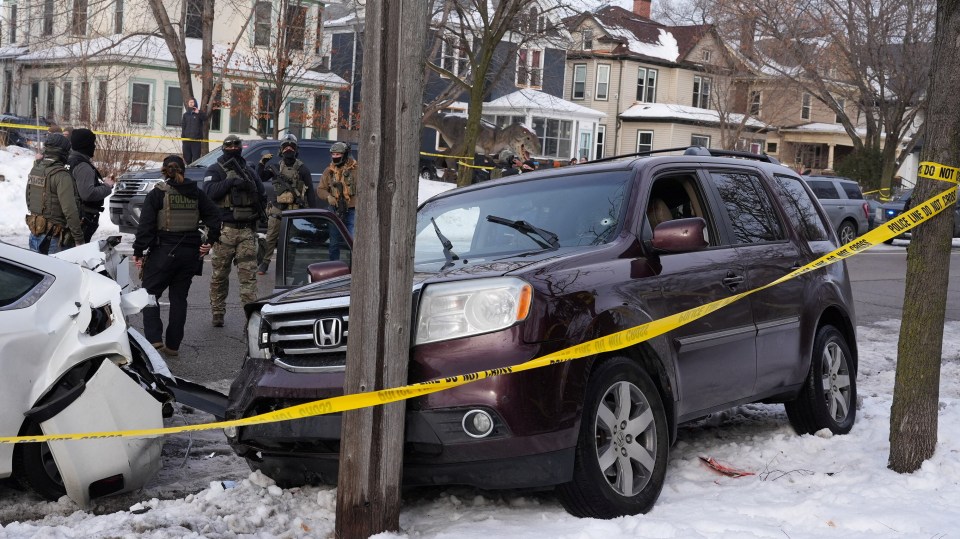
The tragic shooting took place on Portland Avenue South between 33rd and 34th Street, deep in the heart of south Minneapolis. According to Minneapolis Police Chief Brian O’Hara and multiple media reports, officers responding to the scene found a woman—later identified as Renee Nicole Good—inside a vehicle with a gunshot wound to the head. Emergency medical teams attempted lifesaving measures and rushed her to Hennepin Healthcare (formerly Hennepin County Medical Center), but she was pronounced dead shortly thereafter (CBS News, WGCU).
Preliminary accounts from Chief O’Hara indicate that Good’s vehicle was blocking the road when a federal law enforcement officer approached on foot. At some point, the vehicle began to drive forward as shots were fired—at least two rounds—resulting in the vehicle crashing into another car or roadside barrier (WGCU, CBS News).
Who Was Renee Nicole Good?
The victim at the center of this tragedy, Renee Nicole Good, was a 37-year-old U.S. citizen. Minneapolis Mayor Jacob Frey publicly confirmed her identity shortly after the incident. Importantly, early statements clarified that she was not the subject of any active law enforcement investigation at the moment she was shot; neither the police nor city officials indicate that she was targeted for immigration-related reasons (CBS News).
This fact is central to much of the backlash and skepticism surrounding the shooting, as it appears Good was an unintended casualty amid a broader federal immigration crackdown in the city.
The ICE and DHS Account: Self-Defense and “Weaponized Vehicle”
The Department of Homeland Security (DHS) and ICE have framed the incident through a lens of self-defense. DHS officials claim that Good “weaponized her vehicle,” prompting an ICE Special Response Team officer to shoot in defense of himself and other law enforcement personnel, as well as public safety (WGCU).
A senior DHS official told CBS News that the officer involved was a member of ICE’s Enforcement and Removal Operations (ERO) Special Response Team (SRT), a tactical unit used for high-risk immigration enforcement operations.
DHS Secretary Kristi Noem went further, stating that there have been “over 100” documented vehicle ramming attacks against federal officers in recent weeks alone. She labeled Good’s actions an “act of domestic terrorism,” equating her conduct with a disturbing wave of violent attacks targeting federal agents. According to DHS, on the same day, they recorded three attempted vehicle attacks in Minneapolis alone (CBS News).
This narrative—of a weaponized vehicle and a justified defensive shooting—is illustrative of a rising trend DHS describes between federal agents and civilians during federal immigration crackdowns.
Identifying the ICE Agent: Jonathan Ross’s Troubled History
Behind the bullet that ended Renee Good’s life is Jonathan (or Jonathon) Ross (the spelling varies in court documents), the ICE ERO Special Response Team officer identified through court records and senior DHS sources. Ross has been an ICE officer in Minnesota since at least 2017 (CBS News).
Significantly, Ross was involved in a violent encounter roughly six months prior in Bloomington, Minnesota. During an attempted arrest, the suspect refused to comply, leading Ross to break the window and unlock the car door. The suspect then drove the car forward, dragging Ross roughly 100 yards while weaving and accelerating. Ross fired a Taser twice but was eventually thrown free, suffering deep cuts requiring 33 stitches. The driver was later federally charged with assaulting a federal officer with a dangerous weapon (CBS News).
This prior incident highlights a pattern of tension between Ross and suspects allegedly using vehicles as weapons during ICE operations, adding complexity to the January 8 shooting.
Local Officials Challenge ICE’s Version of Events
Minneapolis Mayor Jacob Frey was swift and forceful in challenging ICE’s narrative. After reviewing video footage of the shooting, he dismissed ICE’s claims of self-defense as “bull***” and accused the agency of spinning the story to justify deadly force. Frey labeled the incident as “an agent recklessly using power that resulted in somebody dying, getting killed.” Notably, he urged federal immigration agents to leave Minneapolis altogether, criticizing their heavy-handed operations as tearing families apart and sowing chaos in local neighborhoods (WGCU, CBS News).
Minneapolis Police Chief Brian O’Hara added that there was no indication the victim, Good, was involved in any law enforcement investigation at the time of the shooting. He confirmed that at least two shots were fired by the ICE agent, resulting in the fatal head wound. This publicly contested the federal narrative of a justified self-defense shooting by an agent under direct threat (CBS News).
Conflicting Evidence and Videos Stir Doubts
The most contentious element of this case involves the contradictory narratives emerging from videos and eyewitness accounts.
Former President Donald Trump posted a video alleging that Good “ran over” a federal officer. However, close analysis and multiple news outlets concluded the footage does not show any federal officer being run over, undermining the Washington narrative of a clear danger to the agent (CBS News).
Other videos shared on social media appear to support eyewitness testimony that several federal agents surrounded the Honda Pilot Good was driving. An ICE agent attempted to open the driver’s door, after which the vehicle moved forward, followed by three gunshots. The vehicle then crashed into another car nearby (CBS News).
Community voices also weighed in. Minneapolis attorney and activist Jaylani Hussein from the Council on American-Islamic Relations (CAIR) Minnesota chapter affirmed that multiple cameras and eyewitnesses exist but insisted that “They will not be able to lie through that.” Hussein called for charges to be filed “where warranted” and reiterated a powerful message that “no one is above the law. No ICE. No one is above the law.” (CBS News).
Protests Erupt Amid a Federal Immigration Crackdown
The shooting occurred at a time when Minneapolis had become a focal point of increased federal immigration enforcement. ICE and other federal agencies had deployed visible operations across city neighborhoods to crack down on immigration violations (WGCU).
The community erupted with protests almost immediately after the shooting. Demonstrators gathered not only in Minneapolis but also in Portland, Oregon—a city that experienced a related federal shooting on the same day. The protests highlighted deep frustrations over what many view as excessive federal force and the disruption caused by immigration raids in local areas (CBS News, KATU Portland).
At a tense Minneapolis press conference, officials, advocates, and community leaders demanded accountability and questioned the presence of federal agents operating without clear oversight in city neighborhoods. Despite the anger, Mayor Frey called on residents to channel their outrage into “hope and love and peace and getting justice” (CBS News).
The Same-Day Parallel: Portland, Oregon Federal Shooting
On the same afternoon as the Minneapolis incident, another federal shooting occurred in Portland, Oregon, involving a U.S. Customs and Border Protection (CBP) agent—a different branch under the Department of Homeland Security. In Portland, the federal agent shot and wounded two people after a vehicle was reportedly “weaponized” to try to ram agents during a traffic stop (KATU Portland).
DHS described this as another case of self-defense amid increasing attacks on federal agents. The victims fled for approximately 2.5 miles before being apprehended. One passenger was identified as an undocumented immigrant from Venezuela connected with a notorious transnational gang (KATU Portland).
While the Portland case differs from Minneapolis—no fatalities, different agency involved, and more clearly linked to immigration enforcement—media highlighted both shootings to suggest a growing pattern of dangerous vehicle-related confrontations involving federal officers (KATU Portland, WGCU).
Historical Context: ICE’s Use of Force and Vehicle-Related Incidents
The Minneapolis shooting is not an isolated case in a tense history of ICE and DHS use-of-force controversies involving vehicles.
Past incidents have shown vulnerabilities in the government’s narratives, with some cases originally framed as assaults on federal officers involving vehicles later unraveling. For example, a woman named Martinez was charged with assaulting a federal employee after DHS claimed she tried to run over agents—only for the charges to be dropped later with prejudice when contradicting evidence surfaced (CBS News).
These historical references emphasize the necessity for independent verification of law enforcement claims, especially in cases alleging “weaponized vehicles” and use of lethal force by federal agents. Critics argue that thorough video review and witness testimony are critical for transparency and accountability (CBS News, WGCU).
Ongoing Investigations and Community Demands for Transparency
As of the latest reporting, the FBI is leading or assisting the investigation into the Minneapolis shooting, following standard procedures for lethal force incidents involving federal officers. Local officials and community groups continue to press for the full release of all video evidence—body cam footage from local police, city surveillance cameras, and any federal or bystander recordings (CBS News, WGCU).
Minneapolis city leaders have called for independent reviews of the shooting and outlined the potential for criminal charges if warranted by the evidence. Civil rights organizations are also demanding greater transparency from DHS and ICE and pushing for restrictions on federal immigration enforcement operations within city limits, particularly concerning use-of-force policies involving vehicles (CBS News, WGCU).
What Remains Unknown?
-
- No fully unedited federal video of the shooting moment has been publicly disclosed.
-
- It’s unclear whether Renee Good was aware that the approaching individual was a federal agent, especially given the use of unmarked vehicles and plainclothes/tactical gear (CBS News).
-
- The exact positioning and actions of the ICE agent at the time shots were fired remain under scrutiny.
This opaque situation underscores the critical need for transparency and community involvement in addressing law enforcement accountability.
Conclusion: A Tragedy Raising Questions Beyond Minneapolis
The ICE agent shooting that claimed the life of Renee Nicole Good has become a landmark incident reflecting the fraught intersection of immigration enforcement, federal policing, and community safety. With both local and national implications, it highlights the dangers inherent in aggressive immigration crackdowns, the complexity of use-of-force decisions, and the profound human cost when situations escalate to fatal outcomes.
As protests stir, investigations continue, and public debate rages, one thing is clear: the Minneapolis community, along with cities like Portland, is grappling with how to balance security, civil rights, and justice under the shadow of increasing federal enforcement operations.
This incident demands careful scrutiny, fairness, and above all, transparency to ensure the truth emerges and that future tragedies may be prevented. For the family of Renee Good and for the people of Minneapolis, the search for justice is only beginning.
Frequently Asked Questions
Who was Renee Nicole Good, and why was she shot by an ICE agent?
- Renee Nicole Good was a 37-year-old U.S. citizen who was fatally shot by an ICE agent during federal immigration enforcement operations in Minneapolis. She was not under investigation, and the circumstances remain under investigation with conflicting narratives.
- What is ICE’s explanation of the shooting?
- ICE and DHS claim the officer acted in self-defense after Good “weaponized” her vehicle, which allegedly posed a threat to the agent and others.
- Why do local officials dispute ICE’s version of events?
- Minneapolis Mayor Jacob Frey and Police Chief Brian O’Hara contest ICE’s self-defense claim, pointing to video evidence and the victim’s lack of involvement in active investigations to argue against justification of deadly force.
- What has been the community reaction?
- The shooting sparked protests in Minneapolis and beyond, highlighting anger over federal immigration crackdowns, calls for justice, and demands for transparency and accountability from federal agencies.
- What investigations are underway?
- The FBI is leading the investigation with local cooperation, focusing on gathering all evidence including video footage. Community and civil rights groups are pushing for independent reviews and full disclosure.
Sources:
– CBS News: Minneapolis ICE Agent Shooting Live Updates
– WGCU: ICE Agent Fatally Shoots Woman in Minneapolis Amid Immigration Crackdown
– KATU Portland: ICE Shoots Two People in Portland