

What Is an AI Agent and How It Works: A Comprehensive Guide to Autonomous Smart Automation
Estimated reading time: 18 minutes
Key Takeaways
- AI agents are autonomous digital helpers capable of perceiving, deciding, acting, and learning without constant human input.
- They leverage reasoning, planning, and self-learning to accomplish complex multi-step goals effectively.
- AI agents consist of core components like foundation models, tool integration, memory, and learning systems.
- They come in various forms including software agents, physical robots, and multi-agent teams.
- The future of AI agents promises transformative impacts across customer support, business automation, robotics, and many industries.
Table of contents
- What Exactly is an AI Agent? Your Autonomous Digital Friend!
- The Inner Workings: How AI Agents Come to Life!
- The Brain and Tools: Key Parts of an AI Agent’s Architecture
- From Idea to Action: How AI Agents Achieve Their Goals
- Superpowers of AI Agents: What Makes Them So Amazing?
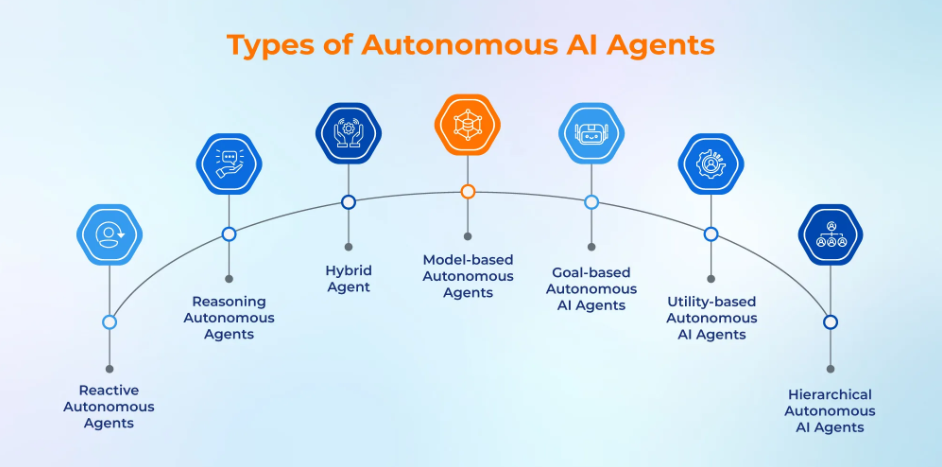
- Meet the Family: Types and Examples of AI Agents
- AI Agents vs. Their Cousins: A Quick Look
- Where We’ll See Them: Real-World Magic!
- The Thrilling Future: AI Agents Are Here!
- Frequently Asked Questions
What Exactly is an AI Agent? Your Autonomous Digital Friend!
So, what exactly is this amazing new thing we call an AI agent? Imagine a super-smart computer program or even a robot that isn’t just waiting for you to tell it what to do. Instead, an AI agent is like a tiny, brilliant brain that lives inside a computer or a machine. It’s a special kind of software system that is designed to be autonomous. What does “autonomous” mean? It means it can make decisions and act all by itself, without someone needing to tell it what to do every minute https://cloud.google.com/discover/what-are-ai-agents https://www.nvidia.com/en-us/glossary/ai-agents/.
Think of it this way: if a regular computer program is like a trained dog that does tricks when you give it a command, an AI agent is more like a clever detective who understands a big mission and figures out all the steps needed to complete it. Its main job is to interact with its surroundings, which we call its “environment.” This environment could be a website, a database of information, or even the real world if it’s a robot! It then collects lots of information, or “data,” from this environment, and uses that information to make smart choices. The goal? To reach specific objectives you’ve given it – and often, it does all this without needing a human to constantly jump in and help https://aws.amazon.com/what-is/ai-agents/.
These incredible agents are built to take on big, tricky tasks and make them simple. They can automate things, which means they do jobs automatically without human help. They can also coordinate many complex tasks for people or big companies. How do they do this magic? They use special abilities like “reasoning” (which means thinking logically to solve problems), “planning” (which is like making a super-detailed step-by-step map to reach a goal), and “self-learning” capabilities. This “self-learning” is truly amazing – it means they get better at their jobs over time, just like you learn from your experiences https://www.mckinsey.com/featured-insights/mckinsey-explainers/what-is-an-ai-agent https://www.salesforce.com/agentforce/ai-agents/ https://www.bcg.com/capabilities/artificial-intelligence/ai-agents.
Imagine an AI agent whose job is to plan your dream birthday party. Instead of you spending hours researching venues, sending invitations, and ordering food, an AI agent could do it all! You just tell it your budget and what kind of party you want, and it starts planning. It would look for places, check menus, send out digital invites, and even follow up with your friends – all on its own! This is the kind of powerful, hands-off automation that AI agents bring to the table. They are truly game-changers in the world of artificial intelligence.
The Inner Workings: How AI Agents Come to Life!
So, how do these super-smart AI agents actually work? It’s not magic, but it sure feels like it! Most AI agents follow a smart, repeating process, kind of like a detective’s loop. Let’s break down this core workflow into four amazing steps:
1. Perceive: The Agent’s Eyes and Ears
First things first, an AI agent needs to know what’s happening around it. This is where “Perceive” comes in. It’s like the agent’s eyes and ears. The agent senses or receives input. This input can be all sorts of things:
- Data: Numbers, words, or pictures from the internet.
- Commands: Instructions you type or say.
- Environmental Signals: Information from the world around it, like if it’s a robot sensing a wall or a self-driving car seeing a stop sign https://www.workshopdigital.com/blog/ai-agents/ https://zapier.com/blog/ai-agent/.
Think of a smart shopping agent. It might “perceive” a request from you: “Find me the best price for a new pair of running shoes.” It then starts to collect information from online stores, price comparison websites, and product reviews. It’s constantly gathering data, just like a busy bee gathering pollen!
2. Process/Decide: The Agent’s Brilliant Brain
Once the AI agent has “perceived” all that information, it’s time for the “Process/Decide” step. This is where the agent’s brain truly shines! It takes all the inputs it gathered and starts to analyze them. It uses its amazing abilities like “reasoning” (thinking logically), “planning” (making a step-by-step strategy), and “domain knowledge” (all the information it knows about a specific topic, like shoe brands or shopping tips).
After carefully thinking about everything, the agent makes a decision. This decision is always about choosing the best action that will help it get closer to its goal https://aws.amazon.com/what-is/ai-agents/ https://www.workshopdigital.com/blog/ai-agents/ https://www.nvidia.com/en-us/glossary/ai-agents/. For our shopping agent, it might process all the shoe prices, delivery times, and customer reviews. Then it decides, “Okay, this store has the best price and good reviews, and they can deliver quickly. That’s my best option!”
3. Act: The Agent Takes Action!
Now that the agent has made a smart decision, it’s time to “Act”! This is the exciting part where the agent actually does something. The actions can be many things, depending on what the agent is designed for:
- Responding to a Query: Giving you the answer to your question, like telling you the best shoe price.
- Controlling Hardware: If it’s a robot, it might move its arm or drive forward. If it’s a smart home agent, it might turn on the lights or adjust the thermostat.
- Communicating with Other Agents: It might send a message to another AI agent to ask for help or coordinate a task https://aws.amazon.com/what-is/ai-agents/ https://www.workshopdigital.com/blog/ai-agents/.
So, our shopping agent would “act” by showing you the link to the best deal it found. Or, if it was allowed, it might even go ahead and place the order for you!
4. Learn/Improve: The Agent Gets Smarter!
This is where AI agents become truly extraordinary! After they’ve acted, they don’t just stop. They go into “Learn/Improve” mode. They look at the “feedback” from their actions. Did it achieve the goal? Was the user happy with the result? They analyze the “outcome” – what happened because of their actions.
This feedback and analysis help them make better decisions in the future. It’s like studying for a test! This learning often involves “machine learning,” which is a fancy way of saying that the computer program uses special techniques to improve its performance over time without being explicitly programmed for every single possibility https://zapier.com/blog/ai-agent/ https://www.salesforce.com/agentforce/ai-agents/.
Our shopping agent, for instance, might learn that you often prefer shoes from a certain brand or that you always choose free shipping over faster paid shipping. The next time you ask it to find shoes, it will remember these preferences and use them to make even smarter choices for you. This continuous cycle of perceiving, processing, acting, and learning is what makes AI agents so powerful and adaptable!
The Brain and Tools: Key Parts of an AI Agent’s Architecture
To make all this amazing work happen, AI agents are built with several special parts, kind of like the different organs and tools in a superhero’s body. Let’s explore the key components that make up an AI agent’s architecture:
1. Foundation Model: The Super-Smart Brain
At the very heart of many AI agents, especially the most advanced ones, is something called a “foundation model.” You might have heard of Large Language Models, or LLMs, which are a common type of foundation model. Think of this as the agent’s super-smart brain. This brain is fantastic at understanding human language – what you type or say – which we call “natural language” https://aws.amazon.com/what-is/ai-agents/ https://cloud.google.com/discover/what-are-ai-agents.
The foundation model also helps the agent manage “context.” This means it remembers what you’ve been talking about, so it doesn’t get confused and can keep the conversation flowing naturally. Most importantly, it’s what “drives reasoning,” allowing the agent to think logically, connect ideas, and solve problems based on all the information it has. It’s the core intelligence that makes sense of everything!
2. Tool Integration: The Agent’s Handy Toolkit
Even the smartest brain needs tools to get things done! This is where “Tool Integration” comes in. AI agents are not just stuck inside their own little program; they are connected to the outside world through a special “toolkit.” This toolkit includes connections to other software, “APIs” (which are like secret doorways that let different computer programs talk to each other), or even physical hardware.
For example, an agent might use a tool to:
- Query databases: Search through huge collections of information.
- Send emails: Communicate with people or other systems.
- Control devices: Turn on your smart lights or operate a robot https://www.nvidia.com/en-us/glossary/ai-agents/.
Imagine our party-planning agent. Its foundation model understands you want a party. Its tool integration allows it to connect to a catering website to check food options, or a calendar app to send invitations. Without these tools, it would just be a smart brain with no way to act in the real world!
3. Memory: The Agent’s Notebook
Just like we remember things, AI agents need “Memory” too! This part of its architecture allows agents to remember past conversations, previous actions, or important bits of information that help them keep track of what’s happening. This memory is crucial for “continuity,” meaning the agent can pick up where it left off and understand the flow of events or conversations.
By remembering prior interactions and context, AI agents can make much more effective decisions. They don’t have to start fresh every time you talk to them; they build on what they already know about you and your goals https://cloud.google.com/discover/what-are-ai-agents https://www.nvidia.com/en-us/glossary/ai-agents/. If you told your AI agent last week that you prefer gluten-free food, its memory helps it automatically suggest gluten-free options this week without you needing to repeat yourself.
4. Learning System: The Agent’s Teacher Mode
The “Learning System” is what allows an AI agent to become truly amazing over time. It gives the agent the ability to adapt and “self-improve.” This means it doesn’t just stick to the rules it was given at the start; it actually learns from its experiences! It uses “historical data” (information from past actions and outcomes) and “machine learning” techniques to get better and more accurate at its tasks https://www.salesforce.com/agentforce/ai-agents/.
Think of it like practicing a sport. The more you play, the better you get. An AI agent’s learning system helps it practice and refine its skills, making its decisions smarter and its actions more efficient with every task it completes. This is a key part of how artificial intelligence truly becomes intelligent.
5. Sensors/Actuators: For the Agents That Live in the Real World
Not all AI agents are just software programs. Some are built into physical machines, like robots or self-driving cars. For these “physical agents,” they need “Sensors” and “Actuators.”
- Sensors: These are like the robot’s eyes, ears, and touch. They collect environmental data, such as how far away an object is, what sounds are being made, or what the temperature is.
- Actuators: These are the parts that do things in the physical world. They perform actions like moving a robot’s arm, making a car turn, or grasping an object https://zapier.com/blog/ai-agent/.
So, a robot AI agent might use sensors to see a toy on the floor and then use its actuators (like a robotic arm and gripper) to pick it up. These components allow AI agents to truly interact with and change the world around them.
From Idea to Action: How AI Agents Achieve Their Goals
Getting something done often means following a plan, right? AI agents are masters of this! They have a brilliant way of taking a big goal and breaking it down into manageable steps, making sure they achieve what you ask them to do. Here’s how they turn an idea into action:
1. Goal Initialization: Understanding the Mission
It all starts when you, the user, give the AI agent a goal. This goal might be simple, like “find me a recipe for chocolate chip cookies,” or complex, like “plan my entire family vacation.” The first thing the agent does is interpret this goal. It needs to fully understand what you’re asking for. Once it understands, it creates a plan or an “internal representation” of the tasks that need to be done to achieve that goal https://aws.amazon.com/what-is/ai-agents/ https://zapier.com/blog/ai-agent/ https://www.workshopdigital.com/blog/ai-agents/.
Imagine telling your AI agent, “Help me write a story about a dragon.” The agent’s first step is to internalize this: “Okay, goal: create a dragon story. This will involve character creation, plot outlines, and writing paragraphs.”
2. Task Planning: Making a Super Checklist
Once the agent knows the big goal, it’s time for “Task Planning.” This is like making a super detailed checklist. The agent breaks down the main goal into many smaller, manageable steps, or “task lists.” It then prioritizes these tasks, deciding which ones need to be done first, based on all the information it has https://aws.amazon.com/what-is/ai-agents/ https://zapier.com/blog/ai-agent/.
For our dragon story, the agent might plan:
- “Brainstorm dragon names.”
- “Decide on the dragon’s personality.”
- “Create a setting for the story.”
- “Outline the main events.”
- “Write chapter one.”
- “Review and edit.”
It might even figure out that brainstorming names should happen before deciding on personality, because the name might inspire the personality!
3. Execution: Doing the Work!
With a plan in hand, the AI agent moves to the “Execution” phase. This is where it actively carries out the tasks, either one after another (sequentially) or sometimes at the same time (in parallel) if it can manage multiple things at once. As it works, it accesses the tools or information it needs, just like a chef uses different ingredients and utensils to cook a meal https://aws.amazon.com/what-is/ai-agents/ https://zapier.com/blog/ai-agent/.
Our story agent would now start brainstorming names, perhaps by searching for mythical creatures or interesting sounds. Then it would use its knowledge of story archetypes to develop a personality, and so on, following its carefully laid out plan.
4. Decision-Making: Making Smart Choices Along the Way
Throughout the execution of tasks, the AI agent is constantly engaging in “Decision-Making.” Things don’t always go exactly as planned, or new information might pop up. The agent needs to make choices. It uses techniques like “predictive analytics” (trying to guess what will happen next), its “domain expertise” (all the knowledge it has about the topic, like how stories usually work), and “historical context” (what it has learned from similar tasks in the past) to make the smartest choice possible at each step https://aws.amazon.com/what-is/ai-agents/ https://cloud.google.com/discover/what-are-ai-agents https://www.nvidia.com/en-us/glossary/ai-agents/.
If our story agent tries to write a really scary dragon story but then remembers you mentioned you prefer funny stories, it might decide to change its approach and make the dragon silly instead of scary. It adapts as it goes!
5. Feedback and Adaptation: Getting Better Every Time
Finally, the incredible “Feedback and Adaptation” step. An AI agent doesn’t just finish a task and forget it. It continually asks for feedback, either from you, the user, or from its environment. Was the story good? Did you like the dragon’s name? It uses this feedback to “adapt” its future behavior. This means it learns from its successes and mistakes, becoming even better at writing stories (or whatever its task is) next time https://zapier.com/blog/ai-agent/ https://www.salesforce.com/agentforce/ai-agents/.
This entire cycle is what makes AI agents such powerful tools. They aren’t just following instructions; they’re understanding, planning, acting, deciding, and constantly improving, all to achieve your goals!
Superpowers of AI Agents: What Makes Them So Amazing?
AI agents aren’t just clever; they possess a suite of incredible “superpowers” that set them apart from regular computer programs. These abilities allow them to take on challenges that were once thought impossible for machines. Let’s look at their amazing capabilities:
1. Autonomy: The Power to Act Alone
One of the biggest superpowers of an AI agent is its “Autonomy.” This means it can perform tasks and make decisions all by itself, without a human constantly guiding its every move. Imagine having a super helper that you can just give a big goal to, and then it goes off and figures out how to achieve it on its own! This independence is what makes them so efficient and capable https://aws.amazon.com/what-is/ai-agents/ https://cloud.google.com/discover/what-are-ai-agents https://www.nvidia.com/en-us/glossary/ai-agents/.
Think of a robot vacuum cleaner. Once you tell it to clean the house, it autonomously navigates, avoids obstacles, and cleans until the job is done, without you needing to control it with a joystick!
2. Reasoning and Planning: The Master Problem Solvers
AI agents are like super-sleuths when it comes to problems. They have amazing “Reasoning and Planning” abilities. This means they can come up with solutions for problems that have many steps or are very complex. They use “logical inference,” which is like putting clues together to figure out the answer, and they have “contextual understanding,” meaning they understand the situation and all its little details https://aws.amazon.com/what-is/ai-agents/ https://cloud.google.com/discover/what-are-ai-agents https://www.nvidia.com/en-us/glossary/ai-agents/.
If you ask an AI agent to organize your entire digital photo collection, it won’t just move files around. It will reason about the dates, locations, and people in the photos, then plan out the best way to sort them into albums, even creating new categories if needed!
3. Learning and Adaptation: The Ever-Improving Geniuses
Perhaps the most exciting superpower is “Learning and Adaptation.” AI agents aren’t static; they constantly get better! They improve their performance and accuracy over time by “learning from experience and outcomes.” Every task they complete, whether successful or not, teaches them something new, making them smarter for the next challenge https://www.salesforce.com/agentforce/ai-agents/.
This means an AI agent that helps you manage your schedule will get better at predicting how long your tasks take or suggesting the best times for meetings based on what it learned from your past weeks.
4. Collaboration: The Ultimate Team Players
Some AI agents don’t work alone. They have the superpower of “Collaboration”! They can work together in groups, which we call “multi-agent systems,” all working towards shared goals. They can communicate with each other, “negotiate” (which means discussing and agreeing on things), and “coordinate” their actions, just like a super-efficient team of experts https://aws.amazon.com/what-is/ai-agents/ https://cloud.google.com/discover/what-are-ai-agents https://www.bcg.com/capabilities/artificial-intelligence/ai-agents.
Imagine a team of AI agents helping run a big factory. One agent might manage the machines, another might track inventory, and a third might handle shipping. They all talk to each other to make sure everything runs smoothly, like a well-oiled machine!
5. Multimodal Processing: Understanding Everything!
Finally, AI agents often have the incredible superpower of “Multimodal Processing.” This means they can understand and process many different kinds of information, not just text. They can understand “text” (like words on a page), “speech” (what you say), “video” (what they see), “code” (computer instructions), and much more! This allows them to interact with the world in a very rich and natural way https://cloud.google.com/discover/what-are-ai-agents https://www.nvidia.com/en-us/glossary/ai-agents/.
A multimodal AI agent could watch a video of you trying to fix a bike, listen to your comments about what’s going wrong, and then give you step-by-step instructions (in text or speech) on how to fix it, all because it understands all those different ways you communicated. These superpowers truly make AI agents revolutionary!
Meet the Family: Types and Examples of AI Agents
AI agents come in many shapes and sizes, just like different types of helpers you might find in a big city! They can be invisible computer programs or even physical robots you can touch and see. Let’s explore some of the main types and what they do:
1. Software Agents: Your Digital Best Friends
Most of the AI agents we talk about are “Software Agents.” These are computer programs that live entirely inside digital systems, like your computer, phone, or the internet. They don’t have a body you can touch, but they are incredibly smart and powerful.
- Virtual Assistants: Think of the smart speakers in your home (like Alexa or Google Assistant, though these are more often “AI Assistants” in the stricter definition, some advanced versions are evolving into agents!) or the chatbots on websites. An AI agent version of a virtual assistant could do more than just answer questions; it could proactively book appointments for you, manage your email, and even reorder groceries when you’re running low, all based on learning your habits.
- Automated Customer Service Bots: While many chatbots just follow scripts, a true AI agent customer service bot can understand complex problems, look up information across different systems, and even initiate solutions (like processing a return or scheduling a technician) without needing a human to step in. They solve multi-step issues and provide personalized answers based on your history https://www.salesforce.com/agentforce/ai-agents/.
Imagine an AI software agent managing your email. Instead of just sorting it, it could actually respond to simple inquiries, schedule meetings by checking everyone’s calendars, and even draft more complex emails for you to approve!
2. Physical Agents: Robots and Smart Machines
These are the AI agents that actually exist in the real world and can move and interact physically. They are often robots or smart vehicles.
- Robots: From factory robots that build cars to household robots that vacuum your floor, many robots are physical AI agents. They use their sensors to “perceive” their environment and “actuators” to perform actions.
- Self-Driving Vehicles: Cars that can drive themselves are amazing examples of physical AI agents. They use cameras, radar, and other sensors to “perceive” the road, other cars, and pedestrians. Then, their AI agent brain “processes” this information, “decides” what to do (speed up, slow down, turn), and “acts” by controlling the steering, brakes, and accelerator https://aws.amazon.com/what-is/ai-agents/.
These agents are thrilling because they bring artificial intelligence out of the computer screen and into our physical lives, changing how we travel, work, and even live at home.
3. Multi-Agent Systems: A Team of AI Superstars!
Sometimes, one AI agent isn’t enough for a really big or complex task. That’s when we see “Multi-agent Systems.” This is where many AI agents, each perhaps specializing in different functions, work together as a team to achieve shared goals. They communicate, share information, and coordinate their actions, just like a human team working on a project.
- Healthcare: A multi-agent system could have one agent monitoring a patient’s vital signs, another managing medicine schedules, and a third scheduling doctor’s appointments, all communicating to ensure the best patient care.
- Logistics: In a huge warehouse, different agents could manage different parts of the shipping process: one agent optimizes routes for delivery trucks, another organizes items on shelves, and a third manages the robotic forklifts.
- Enterprise Software: In big companies, multi-agent systems can automate complex workflows, with different agents handling different parts of a project, like budgeting, resource allocation, and progress tracking https://www.bcg.com/capabilities/artificial-intelligence/ai-agents.
These systems show us a future where AI isn’t just one smart program, but a whole network of smart programs working together, solving problems on a massive scale. The possibilities are truly electrifying!
AI Agents vs. Their Cousins: A Quick Look
You might have heard of “AI assistants” or “bots” before. They sound similar to AI agents, but there are some important differences! Think of it like this: they’re all part of the big AI family, but they have different roles and different levels of independence. Let’s clear up the confusion with a quick comparison:
| Feature | AI Agent (autonomous) | AI Assistant (reactive) | Bot (scripted) |
|---|---|---|---|
| Purpose | Proactively achieves complex goals | Assists, responds to requests | Automates basic interactions |
| Capability | Multi-step actions; adapts | Provides info; guides actions | Follows rules; limited learning |
| Interaction | Decision-making autonomy | User-driven | Trigger-driven |
Let’s break down what each of these means in simple terms:
- AI Agent (autonomous): This is our superstar! Its main purpose is to proactively achieve complex goals. “Proactively” means it doesn’t wait for you to tell it every little thing; it thinks ahead and starts working on its own to reach a big objective. It can perform many steps and adapts as it learns. Its interaction is all about making its own smart decisions to get the job done. It’s like a super-smart friend who sees you need help and just goes and does it, figuring out the best way along the way.
- AI Assistant (reactive): Think of your smart speaker or the helper on your phone. Its purpose is to assist you and react to your requests. You ask it a question, and it gives you an answer. You tell it to set a timer, and it does. Its capability is to provide information or guide you through actions, like giving you directions. Its interaction is “user-driven,” meaning you tell it what to do, and it responds directly to your commands. It’s a fantastic helper, but it doesn’t usually go off and plan complex multi-step tasks all on its own.
- Bot (scripted): A bot is like a very simple robot following a strict set of instructions, or a “script.” Its purpose is to automate very basic interactions. Think of a simple chatbot on a website that can only answer a few frequently asked questions. Its capability is to follow rules, and it has very limited, if any, learning ability. Its interaction is “trigger-driven,” meaning it only does something when a specific word or command “triggers” it. It’s great for simple, repetitive tasks, but it’s not very smart or flexible.
So, while they all live in the world of AI, the AI agent is the most advanced, autonomous, and goal-oriented of the three. It’s the one capable of truly transforming how we interact with technology!
Where We’ll See Them: Real-World Magic!
The excitement around AI agents isn’t just about cool technology; it’s about how they will change our everyday lives and big industries. Get ready to imagine a future where these smart helpers are everywhere, making things easier, faster, and more amazing! Here are some thrilling places where AI agents are already making a big impact or are set to revolutionize things:
1. Customer Support: Your Personalized Help Desk
Imagine never having to wait on hold again or repeat your problem to three different people! AI agents are transforming customer support. Instead of just answering simple questions, these agents can:
- Resolve complex queries: They can understand tricky problems that have many parts.
- Handle multi-step issues: If your problem requires checking different systems or talking to different departments, an AI agent can coordinate all those steps.
- Provide personalized answers: Because they remember your past interactions and preferences, they can give you solutions that are just right for you https://www.salesforce.com/agentforce/ai-agents/.
Think of an AI agent that can help you with a tricky phone bill. It could look at your usage, compare plans, explain confusing charges, and even make adjustments to your account, all in one go, tailored just for you. This is a game-changer for businesses and customers alike, making support super efficient and friendly.
2. Business Automation: Making Work Smarter
In the world of business, AI agents are like having an army of super-efficient employees who never get tired. They are fantastic for “business automation,” which means doing many work tasks automatically.
- Automating workflows: They can take over repetitive, multi-step tasks that humans usually do, like processing orders, managing invoices, or updating databases. This frees up people to do more creative and important work.
- Analyzing data: AI agents can sift through huge amounts of business information to find patterns and insights that humans might miss. They can turn raw numbers into smart advice.
- Enabling strategic planning: By analyzing market trends and internal data, agents can help business leaders make better plans for the future https://www.nvidia.com/en-us/glossary/ai-agents/ https://www.bcg.com/capabilities/artificial-intelligence/ai-agents.
Imagine an AI agent in a company that not only tracks all sales data but also sees patterns, predicts what customers will want next month, and then suggests marketing campaigns to the human team. This kind of intelligence and automation can lead to huge success for businesses.
3. Robotics and Control: Bringing Smart Machines to Life
This is where AI agents become truly tangible and exciting, especially in the physical world! When AI agents are put into robots and other physical machines, they unlock amazing capabilities:
- Navigating environments: Robots with AI agents can move around complex places like factories, hospitals, or even your home, avoiding obstacles and finding the best paths.
- Responding to sensors: They can react intelligently to information gathered by their sensors, like seeing a spill and knowing to clean it, or noticing a person in their path and stopping safely.
- Performing tasks in the physical world: From assembling complex products in a factory to exploring dangerous environments or even helping with chores around the house, physical AI agents can carry out a wide range of tasks https://aws.amazon.com/what-is/ai-agents/.
Think of rescue robots with AI agents that can explore collapsed buildings after an earthquake, using their sensors to find survivors and their intelligence to navigate safely through debris. Or medical robots assisting surgeons with incredible precision. The possibilities here are thrilling, promising a future where smart machines work alongside us to tackle big challenges and improve our lives in countless ways.
The Thrilling Future: AI Agents Are Here!
What an incredible journey we’ve taken today! We started by asking: what is an AI agent and how it works? And we’ve discovered that AI agents are not just another step in technology, but a gigantic leap forward! These autonomous software systems are designed to interact with their environment, collect data, and make decisions to achieve specific goals, often without continuous human intervention https://aws.amazon.com/what-is/ai-agents/ https://cloud.google.com/discover/what-are-ai-agents https://www.nvidia.com/en-us/glossary/ai-agents/.
We explored their core workflow: how they perceive the world, process information to decide what to do, then act on those decisions, and finally learn and improve from every experience https://aws.amazon.com/what-is/ai-agents/ https://www.workshopdigital.com/blog/ai-agents/ https://zapier.com/blog/ai-agent/. We peeked inside their architecture, seeing their powerful foundation models, their handy tool integrations, their crucial memory, and their smart learning systems https://aws.amazon.com/what-is/ai-agents/ https://cloud.google.com/discover/what-are-ai-agents https://www.nvidia.com/en-us/glossary/ai-agents/. We also learned how they brilliantly achieve goals, from understanding your mission to adapting based on feedback https://zapier.com/blog/ai-agent/.
With superpowers like autonomy, reasoning, learning, collaboration, and multimodal processing, AI agents are truly exceptional problem-solvers https://aws.amazon.com/what-is/ai-agents/ https://cloud.google.com/discover/what-are-ai-agents https://www.nvidia.com/en-us/glossary/ai-agents/. From software agents like advanced virtual assistants to physical agents like self-driving cars, and even entire teams of multi-agent systems, their applications are limitless https://www.salesforce.com/agentforce/ai-agents/ https://www.bcg.com/capabilities/artificial-intelligence/ai-agents.
In summary, AI agents represent a major advancement in artificial intelligence. They are moving us beyond simple, rigid automation to systems capable of autonomous reasoning, continuous learning, and intelligent collaboration. This allows them to enable transformative applications across industries, making our world more efficient, innovative, and simply astounding https://www.nvidia.com/en-us/glossary/ai-agents/ https://www.bcg.com/capabilities/artificial-intelligence/ai-agents.
The future with AI agents is not just around the corner; it’s already here, and it promises to be filled with incredible possibilities! Get ready for a world where your digital helpers are smarter, more capable, and more proactive than ever before. The age of AI agents is truly thrilling!
Frequently Asked Questions
- What exactly is an AI agent?
An AI agent is an autonomous software system capable of perceiving its environment, making decisions, acting on those decisions, and learning from the outcomes to improve future performance.
- How do AI agents learn and improve?
AI agents learn through a continuous feedback loop using machine learning techniques that analyze the outcomes of their actions to make smarter, more efficient decisions over time.
- What are some examples of AI agents today?
Examples include advanced virtual assistants that manage schedules, autonomous robots performing manufacturing tasks, self-driving cars, and multi-agent systems coordinating large-scale business processes.
- How are AI agents different from AI assistants or bots?
AI agents are autonomous and can proactively achieve complex goals with multi-step reasoning, while AI assistants usually react to user commands and bots follow scripted rules with limited intelligence.
- Where will AI agents have the biggest impact?
They will greatly impact customer service, business automation, robotics, healthcare, logistics, and many other industries by automating complex workflows and enabling smarter decision-making.
8 thoughts on “What Is an AI Agent and How It Works: A Comprehensive Guide to Autonomous Smart Automation”
Comments are closed.